By
Dave Leno
·
Friday, Nov. 14,2008 12:50 a.m.
When Rick Greenspan cleans out his Assembly Hall office at the end of
December, he’ll leave four emotional years and plenty of memories –
good and bad – behind him.
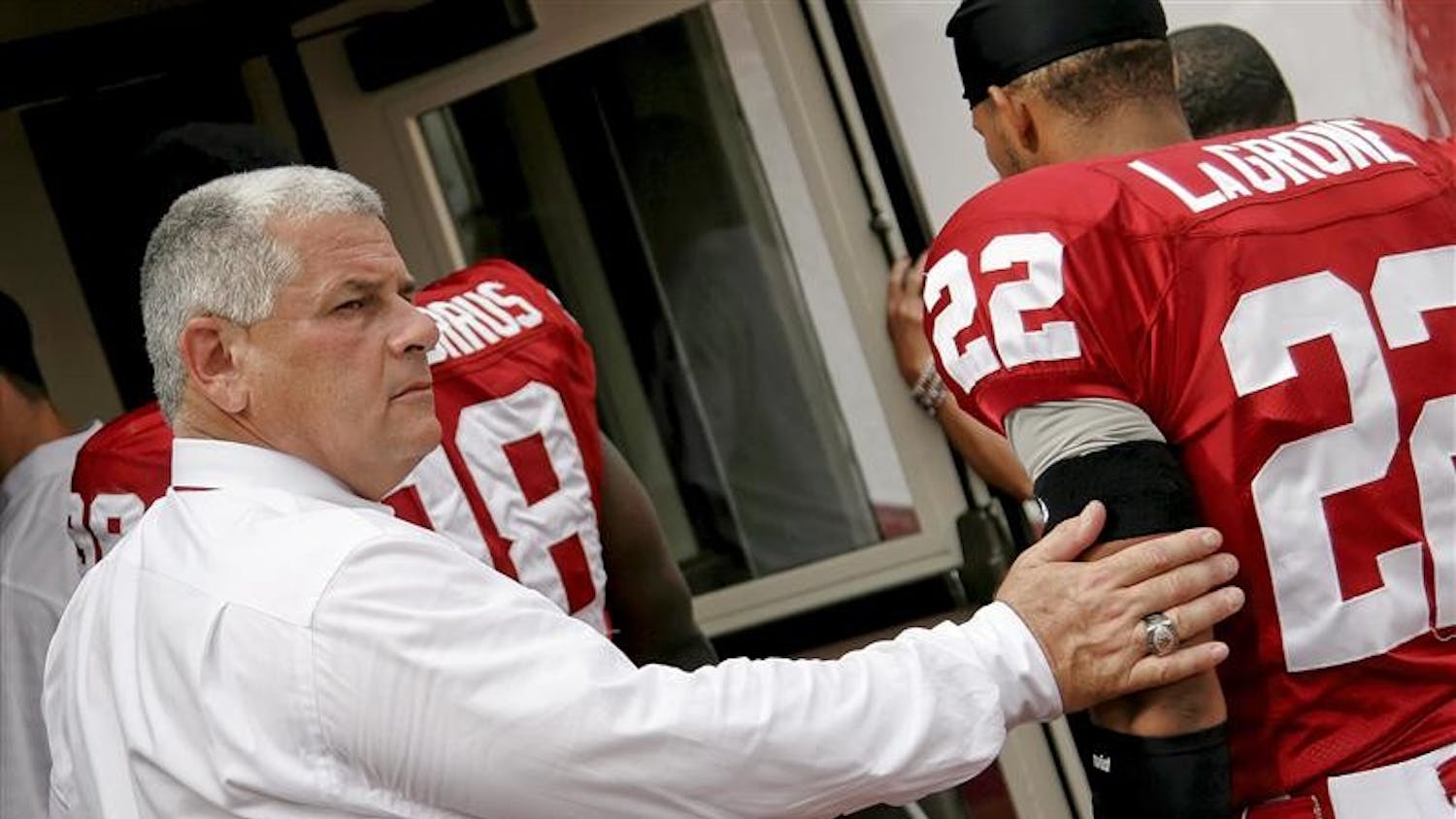
He’s saddened by the loss of his colleague and friend, former IU
football coach Terry Hoeppner, to cancer. He’s frustrated by the IU
football team’s regression in 2008, a season many expected to end with
a second-straight bowl appearance.
Most of all, Greenspan regrets that he won’t be a Hoosier when that program prospers and reclaims Big Ten relevancy.
But he’ll also leave the foundation upon which that program must be built, something many fans have overlooked.
Inundated with criticism mainly attributed to the sanctions levied on
former IU men’s basketball coach Kelvin Sampson, Greenspan announced
his resignation June 26, effective at the end of the calendar year.
Even with the cloud hovering over IU athletics, Greenspan’s decision to resign shocked many co-workers.
“I didn’t think Rick was going to step down, and neither did a lot of
us,” Mark Deal, associate director of football operations, said. “To
say Rick Greenspan’s legacy is the whole Kelvin Sampson saga is about
one-hundredth of all the good things he’s done here.”When Greenspan stepped foot on the Bloomington campus in 2004, he faced
a struggling athletics department welcoming its third leader since 2001.Prior to his arrival, the IU football team wasn’t the primary focus
of the department, despite being the top revenue-generating sport at
most schools. The program was also in the midst of a lengthy postseason
drought.