
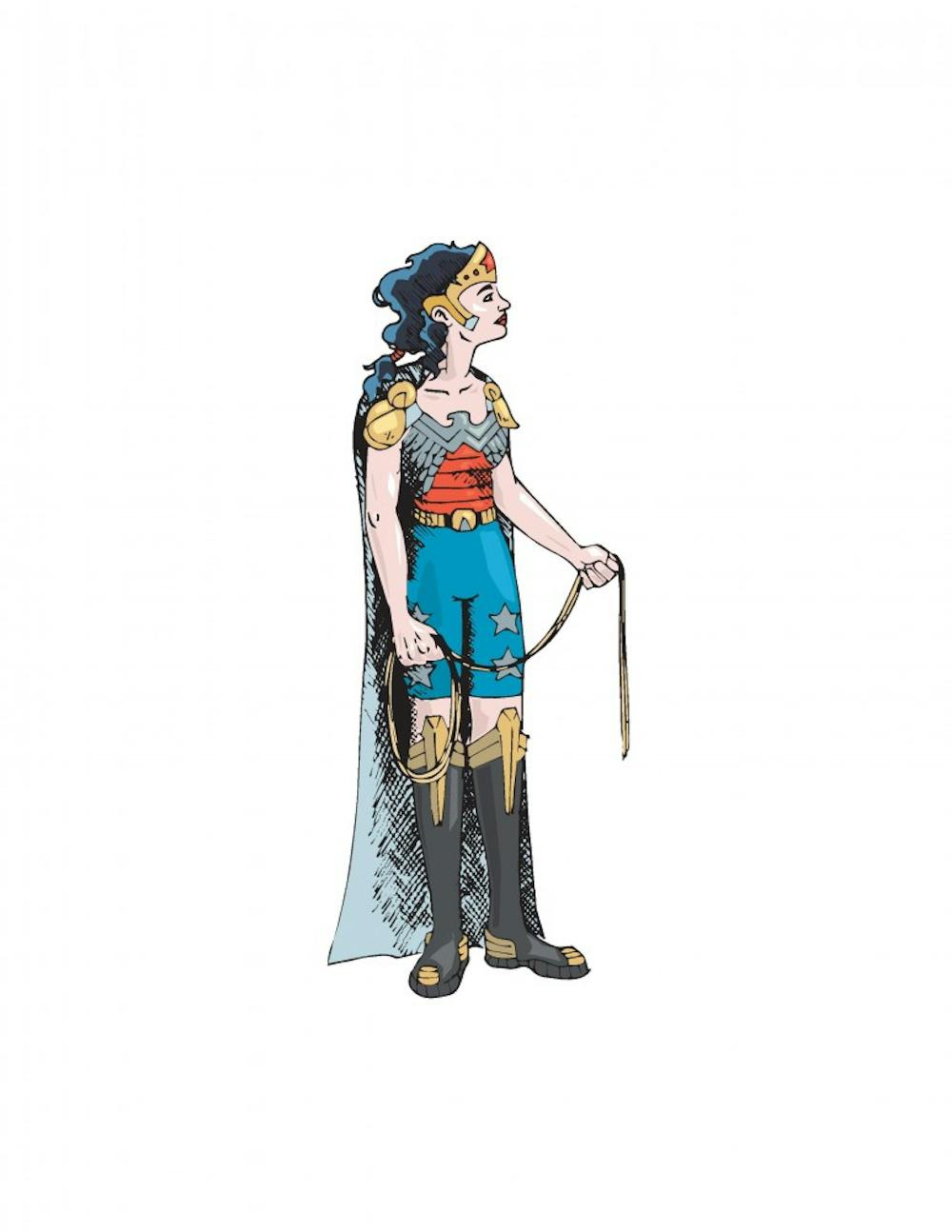
Wonder Woman hit the comic scene in the early 1940s, brandishing killer looks to complement her killer moves.
She became a cultural icon for young women and for everyone who enjoyed the objectivist theme underlying many a superhero psyche: be bold, brave and just.
Fast-forward nearly 70 years. Wonder Woman’s mantra may fall prey to the most exhausted of female role model clichés.
You can do anything you set your mind to so long as you look good doing it.
What about law enforcement or “doing the right thing” necessitates being sexually anything?
Why does a woman who fights crime or is dangerously smart and has a moral center have to look sexually appealing?
Quite simply: because it sells. And until it doesn’t sell so well, strong female characters will always have to succumb to being sexy.
But it has been done before. Take for example our Hogwarts friend, Hermione Granger.
Before blossoming into the Emma Watson we know today, young Watson was just a kid playing a kid in a movie. And she nailed it.
Young girls all over the world fell in love with Hermione for her myriad characteristics, sharp intellect, punctuality, independence and conciseness.
But one thing Hermione never had to be to become an international role model was “sexy.”
The Wonder Woman revamp could be considered offensive to all women, because for a long time it took DC to catch up with the times.
But more important to the younger generations, as this celebration of hegemony leads them to conclude that not only can justice be sexualized, but that a woman using her sexuality as a means of fighting crime is more effective than a woman who doesn’t.
Young girls, before being introduced to the concept of appearing alluring or sexually attractive, who have a naïve passion for suppressing crime, will suddenly be called upon to validate the franchise and buy into justice looking a certain way.
A way they will come to know as sexy.
So what’s the worst that can happen?
Firstly, “doing the right thing” risks being typecast as an act only performed by beautiful people.
If it doesn’t come from someone with perfect teeth, shining hair or a cleft chin, there’s reason to be suspicious and perhaps a little creeped out.
Secondly, bright young women may get the idea that there’s nothing outstandingly immoral or unethical about that cultural anomaly — that outward beauty is something to aspire to but never to be achieved in reality.
There’s nothing wrong with wanting to be pretty or handsome.
I think it’s a healthy awareness to have of oneself.
But not to the extent that flawless perfection is the only option 100 percent of the time. Because it’s not.
Preserving cultural icons is important for a culture to see what ground has been tread and to show what paths have yet to be explored.
But the challenge doesn’t come in revering old things past. It’s accepting them for their time and moving on.
But I doubt much will change.
We like to tout ourselves civilized and think we can put a female in a lead role and not sexualize her, yet Hollywood gives the people what they want.
If that isn’t feigning civility, I don’t know what is.
michoman@indiana.edu


