
Editor's note: All opinions, columns and letters reflect the views of the individual writer and not necessarily those of the IDS or its staffers.
Gaza’s struggle to feed its population began many years before October 2023. Since 2007, Israel has blocked crucial agricultural supplies from entering Gaza, notably fertilizer. The Israeli blockade also limited Gazans’ access to the Mediterranean Sea and thus to fishing, which previously had been a vital source of food in the small territory. While Gazans nonetheless persisted in producing some food, more than half of Gaza’s food was imported following the 2007 blockade, most of it as aid.
The Israeli military assault in response to Hamas’s guerrilla attack of Oct. 7, 2023, further cut both imports and local food production. By March 2024, knowledgeable observers warned of an unfolding famine. A year later, in March 2025, food deprivation was already pervasive and then became far worse when the Netanyahu government closed Gaza to food aid. After more than two months, in response to global outrage, Israel again allowed a trickle of food to enter — but since then, its soldiers have regularly fired on and killed Gazans who trek to the small handful of designated food distribution sites. In effect, Israel has given Palestinians in Gaza a choice about how they will die, whether by starvation or murder.
When I consider this awful choice Gazans face, my mind turns to Robert Frost’s poem, “Fire and Ice,” which reflects on the different ways humanity might bring the world to an end — which is, in a sense, what has been happening for Palestinians in Gaza under Israel’s genocide.
Even the most ardent propagandist for Netanyahu’s government today strains to claim that Israel is not deploying food as a weapon of war.
Indiana’s Senator Todd Young has a notable and commendable track record on the issue of the use of food as a weapon of war. It is a record that Young cannot — that he should not — abandon.
Early in his Senate career, Young led efforts to oppose the use of food as a weapon of war in Yemen. His work on this issue, it is fair to say, diminished suffering and saved lives. And in 2022, Young commented: “It is time for the United States to hold those who use food as a weapon of war accountable for their horrific action. From Yemen to Ukraine, the world’s most vulnerable are suffering in unspeakable ways.” These are noble words from the senator — but they are words from three years ago. Compare them with everything Young has said publicly about the mounting famine in Gaza: “_____.”
That is right. No words. And no action.
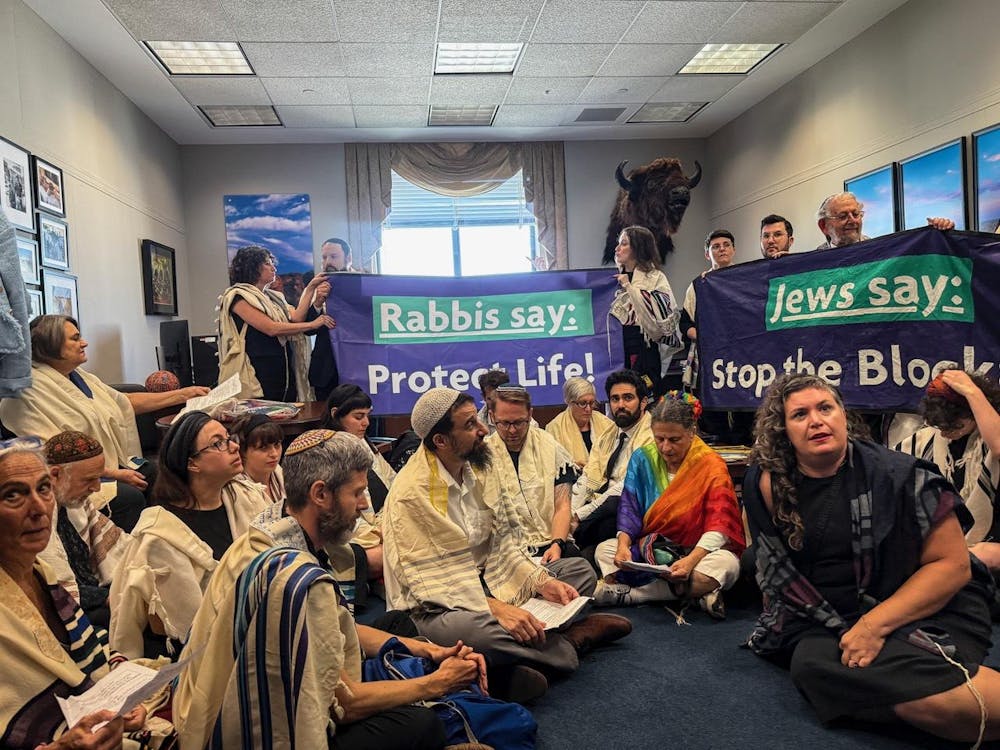
We know that support for the human rights of Palestinians is regularly smeared, and thus chilled, by dishonest charges of antisemitism. This might well explain Young’s baleful pivot on this issue — that is, his wordless embrace of a Palestinian exception to his previously stated principles. It is thus crucial to affirm that Jewish ethical obligations to feed the hungry and stand with the oppressed support the struggle to end the Israeli state’s forced starvation of Gaza. This is why over two dozen rabbis occupied the office of Senate Majority Leader John Thune on July 29, demanding he and the entire United States Senate stand against the Israeli food blockade. And it is why Jewish Voice for Peace Indiana has joined a broad interfaith coalition demanding that Senator Young of 2025 listen to Senator Young of 2022.
Whether the 2025 senator does or does not listen to his own earlier words could play a decisive role in whether deaths from the famine in Gaza continue to increase significantly or, instead, a surge of food and medical aid enters the territory and saves precious lives.
I thus ask every reader to contact Young’s office to urge the senator to listen to his younger self. His office can be reached at 202-224-5623 or by using the letter writing tools on this website, which identifies additional actions that Hoosiers can take to Let Gaza Live!
Daniel A. Segal is professor emeritus of history and anthropology at the Claremont Colleges and a member of both the Academic Council of Jewish Voice for Peace and the state coordinating committee of Jewish Voice for Peace Indiana.



