In modern American society, every woman of a sex-able age is a gatekeeper.
Let me explain.
There is a cultural myth that women are responsible for keeping men from having sex with them.
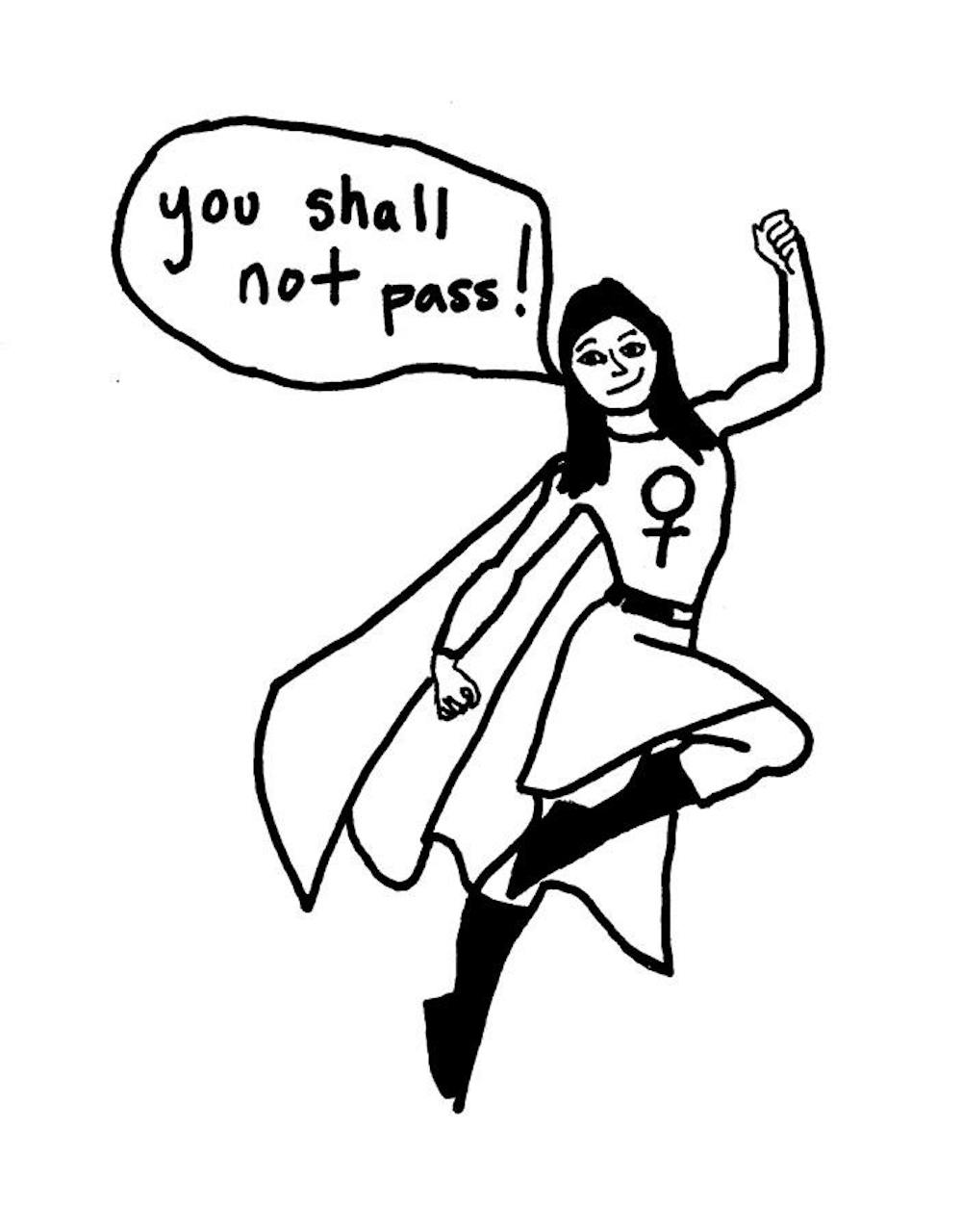
Vaginas are the gate, and women are Gandalf declaring, “You shall not pass!”
This is why drunk girls apparently deserve what’s coming to them when their molested, half-naked bodies are posted with abandon on the Internet.
A good gatekeeper never would have gotten so drunk, never would have left her gate unprotected.
Luckily, this myth is suffocating under the weight of female sexual liberation.
The gatekeeper phenomenon itself is one widely recognized and discussed, particularly by feminists.
What garners significantly less discussion is the emergence of the New Gatekeeper — one born of estrogen, progestin and your doctor’s prescription pad.
Though birth control is essential to the women’s movement, expanding women’s freedom of choice and agency, it has stopped short of its potential.
The pill and intrauterine devices have contributed to the creation of the New Gatekeeper.
No longer are we charged with keeping penises out, but with keeping babies
nonexistent.
Men are expected to wear condoms, yes, but how many monogamous couples do you know who have nixed condom usage because it feels better without them — and besides, she’s on birth control?
I suppose that’s better than the 30 percent of sexually active heterosexual couples who rely solely on the pull-out method.
Male forms of birth control beyond condoms, vasectomies and sterilization do exist, but are stuck in the research and development phase at pharmaceutical companies.
My favorite form of could-be male birth control is called RISUG, a simple shot that renders a man’s sperm sterile for up to 10 years. If he wants to stop shooting blanks early, all it takes is another injection.
The injection has no real side effects, which is crazy when you think about the reduced sex drive, weight gain, mood swings, cramps, blood clots, heart attacks and strokes women put themselves at risk of every pill they pop.
But something as awesome as RISUG is useless to me.
For starters, it’s a cheap shot most men will only get once.
Compare that to the killing drug companies can make on birth control pills. The ones I was buying from the IU Health Center last year cost me $24 — a month.
But despite the low cost, few men would bother to take the plunge. Their wives, girlfriends and hookups have this whole not-having-a-baby thing covered.
Except they don’t.
Half the children born in the United States are unplanned. Of those, 43 percent of partners were using birth control.
Not to say women should give up the agency birth control has afforded us. Giving women the ability to decide if and when to have children is a crucial step toward gender equality.
But if ideal child-rearing is to be an equal two-partner task, child-preventing should be, too.
Men, set the precedent of what kind of father you will be by demanding the ability to share in the burden of birth control.
— casefarr@indiana.edu
Follow columnist Casey Farrington on Twitter @casefarr.
The New Gatekeeper
Get stories like this in your inbox
Subscribe