
In Libya, calls for political reforms and the resignation of Muammar Gaddafi quickly escalated from protests to a full-scale civil war.
The instigator of violence, it should be pointed out, was not the protesters themselves.
It was Gaddafi, realizing his 42-year grip on Libya was slipping away, who ordered military jets and helicopters to shoot and bomb civilians.
Witnesses described a bloodbath, where loyalist military forces have been told to target anything that moves. Italy’s Foreign Minister Franco Frattini told reporters that credible reports put the Libyan death toll at 1,000 deaths and climbing.
America should not wait for the civil war to become a genocide before we involve ourselves; we should move quickly and carefully with the backing of the international community to prevent further Libyan deaths.
Facing the wrath of the military, protesters have gained control of many strategic towns in defense of loyalist forces and in anticipation of the opportunity to dismantle Gaddafi’s government.
While the rebels have had some success, it has not come without heavy losses. The government forces have far more firepower, from Kalashnikovs to fighter jets, to attack the rebels.
These rebels began as protesters, and they were drawn into the conflict by the air strikes Gaddafi is perpetrating on his own people.
Knowing this, and knowing the disparity between the ability of protesters to defend themselves and the ability of the government to target and kill them is huge, world leaders have begun to look for solutions.
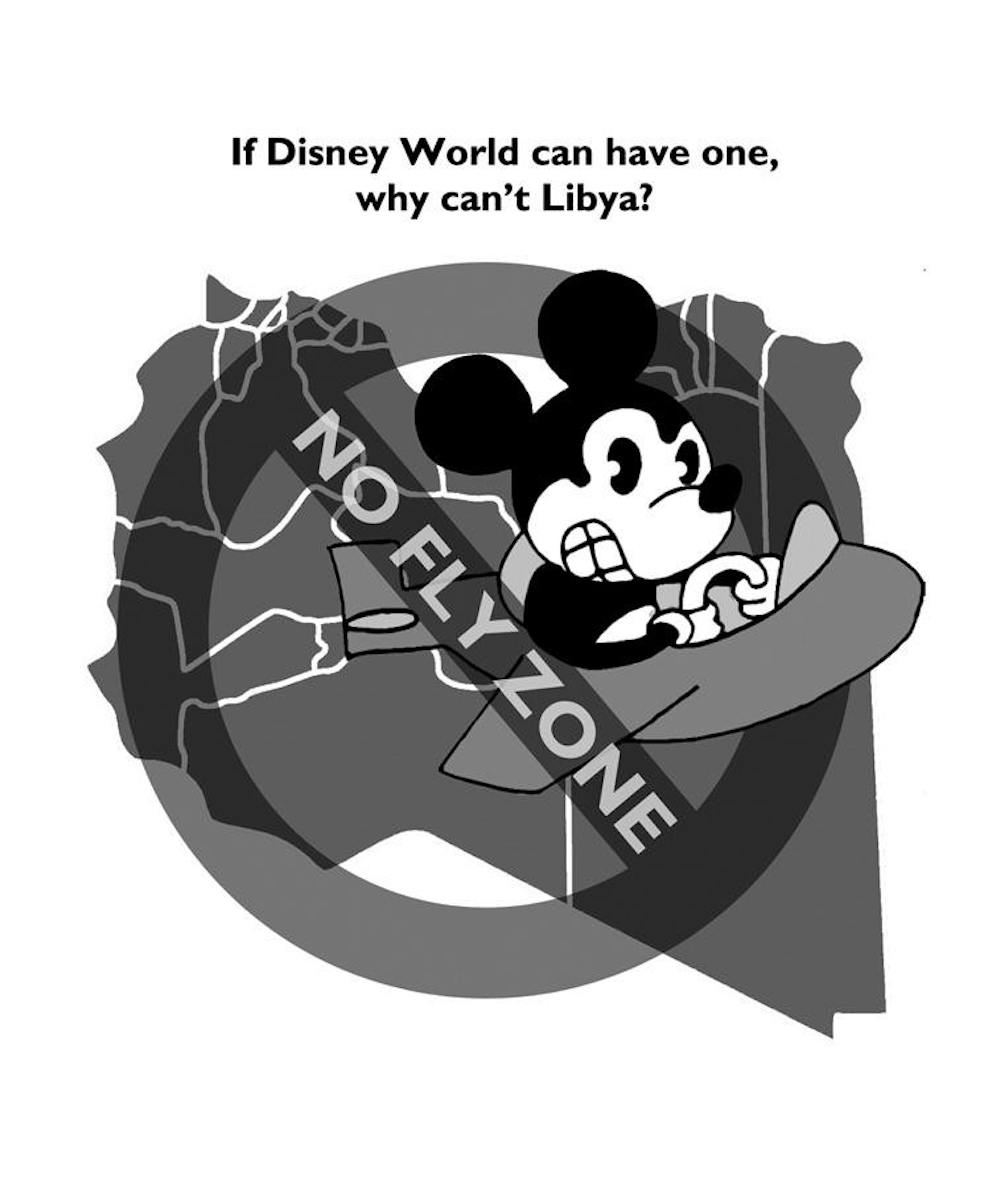
For some, the answer is clear-cut. Give the protesters what they have been asking for: a no-fly zone to prevent Gaddafi’s military from bombing civilians and arms to combat the loyalist ground forces.
The United States has been hesitant to get involved. While Secretary of State Hillary Rodham Clinton has said “no option is off the table” and President Barack Obama has said Gaddafi has forfeited all legitimacy, neither statement has resulted in a clear U.S. policy or action.
Meanwhile, the Libyan death count rises. Gaddafi has been ruthless in ordering his forces to kill indiscriminately in order to crush the rebellion, and it seems that nothing short of direct military engagement will prevent further atrocity.
We believe that supplying arms to the rebel forces is too risky, as weapons are incredibly difficult to track once released into a conflict, and the escalation of arms would most likely only increase the civilian death toll.
We believe, however, that enforcing a no-fly zone seems within reason, and that doing so would effectively prevent Gaddafi from committing the crime of ordering air strikes on Libyan civilians.
If the international community decides to enforce a no-fly zone, the United States should support the decision and aid the international community in enforcing it.
World leaders must send a clear message that governments who seek to crush the universal human right of peaceful assembly through military violence against civilians will be met with the resistance of those countries who value human rights.
Secretary of Defense Robert Gates opposes a no-fly zone on the grounds that it would require a direct attack on Libya in order to cripple its air defenses.
Gates is right to be wary. Involvement of U.S. and world military forces in the conflict is certain to have unforeseen consequences.
But there are very foreseeable consequences to remaining uninvolved. Hundreds, if not thousands, more Libyans will die at the hands of their government.
We should unite the international community in support of a no-fly zone over Libya. The result would be the prevention of more deaths at the hands of the Libyan military and the quickening of the fall of Gaddafi’s ruthless regime.
A no fly zone over Libya
Get stories like this in your inbox
Subscribe



