
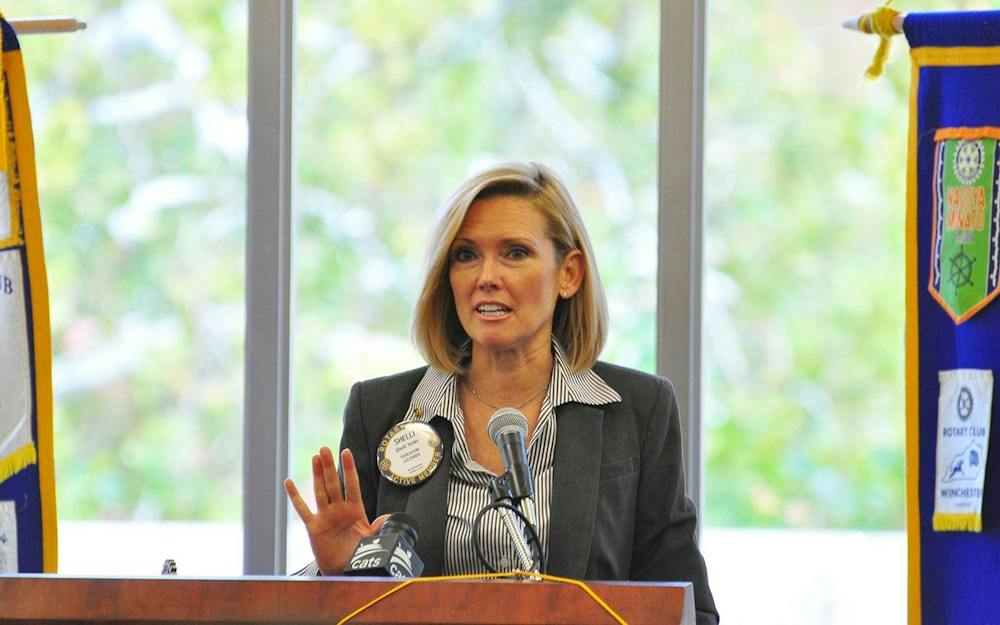
At her daughter’s volleyball game Thursday night, Indiana Sen. Shelli Yoder, D-Bloomington, noticed graffiti on the inside of a bathroom stall.
“Don’t wear white on your period,” someone had scrawled in white paint.
“It’s all about education,” Yoder said as she recalled the story during a virtual “No Taxation on Menstruation” rally Friday in support of eliminating Indiana’s sales tax on menstrual products. She urged viewers to educate their family members and write to legislators about repealing the tax.
Indiana’s 7% sales tax applies to menstrual products like tampons and sanitary pads. It’s one of 18 states that still imposes a tax on the products. Yoder has filed a bill to repeal the tax during the past five legislative sessions, but it has yet to pass both chambers and become law.
“We give a tax break on sales tax to lottery tickets, to data center equipment, to purchasing an RV,” Yoder said. “But when it comes to buying a box of tampons that is required in order to go to school, in order to go to your job, the state of Indiana repeatedly says, ‘Not for those products.’”
Yoder said the products are a necessity, not a luxury, and the state should not build an economy off the revenue made by taxing menstrual products.
Rally moderator Gabriella Gravante, a founder of women’s health nonprofit Her Health, Her Future, said one in four women struggle to afford access to basic menstrual products, which can result in unsafe and unsanitary outcomes. She said the tax places an unfair financial burden on people who menstruate.
The average price of menstrual products has increased by almost 40% since 2020, with inflation and tariffs on cotton contributing to steeper costs.
Damaris Pereda is the deputy director of PERIOD., a global nonprofit striving to eradicate period poverty, which Pereda defined as inadequate access to menstrual products or menstrual health education.
“There’s about 800 million women and girls on their period, today, on a daily basis,” Pereda said. “This happens around the world, and from those 800 million people, about 500 million are estimated that are experiencing period poverty.”
Pereda said some people may not have enough products, adequate resources, access to private bathrooms or clean water. She said the sales tax on the products isn’t just revenue.
“It’s really discrimination, and that’s why we must end it,” Pereda said.
She encouraged viewers to donate products, host panel discussions and share their concerns with their elected representatives.
Amy Courtney, the executive director of Indiana civic engagement nonprofit MADVoters, said Indiana could easily afford to make period products tax-exempt in the upcoming 2027 budget session.
“The majority of states have already made these items tax-exempt, but Indiana is literally profiting off every box of pads, tampons or other period products purchased by Hoosiers,” Courtney said. “And what do we say to that? ‘Periods aren’t for profit. Period.’”
Legal nonprofit Period Law estimated Indiana earns $7.1 million annually in tampon tax revenue, or about 0.02% of the state’s total revenue.
Jennifer Harmon, founder of Hamilton County-based period poverty nonprofit HamCo Love, said those who don’t have access to period products often have to improvise by using toilet paper, socks or paper towels, or use period products for longer than is healthy or recommended.
“That increases you know, chance of toxic shock, it’s not healthy,” Harmon said. “It’s not hygienic.”
Toxic shock syndrome is a rare but possibly life-threatening complication of a bacterial infection, which can be caused by leaving tampons or menstrual cups inserted for too long. Harmon said when people face tough budget choices, period products may not make the cut, which can cause stress, anxiety and embarrassment.
Yoder closed out the rally by asking viewers to “make it totally normal to talk about menstruation.” She urged people to spread the word and, ahead of the midterm elections, ask their representatives to support repealing the state sales tax on menstrual products.
“We’re certainly not going to be the last state that does the right thing,” Yoder said. “We’re going to get this done in 2027.”


