
Editor’s Note: This story includes mention of sexual assault. Resources are available here.
SPOILER: This column contains potential spoilers for “The Whisper Man.”
Netflix’s newest thriller, “The Whisper Man,” released Aug. 28, is clearly a throwback to ‘90s crime thrillers like “The Silence of the Lambs” or “The Fugitive” with its moody and character-driven core. While this emphasis on emotion drives the characters to be unique and well-developed, the plot itself feels lackluster.
I think many cinephiles would agree that developing the plot and characters is equally important. Without both, the structure of the film tends to crumble. A film can be beautiful with its cinematography and have compelling characters, yet if the filmmaker makes a choice that disregards the film’s core story, it will end up feeling flat.
Such is the case with “The Whisper Man,” where constant genre conventions and lack of plot depth make the film feel dull.
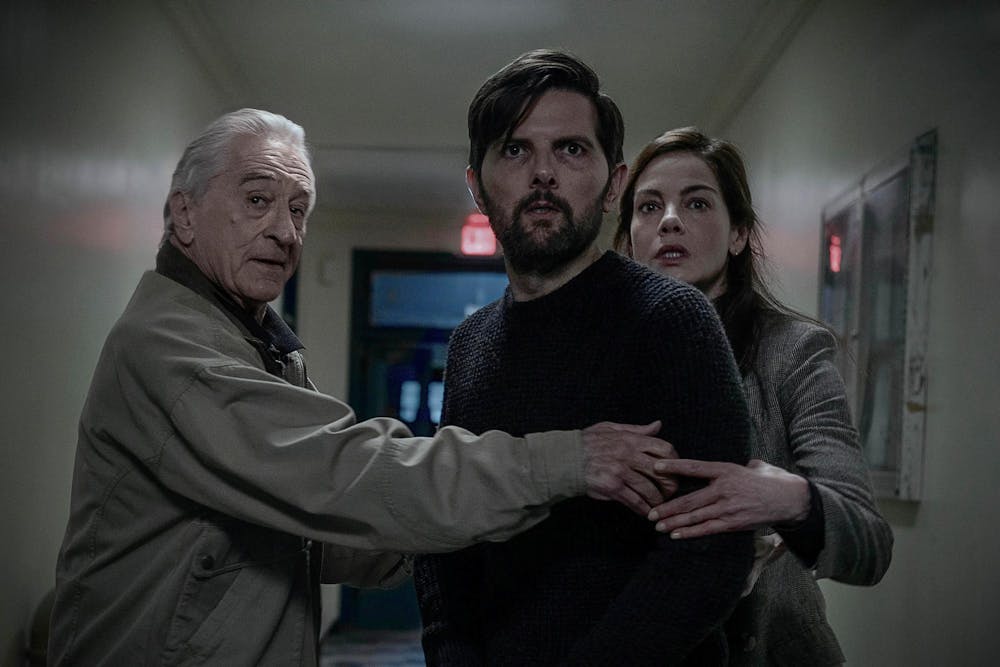
The film centers on recently widowed novelist Tom Kennedy (Adam Scott) and his socially struggling 8-year-old son Jake (Acston Luca Porto). The duo moves into the fictional town of Garretton, where Tom attempts to start a new life with his son after his wife’s death. However, soon after they move in, the town is in an unrest due to the recent child abductions that resemble those committed by the film’s serial killer Frank Carter (Michael Keaton).
As you might suspect, Jake goes missing along with the other children very early in the story. Tom is forced to reach out to his estranged detective father Peter Willis (Robert De Niro), who happens to be the one that solved the initial Carter murders.
At this point in the film, it felt like the twists and turns of the investigation were simply handed to me on a silver platter. And the film’s various plot points were too predictable to the thriller genre, failing to surprise me.
I did enjoy Keaton’s on-screen appearance as the calm and manipulative serial killer and thought his backstory added more nuance to his character. As a child, Carter was sexually abused by his father, continuing the film’s theme of complex family dynamics while also giving him his presented motivation for enacting murderous crimes on children.
Although his actions certainly aren’t justified, Carter’s background of abuse is very similar to many true crime stories. I liked how the audience wasn’t supposed to just believe a serial killer just wanted to.
Likewise, I feel De Niro played his character as a retired police detective excellently, as he often does a good job of representing a quiet, yet burdened older man, such as a retired executive in “The Intern.” His confrontation with both this old case he once solved, and his less-than-ideal relationship with his son became the most compelling character progression throughout the film.
But when the film started to explore the characters and their backgrounds, the ending became all too apparent — way too early on. So, when I finished the film, I was unimpressed. And it’s unfortunate to say, but I feel like this is starting to become a pattern with Netflix originals.
I suspect the film’s $50 million dollar budget was spent mainly on its array of A-listers rather than focusing on intentionally interesting plot points. Or maybe the shallow storytelling could be a result of the film having to cram the original novel’s 368 pages into less than two hours.
While I admittedly have not read Alex North’s 2019 novel “The Whisper Man,” it seems that the film significantly cut the original plot down while focusing on faster pacing.
While this is expected of film adaptations, the plot is comparatively worse than the rest of the movie, even without taking the novel into account.
For example, the film deals with intense and often underdiscussed themes of father-son relationships, through not just Tom and his father Peter, but also later through Carter and his son Francis Carter Jr. (Owen Teague). With such unique themes, it was disappointing that the plot wasn’t strong enough to back up extremely emotional moments.
The plot remains very reminiscent of ‘90s crime thrillers that blend suspense with psychological tension. Even though this isn’t a genre that I particularly enjoy, I still have found other recent films within this ballpark better. I enjoyed watching the depravity of Nicolas Cage’s character in “Longlegs” and sympathizing with the trapped boy in “The Black Phone.” Both films followed the ‘90s thriller genre and were able to keep me on the edge of my seat at times.
I wish “The Whisper Man” was better refined to stand out against similar ‘90s crime thriller films. But, with its profound acting performances and exploration of male relationships, at least it's not another agonizingly mediocre Netflix bust.



