
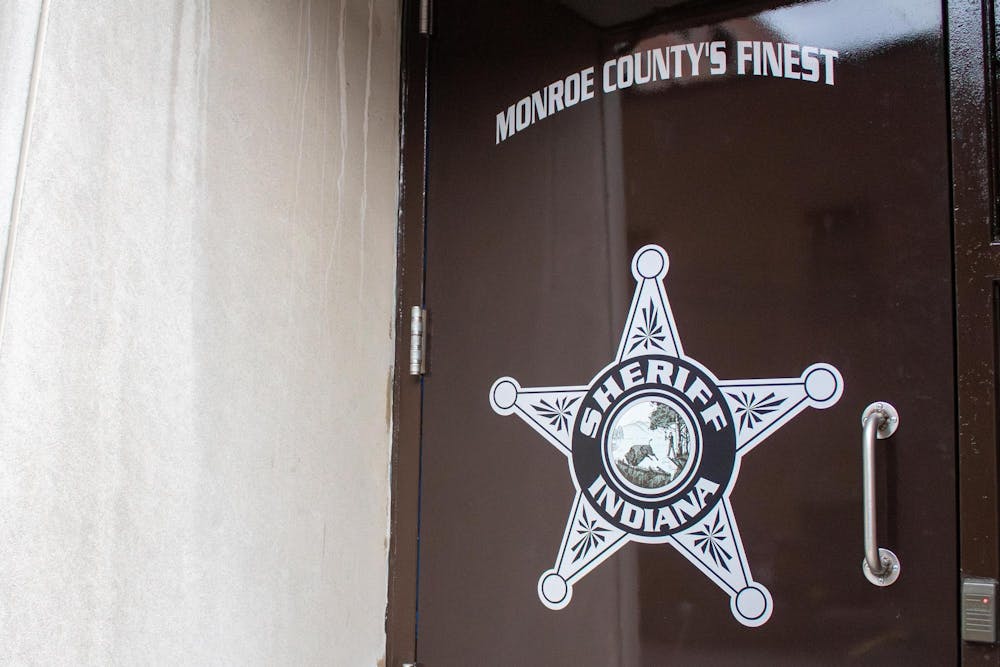
The Monroe County Sheriff’s Office agreed not to restrict its personnel from working with immigration enforcement via a consent decree with Indiana Attorney General Todd Rokita announced Thursday.
The Attorney General’s Office celebrated the move as a “major victory,” according to a release, but Rokita said "we still have work to do" in response to another sheriff’s office policy concerning non-criminal detention orders from U.S. Immigration Customs and Enforcement.
A consent decree is a legal agreement that resolves disputes between parties without admitting liability or guilt. It holds the same power as a court order, and a party can be held in contempt of court if they break it.
The decree settles all of Rokita’s legal objections to MCSO-12, a sheriff’s office policy originally challenged by Rokita in 2024 due to its rules against employees working with federal immigration operations, unless required by law.
The sheriff’s policy stated the office would not agree to any partnership with ICE or the Department of Homeland Security regarding immigration enforcement. It also said employees should not request the immigration status of an individual while working or detain someone based on their citizenship status.
Rokita’s release lists four bullet points of the agreement between the sheriff’s office and Rokita, removing the sheriff’s previous restrictions on:
- Engaging in the enforcement of federal immigration laws
- Officers attempting to learn an individual's immigration or citizenship status
- Communicating with federal officials
- Entering into agreements with DHS, ICE and other government agencies involved with immigration enforcement
“Our resounding successes in this case not only make a big difference in Monroe County, but they will echo throughout the rest of the state as well,” Rokita wrote in the release. “Serving notice that we mean business when it comes to exercising our statutory authority to enforce these immigration laws and help the Trump administration detain and deport illegal aliens.”
Senate Enrolled Act 76, signed in March by Gov. Mike Braun, prevents local and state officials from stopping employees from contacting ICE, reporting people living in the country illegally or any other restrictive measures on “actions with regard to information of the citizenship or immigration status, lawful or unlawful, of an individual.”
Sheriff Ruben Marté filed a lawsuit against Rokita on April 9, calling SEA 76 unconstitutional.
“The lawsuit argues that the Fourth Amendment prohibits detaining individuals without a judicial warrant or probable cause that the person committed a crime, and the Sheriff cannot constitutionally hold someone in custody simply based on their immigration status,” MCSO’s legal team wrote at the time.
The two-year legal battle between Rokita and Marté began with the sheriff’s June 29, 2024, policy limiting cooperation with federal immigration enforcement.
According to Rokita’s original July 11, 2024, lawsuit against the sheriff’s office, which was filed before Marté’s suit over SEA 76, the policy stated the sheriff’s office does not “engage in enforcement of immigration or citizenship status unless required to do so by law.”
That original lawsuit claims that the sheriff’s policy violates Indiana laws concerning immigration and the federal enforcement of immigration.
The sheriff’s office policy Rokita challenged also stated its employees couldn’t detain or hold people beyond their scheduled release date based solely on ICE non-criminal detainers. The new consent decree does not resolve this section of the lawsuit.
“We are still litigating the issue of whether or not we are required under Indiana law to honor ICE containers that do not have judicial warrants," Monroe County Attorney Justin Roddye, who represents the sheriff’s office, told the Indiana Daily Student.
There will be a hearing Oct. 27 in the Monroe County Circuit Court regarding the issue, Roddye said.

