
Editor’s Note: All opinions, columns and letters reflect the views of the individual writer and not necessarily those of the IDS or its staffers.
It's hard to deny that no two students at Indiana University share the same experience. Even if two share similar classes or friend groups, everyone faces different challenges during their time in Bloomington. But no matter your major, hometown or year, one issue is the same: you must find housing.
This fall, I began my sophomore year at IU, and housing remains an issue as I look ahead. Expensive rentals and limited on-campus options make the hunt an annoyance, as balancing one's budget and needs becomes increasingly difficult, especially when competing with thousands of other students looking for similar properties.
This issue stems from Bloomington's housing market, where 60% of renters paid up to 30% of their income in 2023, a situation driven by less supply than demand. Additionally, average monthly rent ranges from $1,105 to $2,000.
On-campus apartments, a potential solution for students, are limited. Tulip Tree and Campus View, for example, are the two largest options. But both buildings house fewer than 500 beds, a small number compared to the total student population.
When you look at IU’s population as a whole, demand is increasing further.
This fall, IU has over 48,000 students, a third of whom live on campus. But with freshmen enrollment breaking records, the total student body continues to grow. And when a university does not adequately prepare to house all its students, students suffer.
See Purdue University — in 2018 and 2022, the university faced controversy when overfilled dorms forced students to live in “barracks,” converted common areas with multiple students crammed into the same room. This lapse in planning, a result of the university’s inability to manage housing supply, forced students into their freshman year with limited room for clothing, toiletries and most importantly, personal space.
While the situation may seem extreme, not providing ample housing for a growing student body and leaving students to their own means is not off the table given the current situation. If IU’s student body continues to grow while the total supply of rooms does not, these two lines will eventually cross.
In addition, simply relying on on-campus housing for each incoming class contributes to the plight of upperclassmen. Eventually, this can crowd them out and force them to find spots off campus, and as mentioned before, this isn't working.
So how should IU prevent these issues when off-campus locations are so expensive and demand for on-campus living far exceeds supply?
My solution is simple: use land already on campus to build new housing. There is no dorm better to axe than Ashton.
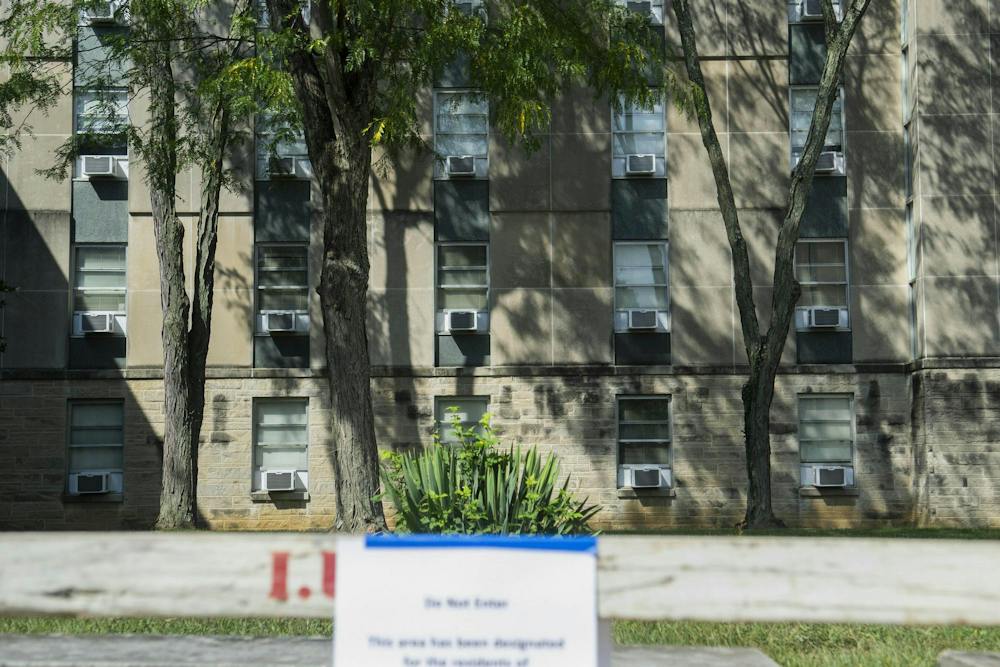
Ashton Residence Center is a multi-building complex that sits on 12.7 acres in the middle of IU’s center neighborhood. Constructed in 1946 and renovated in 2011, the hall includes five dormitory buildings, common buildings for recreation and a center building for administrative purposes.
Despite all these buildings, Ashton does not provide enough dorms for the expanse of land it occupies. A similar dorm, Willkie Quadrangle, has only two residential buildings but holds more than 758 beds. Ashton has 578.
The best course of action, clearly, is to demolish the dorm.
Given its central location and proximity to campus hotspots, Ashton serves as the perfect spot for a more efficient living space. Replacing Ashton's five residential buildings with taller, wider residence halls to increase the potential for more rooms would do exactly that.
Ashton residents shared a variety of views on the dorm, but the majority expressed multiple issues with the building itself, more evidence that should seal its fate on the chopping block.
“I think it’s kind of dirty,” Aliyah Strickland, a first-year transfer student, said of the dorm. “It kind of reminds you of a jail cell.”
Christian Hernandez, another Ashton Resident, said an issue he has with Ashton is the scarcity of washing and drying machines.
“There are only three in my building,” he said.
One might ask why renovation isn’t on the table, but the reason is rather simple. A renovation may address key dorm problems. One could even make the building taller through renovation, pending structural capacity. But to maximize the land Ashton sits on, a full demolition is necessary.
Additionally, a full replacement would allow newer infrastructure, such as elevators or central air conditioning, or more washing machines.
“Why can’t they put elevators in here?” Strickland said. “Why can't they put AC in the hallways? It’s boiling in here. Like, it’s gross.”
The decision is drastic, but it's necessary to secure a strong future for students. More students can come to IU with more dorms, and with potential vacancies, returning students could find themselves with a more affordable option than what is available off campus. Additionally, fewer students on the market would help students who want to live off campus. Leading to less competition and, theoretically, lower prices.
There's no doubt that memories of Ashton would remain, however dirty, sweaty and grungy they are. But as we look ahead, letting go of the past creates room for new opportunities that an ever-greater number of students can enjoy.
Alexander Coffman is a sophomore, studying Economics, East Asian Languages and Cultures and International Studies



