
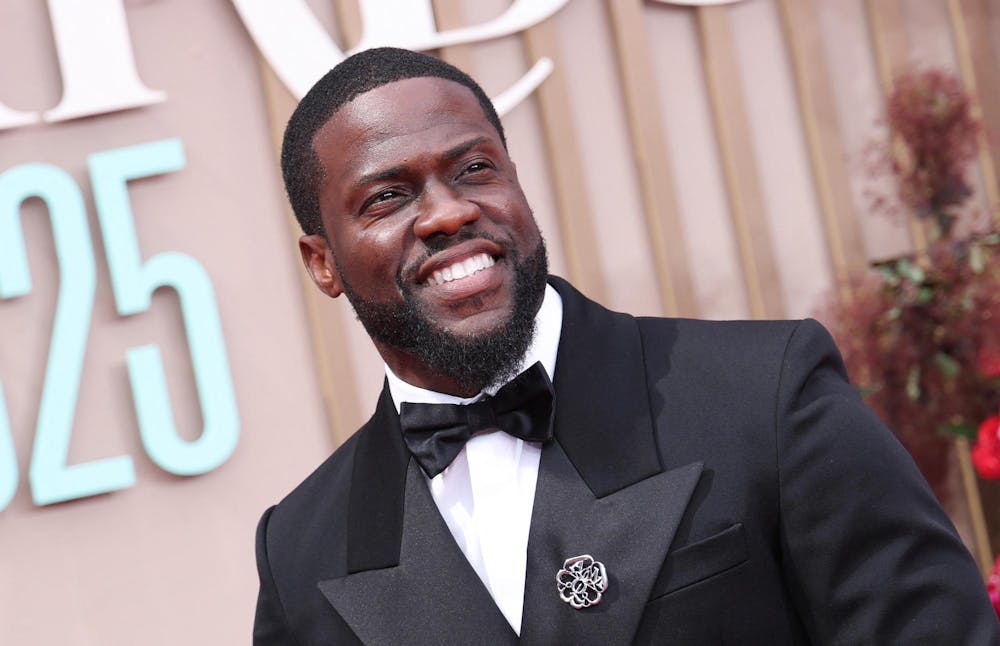
Netflix's newest raunchy comedy "72 Hours," released July 24, feels like a cheap copy of the clever 2009 film "The Hangover." While I initially enjoyed the modernization of the original “bachelor party gone wrong” concept present in "72 Hours," after watching the film in its entirety, I found it was completely forgettable.
The film introduces audiences to the flawed Joe Nixon (Kevin Hart), who is failing in both his relationship with his girlfriend Jennifer (Teyana Taylor) and in his job as an advertising executive currently working on a pitch for a vodka brand. When Joe is accidentally added to a bachelor party group chat, he realizes that this might be the perfect opportunity to show his company that he is still relevant and flies out to join this friend group.
I immediately felt that this movie featured Hart in a role that he plays way too often: the self-deprecating Gen X adult.
While in other movies, the scrutiny he faces is mainly about his below-average height, I am glad to say that this movie doesn't harp on that point. "72 Hours" instead pokes fun at Hart's age and dated ideology compared to that of the Gen Z bachelor group. This results in a main character that doesn't feel interesting to follow, and that hides in Hart's wide catalog of similarly self-disparaging characters.
The movie also attempts to imperfectly replicate "The Hangover," an iconic comedy I feel is comparably better and more memorable. Often cited as one of the best 2000s-era comedies, "The Hangover" has a mystery-driven story focused on figuring out what crazy stuff the group did the night before during a bachelor party. "72 Hours" has neither this uncertainty nor a strong friendship that gets questioned as the film's story develops.
Instead, the film focuses on contemporizing the concept and applying it to Gen Z friendships, while still ostracizing Hart for his age. This formulaic approach was moderately enjoyable but felt like a lazy attempt to recreate "The Hangover" story.
I feel that placing Hart as the overly confident, yet severely out-of-touch Joe continues his streak of underwhelming comedy performances. There are only so many times an actor can play nearly the same character before the enthusiasm is stripped away from me.
Thankfully, the film's depiction of Gen Z doesn't suffer nearly as much as Hart's typecast position as a grown adult going through a chaotic midlife crisis. I found that I often enjoyed the group’s banter with Hart as a random older man who decided to pay all their expenses, which I think is attributed to the film's younger cast.
With the familiar faces of Marcello Hernández and Ben Marshall from Saturday Night Live, who play the characters Nick and Hunter, respectively, I enjoyed that this movie seemed to have an actual touch of Gen Z comedy. Though, that isn't to say this film is free from jokes that seem like they are what millennial writers inaccurately think Gen Z finds funny.
For example, the bachelor group was seen asking each other about their feelings. This moment felt quite centered around some older generations' ideas that Gen Z is overly emotional. However, I felt like this view is outdated considering that the concept of discussing male feelings — especially within male friend groups — is still seen as taboo.
And, like many recent comedies such as "Scary Movie," our generation is mimicked with the use of Gen Z slang few of us actually use. For "72 Hours" it became the repeated gag of calling Hart "unc," which was funny at first, but quickly felt more like a mockery of Gen Z than of Hart.
The plot itself became convoluted with the writers’ ideas to make the movie have a message prioritizing family over work. Another recent Netflix comedy, "Little Brother," tried to get across this same message to viewers with the outcome being equally ineffective.
And while the attempts to make this new raunchy comedy a feel-good film ultimately failed me, that isn't to say other people can't enjoy what Hart and these SNL cast members have to offer in "72 Hours."


