
Editor's note: All opinions, columns and letters reflect the views of the individual writer and not necessarily those of the IDS or its staffers.
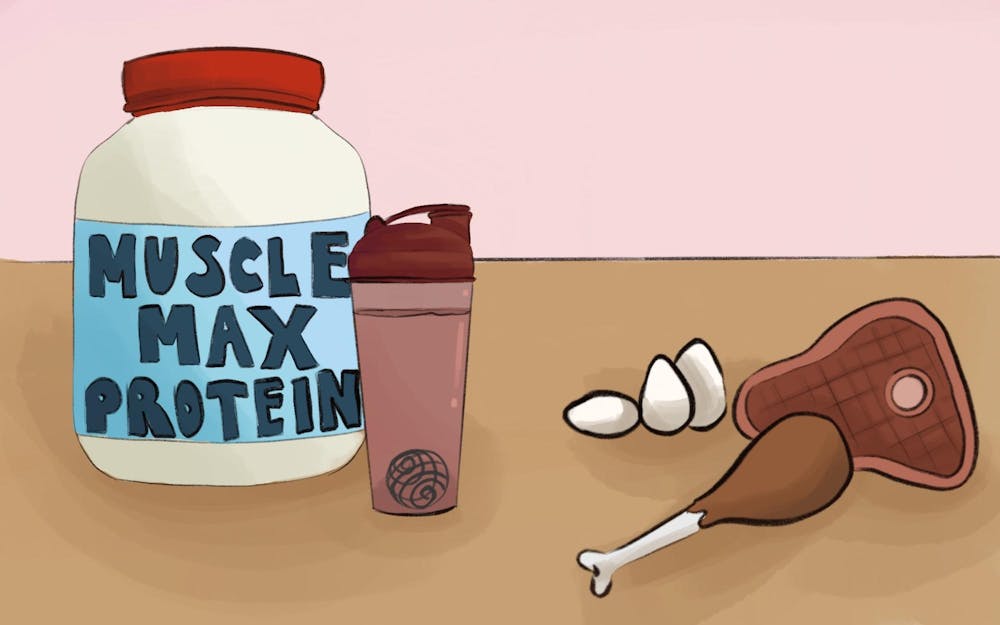
Protein powder is all over social media right now.
The dietary supplement helps you reach your daily protein needs in a single scoop. This number depends on your weight, but Harvard Health states an adult needs 0.36 grams per pound. It can come in a variety of tasty-sounding flavors, and even in crazy ones, like Lucky Charms, taro milk tea or baklava. More and more brands are competing to help consumers meet their fitness goals.
When I first started my health journey, protein powder was inescapable. Shaker bottles for preparing shakes dotted every corner of my gym. My social media feed was plagued with advertisements for different protein brands. It seemed if I wanted to reach my goals, I needed to keep up with what social media has dubbed “protein-maxxing.”
For many college students, fitness is no longer just going to the gym and trying to stay active. Instead, it’s an optimization game of our nutrition, starting with an obsession with eating more and more protein. Protein powder seemingly offers a convenient way to do that.
But do we actually need more protein powder?
The answer is no.
According to the Mayo Clinic Health System, sedentary adults only require about 0.36 grams of protein per poundof body weight per day. For active individuals, that recommendation rises to 1.1 and 1.5 grams of protein per kilogram of body weight per day. For example, an active adult weighing 150 pounds only needs between 74 and 102 grams of protein a day to be healthy.
It’s easy to meet these protein goals by eating regular meals. Foods like eggs, chicken, beans, yogurt and even rice contribute to the daily protein intake more than we realize. For example, one egg offers about six grams of protein, half a cup of cooked beans has eight grams, and 100 grams of chicken breast has 32 grams of protein.
Still, the convenience of protein powder in place of cooking a full meal is undeniable. With just a scoop, the supplement can aid muscle growth by providing a fast-absorbing source of amino acids, specifically leucine, which triggers the muscle protein synthesis and repairs micro-tears caused by strength training. The vitamins and minerals in protein powder, such as calcium and vitamin D, also help keep bones strong, reducing the risk of injuries like stress fractures. But protein powder should be a supplement to a balanced diet, not a requirement to be healthy.
And that distinction has gotten lost online.
Creators on platforms like TikTok and Instagram frame protein powder as essential to fitness. They classify meals by how many grams of protein they contain. For example, there are videos highlighting “30g of protein breakfast ideas” or championing certain foods for being “high in protein.” These creators convince us that more protein equals better results.
However, fitness is not that simple.
When nutrition becomes about maximizing protein, the focus shifts away from balance. Instead of asking, “Am I eating enough today?” or “Do I feel energized?” the question becomes, “Did I hit my protein goal today?” And if the answer is no, there’s pressure to fix it, usually with a quick scoop of protein powder.
Protein powder isn’t just a product, but part of a larger culture that turns fitness into something rigidly structured, measured and, at times, overwhelming. The narrative becomes that there is a “right” way to eat and train, and that anything different is ineffective.
But most college students aren’t professional athletes.
We balance classes, jobs, social lives and everything in between. Our schedules aren’t built around perfectly timed meals or optimized nutrition plans. Some days, just eating consistently feels like an accomplishment.
If we fail to consider our context, protein tracking starts to feel less like a choice and more like a requirement we’re constantly trying to meet.
There were days when I would finish eating something I actually enjoyed, but felt like it wasn’t “right” because it didn’t have a certain amount of protein grams. It didn’t matter if I had a full meal or if I felt satisfied. What mattered was the number.
But when we reduce food to numbers, we lose sight of what it actually does for us. Food is not just a macronutrient calculation to optimize. It’s energy, nourishment, culture and routine. It’s what gets us through long lectures, workouts and late-night study sessions. If we turn every meal into a math problem, we lose sight of the bigger picture.
Instead of eating based on hunger or availability, we might start eating based on macronutrient targets. Instead of enjoying a meal, we might analyze it. And if we don’t meet our expectations, we might feel like we’ve done something wrong.
Protein powder isn’t the problem itself, but it has become part of a toxic online culture emphasizing hitting higher and higher protein goals when the science doesn’t call for it.
Protein is essential. It supports muscle repair, aids workout recovery and can keep you feeling full for longer. For someone who exercises regularly, a higher protein intake can be beneficial. But more isn’t always better. If protein intake is prioritized above all else, it can hamper intake of fiber, healthy fats and complex carbohydrates, causing problems like headaches, constipation and an increase of low-density lipoprotein cholesterol, also known as the “bad cholesterol.”
In 2025, Clean Label Project conducted a study on the toxins found in protein powders. The study discovered heavy metals like arsenic, mercury and cadmium in protein powders, as well as bisphenol-A, pesticides and other contaminants linked to diseases like cancer.
Protein powder then becomes the easiest way to “fix” the gap between what you ate and what you think you should have eaten. But the perception of that gap only exists because our thinking about nutrition has become so rigid and numerical. While protein powder can be useful, especially for people who might struggle to meet their protein needs through whole foods alone, such as vegetarians, vegans, or people with dairy or soy allergies, it shouldn’t be treated as essential for everyone.
You can build muscle, stay active and feel healthy without protein powder. You can meet your nutritional needs through regular meals, even if they are not perfectly optimized. And more importantly, you can have a health-conscious relationship with food that doesn’t demand constant tracking.
Some people will choose to use protein powder, and that’s fine. Others won’t, and that’s also fine. What matters is understanding that constantly adding more and more protein to your diet isn’t an obligation. Your health doesn’t depend on whether you added or not a scoop of protein to your shake, coffee, pancakes or oatmeal. Instead, ask yourself if your diet is working for you.
Astrid Alomia (she/her) is a freshman studying journalism with a concentration in public relations and a minor in marketing.



