Kimberly Goy has spent three years feeding Monroe County’s most vulnerable residents as development manager for Community Kitchen of Monroe County, no questions asked. Now, she anticipates that new laws will make that work harder than ever.
A series of state and federal policy changes to the Supplemental Nutrition Assistance Program are reshaping food assistance across Indiana, with food security advocates and researchers warning the consequences will fall hardest on vulnerable populations.
These changes are expected to reduce the number of Hoosiers who receive SNAP benefits over the next few months, making it harder for those who remain eligible to keep them and deter some from applying at all.
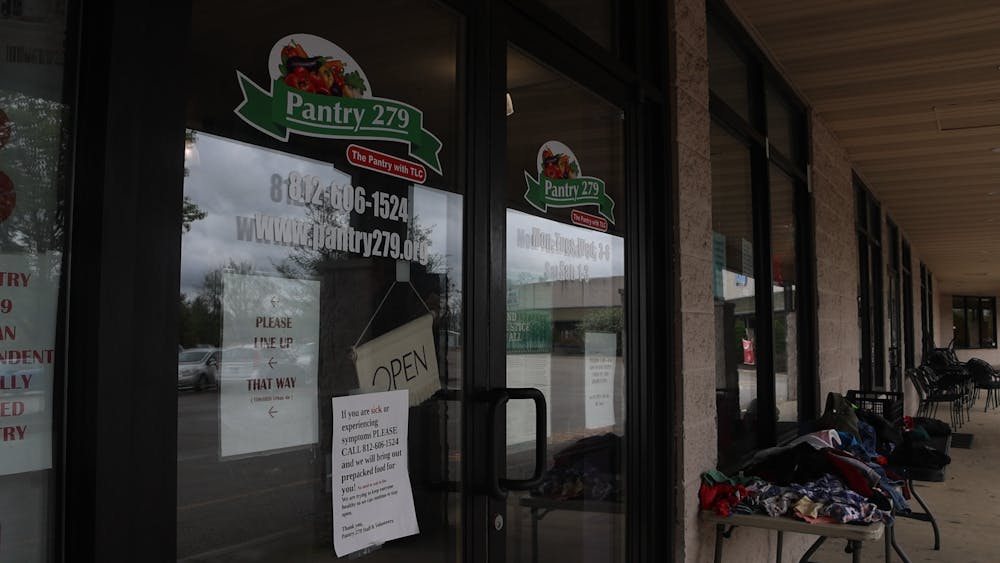
Food security advocacy groups, food pantries, community kitchens across Monroe County, like the Community Kitchen of Monroe County, Pantry 279 and the Indiana Community Action Poverty Institute, say they are already preparing for an influx of clients as the full weight of both laws take hold.
"It's a strange, different world we're in right now,” Goy said. “We all kind of just need to support each other and give each other and their selves a little bit of grace when things are a little rocky."
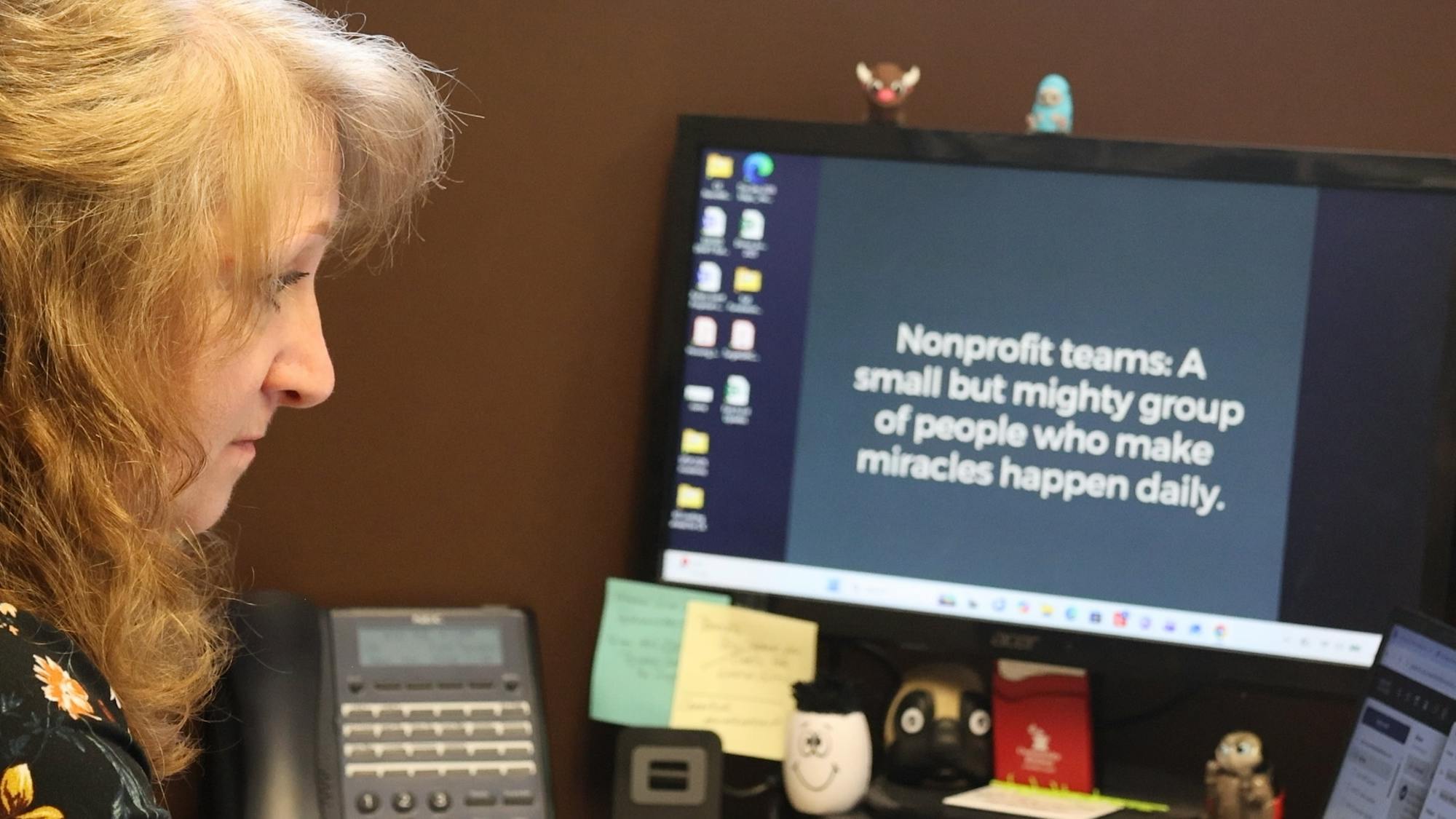
Kimberly Goy, the development manager at Community Kitchen of Monroe County, works at her desk on April 21, 2026, in Bloomington. The kitchen has relied on staff and volunteers to serve free meals six days a week.
Some changes stem from the One Big Beautiful Bill Act, signed into law July 4, 2025, which is a sweeping federal tax and budget reform package designed to deliver the “largest tax cut for working and middle class Americans in history,” the White House said.
Indiana lawmakers then passed Senate Enrolled Act 1 on March 4, 2026, to layer additional restrictions on top of the federal changes — tightening asset limits, household income calculations and immigration verifications.
Now, anyone 18 to 64 without a qualifying exemption — such as a disability, age, caregiving responsibility or school and work enrollment — must document at least 80 hours per month of work, job training or volunteer service to continue receiving benefits beyond three months in a three-year period.
Households with more than $3,000 in savings could lose SNAP benefits under Indiana’s new asset cap and mixed-status households could see benefits cut, even for members who are eligible.
The One Big Beautiful Bill Act expanded SNAP work requirements to able-bodied adults without dependents ages 18 to 64, the high end is up from 54. Indiana has begun updating its SNAP enforcement to align with federal changes, though full federal guidance on the new requirements is still pending.
The White House defended the new work requirements, saying almost three-quarters of able-bodied adults on SNAP have no earned income and that the law is intended to refocus the program on “those who need it most.”
According to the most recent available data from the USDA, in 2023, 61% of SNAP households nationwide received unearned income such as Social Security or disability benefits. Some of those households also had jobs — overall, 28% reported earned income.
Just 20% had no income from any source.
Cindy Chavez, executive director of Monroe County community-run food distributor Pantry 279, disagreed with the assumption that people on SNAP are not working. Of the working adults her pantry serves, she estimated about 80% already hold jobs — many more than one.
“Of the 20% that are left, those are all senior citizens or disabled, with the exception of maybe 1%,” Chavez said.
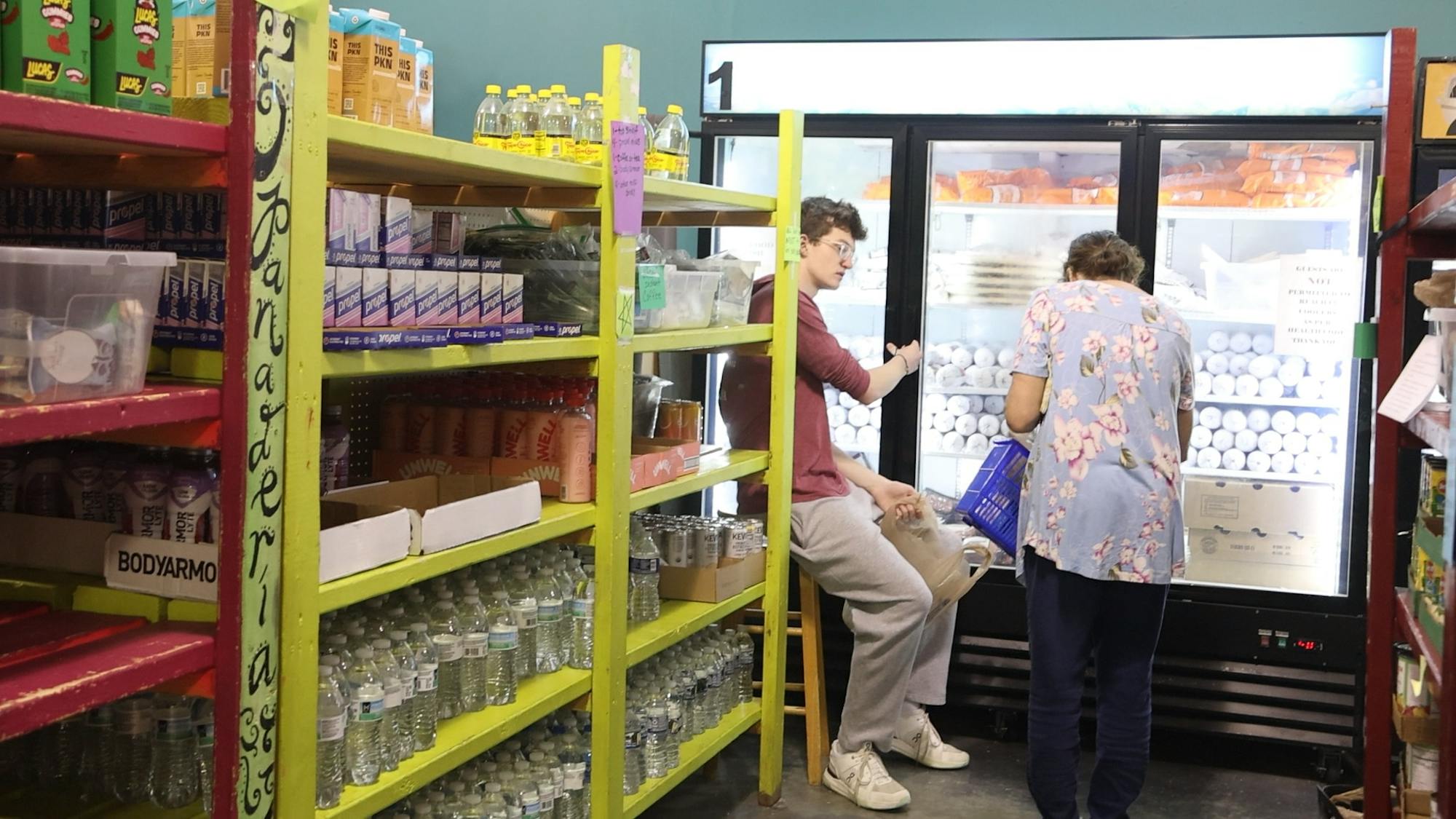
A volunteer assists a shopper near the refrigerated section at Pantry 279 on April 18, 2026, in Bloomington. The pantry has provided food to the community with no ID or proof of citizenship needed.
According to the USDA, an average of 42.1 million Americans received SNAP benefits per month in 2025. When the bill was enacted, the program served roughly 577,054 recipients in Indiana alone.
By February, SNAP participation was down by more than 3.5 million people following the One Big Beautiful Bill enactment, according to a 2026 Center on Budget and Policy Priorities report.
Indiana went down 47,162 recipients.
Erin Macey, director of low-income research and advocacy organization Indiana Community Action Poverty Institute, has been running focus groups with current and recent SNAP recipients.
“They’re worried that they won’t be able to meet the hours requirements because they don’t have control over how many hours they can work — that’s up to their employer,” Macey said.
Macey said her organization has already seen declines in participation and expects the trend to continue.
The law also removed an existing exemption for caregivers with children between 14 and 17, meaning parents and caregivers of teenagers who previously qualified for an exemption must now document 80 hours of monthly work or risk losing benefits.
Daniel Knudsen, a professor emeritus in Geography and former researcher at the IU Food Institute, said the situation is especially complicated in southern Indiana, where grandparents often raise grandchildren whose parents are incarcerated or otherwise absent.
Even for those grandparents who qualify for a caregiving exemption, Knudsen said the burden of proving it can be enough to push older adults out of the program entirely.
“Anytime there’s a barrier like that, there’s a certain number of people who say it’s just not worth it, and those people are gonna drop out of the program,” Knudsen said.
Indiana Senate Enrolled Act 1 layered additional requirements on top of the federal law, tightening asset limits, restricting household income calculations and adding immigration verification requirements beginning July 2026.
Senate Majority Floor Leader Chris Garten, the bill’s author, framed it as a necessary response to “end waste, fraud, and abuse” in Indiana’s SNAP programs.
"We are restoring integrity to the system to ensure that these programs remain solvent and available for the Hoosiers who truly need them, while shutting the door on fraud and inefficiency," Garten said in a Feb. 23 statement.
Emily Weikert Bryant, executive director of Feeding Indiana’s Hungry — an association of 11 Indiana food banks affiliated with national non-profit Feeding America — said the fraud narrative driving the legislation does not hold up.
"The word fraud is being used freely and loosely and interchangeably with errors, which are different," Bryant said. "The problem is the rhetoric has taken that and painted a picture that the neighbors who are using food assistance programs are just committing rampant fraud — and that's absolutely not the case."
By ending Indiana’s participation in a federal option known as expanded categorical eligibility, the Indiana bill lowered the state’s SNAP asset limit — the amount of money a family can save before losing SNAP benefits — from $5,000 to the federal baseline of $3,000. Households with a senior or disabled member face a slightly higher cap of $4,500.
An estimated 3,112 households will be removed from the program statewide due to the asset change, saving the state about $635,000 over two years, according to a fiscal analysis of the bill.
Bryant said this asset limit change runs counter to the program's own goals.
“Many people are one medical issue, one car accident, one something-breaks away from not having grocery money,” Bryant said. “By not having a minimal cushion in a bank account, it’s only setting folks up to fail.”
For households over the new threshold, Bryant said the Indiana Family and Social Services Administration will reach out before the July 1 effective date. Her advice: open the mail and respond, since recipients may have the chance to correct or update their asset information before losing benefits.
Starting in July, household income calculations will also change. To determine SNAP benefits, the state calculates a household's total income based on who lives there and how much they earn combined.
Previously, if an ineligible person lived in the same household as an eligible recipient, their income was previously excluded toward that calculation. Now, it will be, meaning eligible recipients living with ineligible household members could see their benefits reduced or cut off entirely.
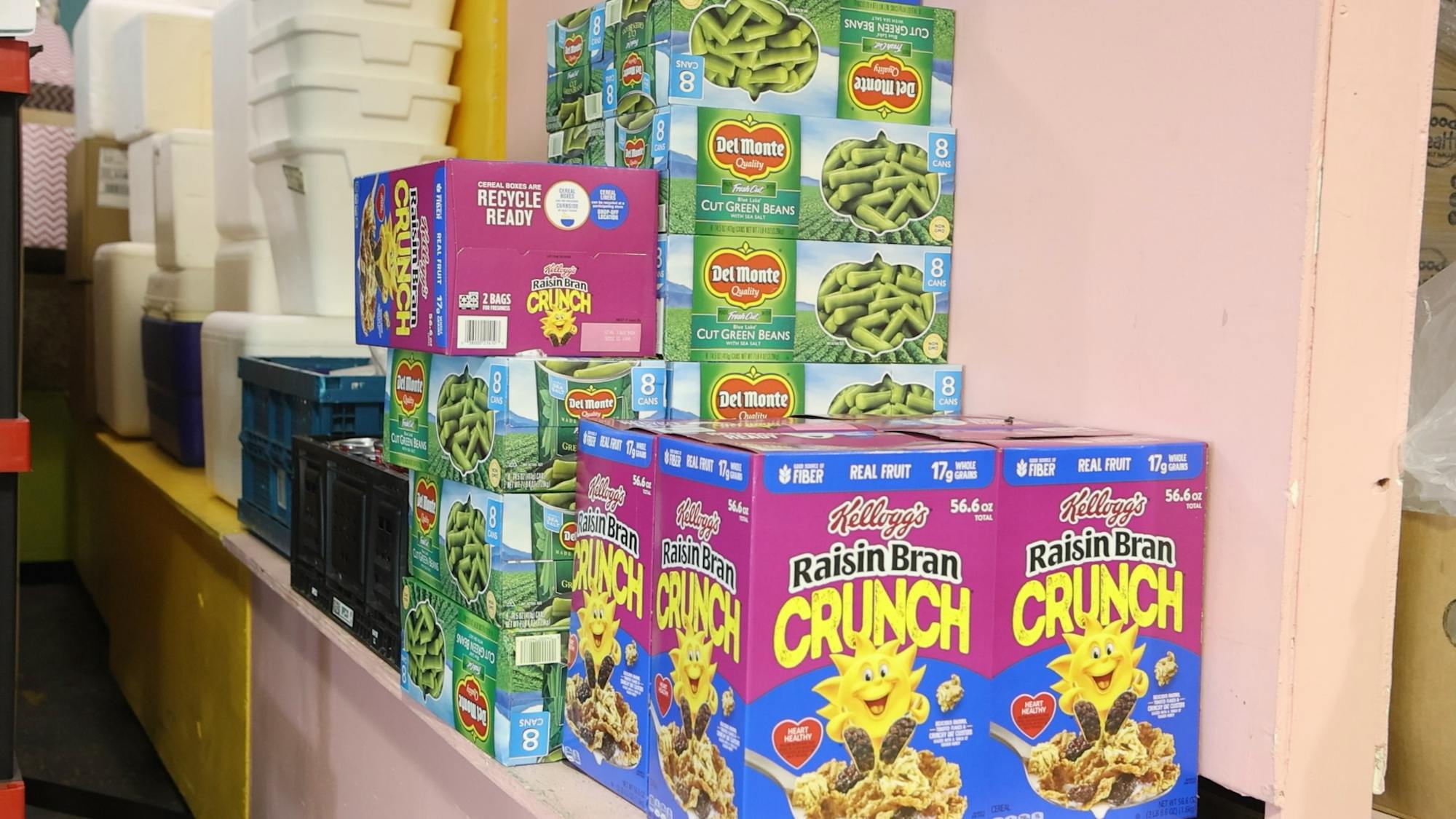
Boxes of canned goods and cereal line the shelves on April 18, 2026, at Pantry 279 in Bloomington. The pantry has served an average of 11,000 people a month across 39 counties.
People can be ineligible for several reasons — program violations, student or work visas or being a permanent legal resident who has not lived in the country for at least five years. In October, most refugees and asylum seekers will now be ineligible for SNAP.
Bryant said the change will affect eligible households in one of two ways, either pushing them over the income threshold entirely and cutting off benefits or reducing their monthly benefit by counting income that was previously excluded.
“It’s punishing U.S. citizens for having someone in their household who is not an eligible person,” Bryant said.
Supporters of the bill did not dispute that the change would affect mixed-status households — that was the point.
“The generosity of Hoosiers should never be exploited by those who have broken our laws to enter this country,” Garten said in the same Feb. 23 statement. “We are drawing a hard line in the sand: Indiana's public safety net is for vulnerable legal residents, not for illegal aliens.”
Applicants must also provide information allowing the state to verify the immigration status of everyone in their household. If the state cannot verify a household member’s status, it is required to forward that information to federal authorities.
Critics say the change pushes even legally eligible applicants away from the program out of fear of exposing household members to deportation risk.
Macey said her organization raised the concern directly with lawmakers, particularly around children who are legally entitled to benefits but may lose access anyway. She said fear may be keeping some people from showing up to focus groups at all.
Chavez said the Hispanic families who had come to Pantry 279 every week stopped showing up in January after immigration enforcement ramped up across Indiana.
“We’ve been really pushing hard in March to let people know, hey, we’re a safe space,” Chavez said.
Food pantries and community kitchens across Monroe County say they are already preparing for an influx of new clients, even as the full weight of changes has yet to hit.
Chavez said Pantry 279 has been serving around 11,000 people a month since July 2025 and doesn’t expect that number to stay the same as the full weight of the changes hit. The pantry offers home delivery — the only one in the region to do so, according to Chavez — in part because so many clients cannot get there on their own.
Donations have dropped sharply while food and gas prices continue to rise, Chavez said, straining both the pantry’s resources and the budgets of the clients it serves.
Macey said part of what makes the current moment especially difficult is the pace of the changes themselves; some have been implemented with little time for people to learn what’s been rolled out and what’s still coming.
For those worried about losing benefits, Goy had a simple message.
“There’s no questions asked, we welcome everyone,” Goy said. “It doesn’t matter the age, it doesn’t matter the reason.”
CORRECTION: This story was updated to accurately state the dates each photo was taken.