
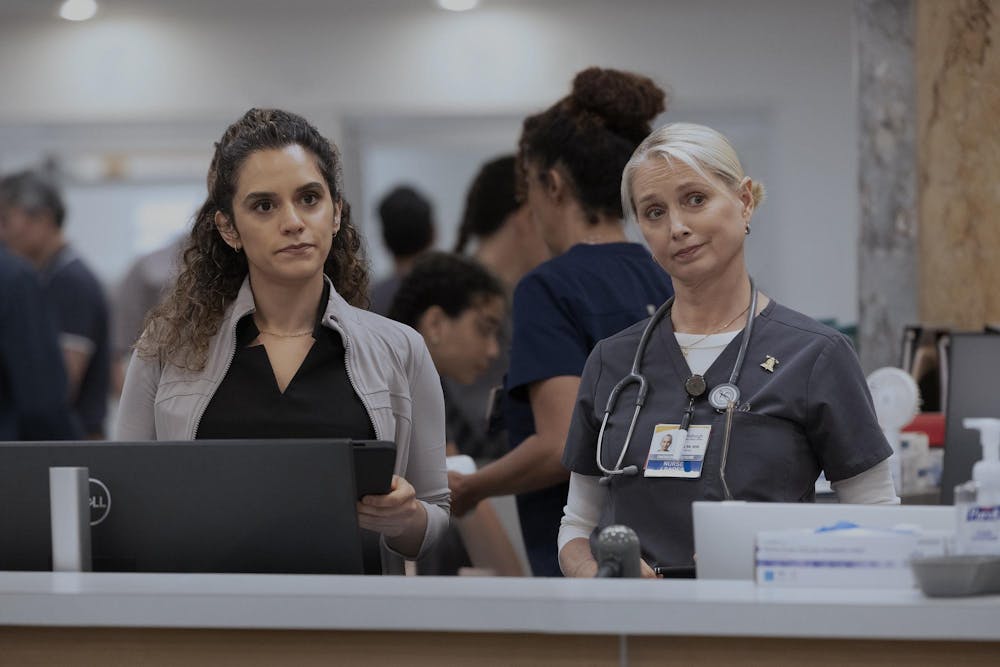
On April 16, my friends and I eagerly sat down to watch the Season 2 finale of HBO Max’s hit series, “The Pitt.” Two weeks ago I had never seen the show. Now, I can’t get enough.
“The Pitt” follows the emergency department staff at the fictional Pittsburgh Trauma Medical Center. Taking place around 10 months after Season 1, the second season of the show occurs on the Fourth of July and primarily focuses on the deteriorating mental health of Dr. Michael “Robby” Robinavitch (Noah Wyle) following the mass casualty event from the first season.
One major detail that makes “The Pitt” stand out in a sometimes oversaturated market of medical dramas is that unlike other shows, which can take place over weeks or months, one 15-episode season of “The Pitt” represents one single, continuous 15-hour shift in the hospital.
While I enjoyed the format overall and thought it presented an interesting new way of understanding characters more deeply, moving from one season to the next I immediately noticed some drawbacks to this “only one shift” narrative starting with the lack of answers about what happened in between seasons.
The time jump helped accommodate the return of characters like Dr. Frank Langdon (Patrick Ball), whose drug addiction was discovered at the end of Season 1 and he was sent to rehab. It also helped make room for new characters like student doctors Joy Kwon (Irene Choi) and James Ogilvie (Lucas Iverson), as well as attending physician Dr. Baran Al-Hashimi (Sepideh Moafi).
However, this gap also makes it more difficult to understand the growth we see in returning characters like Dr. Dennis Whitaker (Gerran Howell), Dr. Trinity Santos (Isa Briones) or Dr. Melissa “Mel” King (Taylor Dearden). Aside from the basic answer at the start of the season that the mass shooting from Season 1 is a traumatic event they’ve all had to deal with, we don’t see much about how that incident affected anyone long term besides Robby.
We can assume that in the time period since the shooting these other characters have started to handle any residual trauma they have surrounding the event. But with so many other storylines taking place and Robby’s mental health at the forefront, a 15-hour shift can’t properly dive into the emotions of other characters which left some, like Whitaker or Dr. Cassie McKay (Fiona Dourif), feeling underdeveloped.
Despite the slight lack of depth I thought was provided for some characters' storylines, what the show did end up discussing surrounding the mental health of medical professionals felt thorough and handled with sensitivity.
Most of this discussion involves Robby, who starts the season planning to go on sabbatical, a three month long road trip on his motorcycle. His coworkers often remind him it’s an unhealthy way to avoid his trauma. The concept of burnout among emergency department healthcare workers is brought up by multiple characters throughout the show and it’s clear that this intense burnout, and possible untreated post-traumatic stress disorder, is plaguing Robby from episode one.
The writing of Robby’s character does a great job at showing the toll his trauma is taking not only on him but on others as well, which is emphasized by the outbursts he has toward several characters this season. It’s Wyle’s acting, though, that really blew me away; it’s raw and emotional and his ability to somehow always be on the brink of tears had me seriously worried for the fictional doctor he was portraying.
This season also dives into the residual trauma of Dana Evans (Katherine LaNasa), the charge nurse of the day shift that suffers a physical assault by a patient in Season 1. The assault initially causes her to leave the emergency department before coming back sometime between seasons.
Violence against hospital workers is an issue rarely discussed in medical dramas, despite the topic having an impact on many hospital workplaces in the United States. “The Pitt” shines a light on this issue through Dana, who shows signs of having PTSD following her Season 1 attack. She becomes extremely protective of the nurses, specifically new nurse Emma Nolan (Laëtitia Hollard).
With her thick Pittsburgh accent, Dana quickly became a fan favorite when the show began. LaNasa has only garnered more praise for her performance as the nurse since Season 2’s release.
The show isn’t all high-intensity drama and ultra realistic emergency procedures though; some of my favorite scenes were the gentle moments between characters.
Digby (Charles Baker), an unhoused patient that comes into the emergency department seeking care for his forearm cellulitis, was an instant favorite of mine. Not only did his storyline help highlight the support system that the hospital provides, especially to the unhoused community, but every scene with Dana and Emma where they show him a little kindness warmed my heart.
While the cases that come in can often be extreme and some characters can feel a little over-the-top, each storyline in this series is filled with heart in a way that gets you invested in the characters whether they appear throughout the season or in just one episode.
In a landscape of overly theatrical medical dramas, “The Pitt” proves it doesn’t need to be flashy to be compelling; it just needs to feel a little real.


