
When Faizan Khan walks in to volunteer at the Crescent Clinic, he can’t help but be reminded of his grandmother.
He thinks of her when he talks to a patient whose first language isn’t English. He imagines what it must have been like for his grandma when she moved to New York City with six kids. And he knows how much easier it would have been for her if she had access to a clinic like Crescent in Indianapolis.
That’s one of the reasons he wants to start another location in Bloomington.
In 2018, a group of American Muslim citizens in Indianapolis founded the Hoosier Crescent Foundation and Crescent Clinic in Indianapolis. The HCF identified a need in the Indianapolis area for free primary care to those who needed it, whether they had access to health insurance or not.
Indiana University School of Medicine student volunteers run the monthly clinic in Indianapolis with the assistance of undergraduates, like Khan. One professional physician is on-property during clinic hours, but the small group sometimes receives up to 15 patients during the clinic’s usual four hours of operation, leaving much of the care up to the students.
Khan started volunteering at the clinic during his freshman year because his older brother was involved. He’s now in his final semester of his bachelor’s degree in psychology at IU Bloomington and hopes to attend medical school.
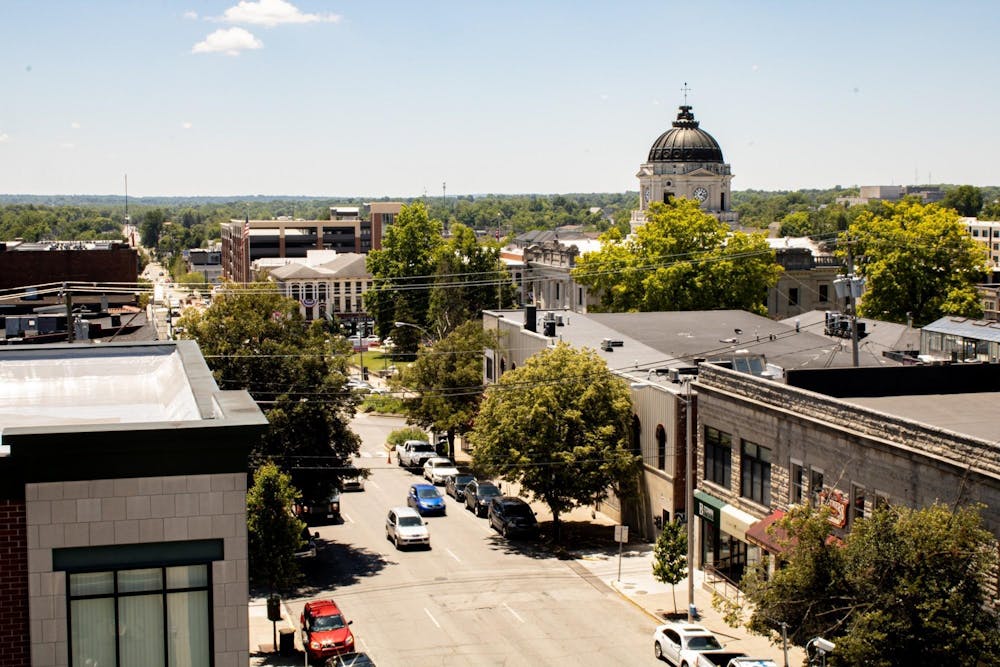
He and fellow senior Yahya Ahmjad hope to start a second Crescent Clinic location in Bloomington, where 30.5% of Bloomington residents are at or below the poverty line.
The two reached out to friends they thought would be interested in volunteering as they try to get the clinic started. The clinic has a group of around 10 volunteers ready for when the Bloomington location officially starts, but they plan to reach out to more students as the clinic’s opening approaches. They have not yet set a specific date for opening but estimate it will be in March.
The Indianapolis clinic allows first and second-year medical students to work closest with patients, with third and fourth-year medical students and undergraduate students offering additional support.
Third-year Indiana University School of Medicine student Khunsha Ahmed is the Indianapolis clinic’s co-president and she has worked with the clinic since her first year of medical school.
“It was such a good experience to get the hands-on clinical face time with patients that you don't always get in medical school,” Ahmed said. “It really helped me to progress, I feel, in my medical training a little bit faster than I would have otherwise.”
Ahmed has collaborated with Ahmjad and Khan as they have worked on the Bloomington clinic’s development by passing on knowledge she has learned leading the clinic.
“I was so excited when they first brought up the idea, because we've always thought about just how we're filling this small gap here in Indy, and even then, we continuously are enriching our outreach resources,” she said. “There's such a diverse population in Bloomington, whether it's like immigrants, refugee or the underserved, so, I'm really excited that that resource is going to exist for them.”
Ahmjad and Khan have planned much of the clinic’s future and are trying to find a location for the clinic. They’ve talked to the Islamic Center of Bloomington and a few churches as potential locations for the clinic’s specialized needs.
“We're just trying to get a space secured where there's enough room to ensure that people's privacy is guaranteed as they might need to have certain things checked out,” Ahmjad said.
Ahmjad and Khan hope to have the location determined by the end of the month. The clinic’s Instagram page will be used for updates and more clinic information.
The two emphasized the clinic is open to all, but the Indianapolis location tends to receive many low-income patients, as well as patients who have recently immigrated to the U.S.
“It will always give me this context of ‘let me ask about this person's living situation,’” Ahmed said. “It's that you just don't know the background of that patient and just how much that informs their health and maybe why they're missing appointments or maybe why they're not able to pick up their medications.”
Khan appreciates how the clinic offers a chance for him and other medical staff to build closer relationships with patients, something they don’t always have the chance to do when working in typical healthcare settings.
“There's always like the discussion between the bridge between the physician and the patient and building that bridge,” he said. “I feel like my role as a physician is: I build a bridge and I walk over.”
Ahmjad and Khan are both members of the Muslim community, something that has motivated their clinic development and ambition to help the community.
“This also has a really strong connection to what is in our religious teachings, where it's like, ‘if you save one person, it's like as if you've saved all of humanity,’ in a sense, and ‘save’ meaning helping them with whatever their needs are at the time,” Ahmjad said. “I think that motivates and drives so many of us.”


