Tarrin Ahmed was 22 weeks pregnant with her sixth child, a boy, when she got the call that she wouldn’t be able to give birth at the hospital where she planned to deliver.
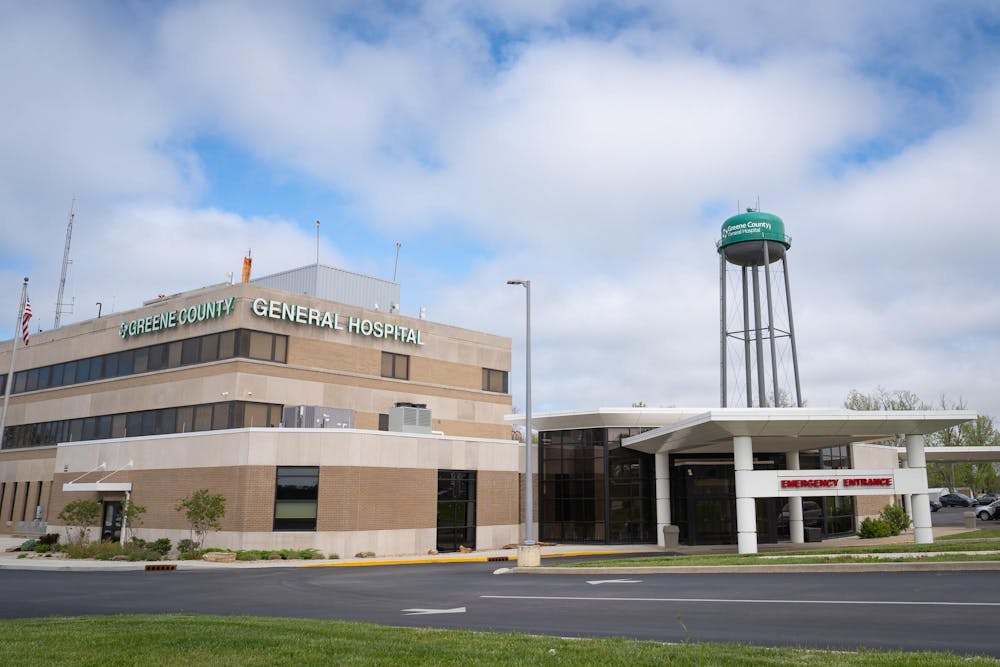
She was shocked. Ahmed delivered four of her children at Greene County General Hospital in Linton, Indiana. She called it the “best option.”
Ahmed’s comfortable there; she has a doctor she likes who helped her through her last two pregnancies, and her mom lives in Greene County, which means she can help take care of the other kids.
But in the middle of her pregnancy, after GCGH announced Dec. 3 it was ending obstetric services Jan. 31, she had to find a different place to give birth.
“I did not know what I was going to do, I had no idea where I was going to go,” Ahmed said. “I was really nervous.”
Ahmed has since found a new hospital, closer to Terre Haute, where she moved nine months ago. Still, she has doubts about the switch.
“Now the change for me is that I’m like, ‘Okay, so how is it gonna affect, is it going to be different?’” Ahmed said. “‘If I have the baby prematurely ... how are they going to react to it?’”
In the Facebook announcement, the hospital said the move came in response to trends impacting rural hospitals everywhere.
Steve Cooke, senior director of public relations at the Indiana Hospital Association, an organization aiming to provide hospitals with leadership and representation, said 15 birthing units have closed in Indiana since 2020. That includes the closure of the one in Greene County. But the trend of OB departments closing is also nationwide, said Andrew VanZee, the IHA’s vice president of regulatory and hospital operations.
VanZee said the closure of OB departments has accelerated over the last five years due to factors like low Medicaid reimbursement — he said hospitals could get anywhere from $2,000-3,000 less per birth for Medicaid patients.
He said to maintain or restart the services, Indiana would have to look into increasing Medicaid reimbursement for OB services and investing in the physician and nursing workforce. Indiana already has poor infant and maternal mortality rates, ranking among the bottom states for both. Maternal mortality rates worsened in Indiana in 2024, and the state’s infant mortality rate is higher than the U.S. average.
Indiana struggles to retain OB-GYNs and faces a nursing shortage. The state also cut funding last year during the budget process for programs that worked to address infant and maternal health outcomes.
In December, Indiana received almost $207 million in grant money from the Rural Health Transformation Program, a federal program set up in the One Big Beautiful Bill Act to distribute $50 billion over five years to different states. The state is using the money in part to strengthen care in rural hospitals and EMS readiness for obstetric emergencies.
GCGH CEO Brenda Reetz said in an interview with the Indiana Daily Student that the trends that led to the hospital’s decision to end OB services included Medicaid reimbursement rates, which haven’t kept up with the cost of expenses, and commercial insurance companies not paying the hospital enough.
“We have to fight for every dollar that we have,” Reetz said. “And it just seems to be getting worse and worse and worse every year.”
On top of that, the hospital was only delivering around 70 babies a year, Reetz said. Columbus Regional Health in Columbus, Indiana, delivers over 1,200 a year.
The low delivery rates made it difficult to replace experienced nurses with inexperienced ones when they retired, since frequent practice is needed to maintain competency. Three employees are currently listed on the hospital’s labor and delivery website as the Perinatal Navigator Team, which the press release said would continue to support patients with education and care.
It wasn’t an easy decision. She said the OB unit has been a point of discussion for the last 12 years during the hospital’s board meetings, but it recently got to a point where staffing the department had become too difficult. Reetz said it was a struggle to go against the hospital’s mission to provide access to care, but they weren’t able to find replacement nurses.
Reetz said they spoke to other local hospitals, including IU Health Bloomington, located around 45 miles away from the Greene County hospital, about whether it could take the influx of patients.
“Bloomington has been very responsive to helping us, and we have a lot of patients that that’s where they’re choosing to go to after this,” Reetz said. “They’ve been just really supportive of helping us work through that process.”
My Linton Clinic, one of the hospital’s four regional clinics that is across the road from GCGH, will continue to provide prenatal, perinatal, postpartum and women’s health care. Reetz said GCGH’s emergency room staff will still be able to deliver a baby in an emergency, but that it wouldn’t be the best option if something went wrong because they don’t have the necessary "next layer of staff" for those situations.
Lauren Powell, a Bloomfield resident, gave birth at the hospital last year. She described her delivery as scary and emotionally taxing due to the birth itself and having to stay in the hospital for a week after, but she became close with the staff. Afterward, she switched everything over to GCGH: her primary care, pediatrician and OB-GYN.
“I did have such a traumatic birth that I took so much comfort in knowing the care that I had received,” Powell said. “And now, you know, that doesn’t exist anymore.”
Powell said she planned to have more children, if she’s able to, but now is without an OB-GYN. She said it would be a minimum of 45 minutes from her house to any labor and delivery department.
After she found out from the Facebook post, Powell said, she sent the post to her husband, mom and friends. She had “a big cry” on the couch.
“It’s a major loss,” she said. “We’re just praying it’ll all work out where it’s supposed to, and thankful that I am not one of the women that are pregnant right now and could have their baby in the next two weeks and don’t know who’s going to be there to deliver it.”