
Indiana’s school choice scholarship program, created in 2011 to give low-income families access to nonpublic education, has become available for nearly all Hoosier families, no matter their income.
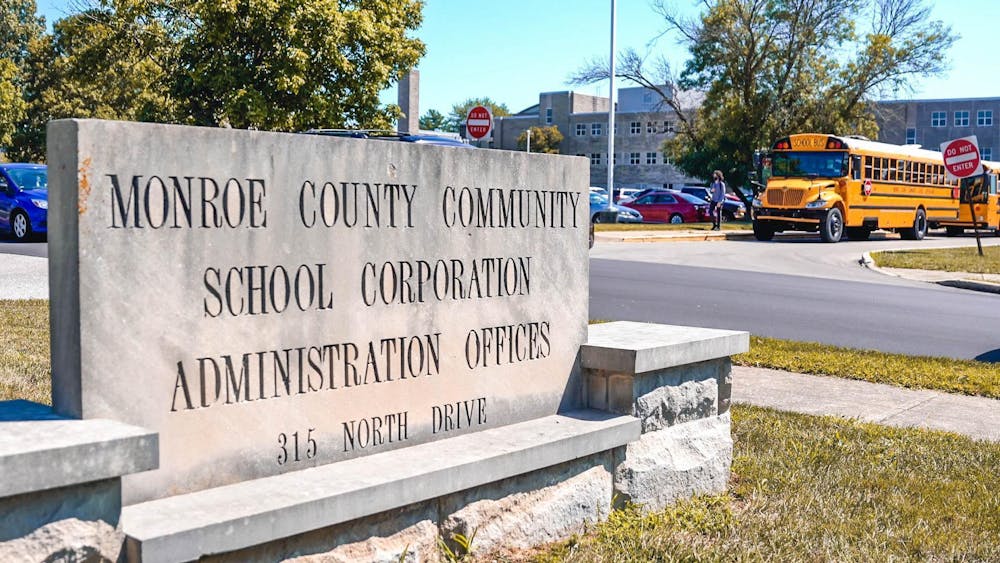
The program has contributed to lowered enrollment at the Monroe County Community School Corporation as the program has become more inclusive.
Since June 2023, school choice scholarship recipients have been required to check three boxes:
- Be legal residents of Indiana
- Be between 5 and 22-years-old by Oct. 1 of the school year to which the student’s scholarship applies
- Have an annual household income that is 400% or less of the income that qualifies students for free and reduced-price lunch, which is around $197,210 for a household of three during the 2025-26 academic year
Beginning July 2026, the program's income rule will be removed, and the scholarship will become available for all Hoosier students who fulfill the first two requirements, no matter their household income.
“There’s been a push in Indiana and other places to let parents choose schools that fit their (child’s) learning styles the most,” said Christopher Lubienski, professor of education policy at IU. “In some cases that works, but in other cases, parents don’t necessarily know what’s the best option.”
In the 2024-25 academic year, about $497.2 million in taxpayer dollars were used for choice scholarships statewide, a 13.2% increase from the previous academic year.
From 2021-24, MCCSC saw a 41% decrease in students who live in the district attending MCCSC schools. In the same period, the number of MCCSC-districted students who chose to attend nonpublic schools using the choice scholarship program increased by 111%.
“This decline in MCCSC student enrollment has a direct impact on the school corporation’s revenue because public schools receive state funding based on the number of students enrolled,” Sarah DeWeese, MCCSC’s director of strategic communications, said in an email. “When enrollment decreases, so does the amount of state funding.”
According to the 2024-25 Indiana Choice Scholarship Program Annual Report, 580 students living in the MCCSC district used choice scholarships to attend schools outside of MCCSC in 2024, which cost a total of over $3.6 million.
Of choice scholarship recipients statewide in the 2024-25 academic year, 47.19% had an annual household income of more than $100,000. This is up from 3.67% in the 2011-12 academic year, the first year choice scholarships were available in Indiana.
Lubienski, who is also a co-author of “The Public School Advantage: Why Public Schools Outperform Private Schools,” said his studies have shown that when controlling for demographic factors and simply testing school effectiveness, students who attend public schools outperform those who attend private schools.
Though the test scores of private school students are generally higher than those of public school students, the wealth and parental education factors that private school students generally benefit from give them a step up, Lubienski said.
When such situational factors are reduced, public school students have better scores. Public schools take kids who start out further behind, Lubienski said, and teach them more than they would learn in private schools.
“It’s like having a higher death rate in an emergency room than in a dentist office,” Lubienski said.
He said the better academic performance of public schools is partially because they are held to consistent licensure standards by the state, whereas private schools have more autonomy and can end up hiring teachers who are less trained in their areas of teaching.
Public schools also often have a broader set of course options and extracurriculars, Lubienski said, while also serving a more diverse population in comparison to nonpublic schools. He said private schools tend to have less standard curriculum as opposed to public schools who adhere to stricter state guidelines.
“From the perspective of current policy, that’s a huge insight,” Lubienski said. “It means that all this money we’re spending on vouchers and charter schools and education savings accounts in Indiana, it’s not very well spent.”
On the other hand, James McNeany, executive director of the Indiana Non-Public Education Association, said he has heard many stories about the school choice program having a “profound impact” on parents and students. Giving students the opportunity to attend a school that feels like the “right fit” can make students enjoy school more and, at times, perform better, McNeany said.
“We never ever advocate to take money away from public schools,” McNeany said. “I also think it’s extremely healthy when the family takes a look at educational choices and says ‘this is the environment that I’d like for my child to be educated in,’ and I appreciate that in Indiana, we give parents that freedom.”
But Cathy Fuentes-Rohwer, president of the Indiana Coalition for Public Education, said school choice does take money away from public schools. She said it converts money that could be used by public schools into funding for people, including wealthy people, to subsidize their children’s private education costs. She said the money for public schools and private schools comes from the same pot.
“Basically, Elon Musk could move to Indiana and all 14 of his children would qualify for a subsidy for their private school tuition,” Fuentes-Rohwer said.
Public education is important, Fuentes-Rohwer said, because it is where kids come together and learn with kids who are different from them in background, belief and more. She noted that in rural areas, public schools can be a top employer.
MCCSC has about 1,500 employees, according to their homepage.
Lubienski said that while school choice makes schooling seem more equitable, it only accounts for the financial part of the bigger picture. Parents who have the ability to take time off work have more time to research schooling options for their children or provide their children with transportation.
Children with parents who don’t have that ability may have just as much trouble attending certain private schools as they would if they didn’t have a choice scholarship, Lubienski said. Private schools can also carefully choose who they admit, furthering the segregation of students as compared to public schools who generally serve all.
While choice scholarships may seem like a nice opportunity for wealthy families, Lubienski said less fortunate families are often left with additional costs.
Editor’s note: Cathy Fuentes-Rohwer is related to a writer currently on staff at the IDS. That writer was not involved in the reporting, writing or editing of this story.


