
Our bodies are finely tuned machines.
We developed through the millennia with survival in mind, and we can handle a lot of stressors.
But we still run into problems. Disease, disorder, general malaise. Our machines can break down if not handled properly.
So we do what we can to maintain our machines. We eat healthily. We try to cut out the bad and focus on the vitamins and fiber.
And every once in a while, someone comes up with a revolutionary new way to eat.
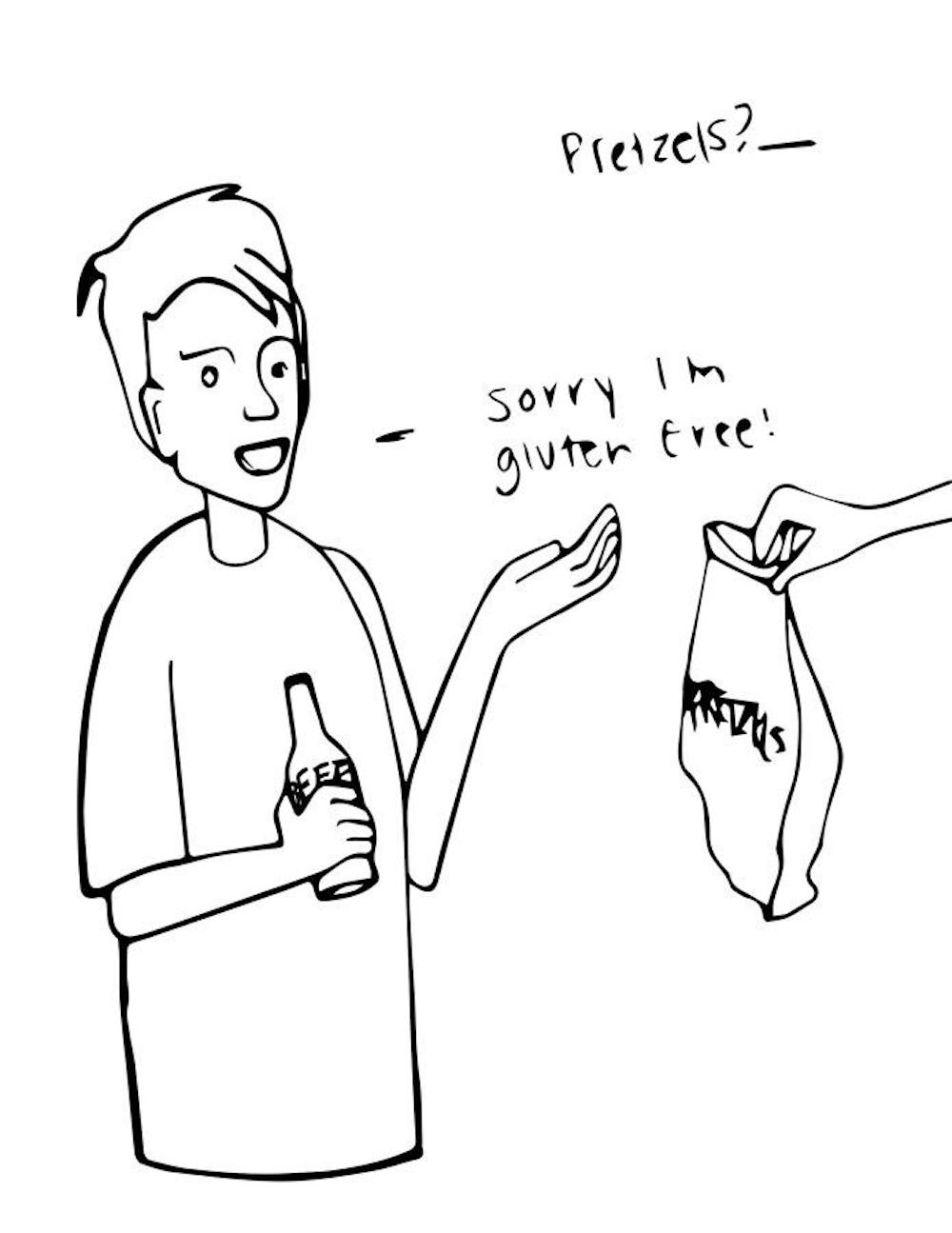
A diet that is guaranteed to make you lose weight, feel better and look amazing. South Beach. Atkins. Paleo. And, most recently, gluten free.
Gluten is a protein in wheat, barley and rye. People who suffer from the autoimmune disorder celiac disease are intolerant to gluten.
If gluten is eaten, they can experience digestive pain, bowel problems, fatigue and anemia.
Gluten can even stunt growth in children. A gluten-free diet is the only medical remedy for celiac disease.
Some say going gluten free benefits more than just celiac sufferers.
People have reported health benefits from cutting out gluten, even when they don’t suffer from a disorder.
It is highly unlikely that cutting gluten out of our diets will affect the majority of the population in a meaningful way.
Celiac disease affects roughly one percent of the United States’ population, so the chances of you having it are slim.
While many people report benefits and are demanding more eating options, there is no published evidence that suggests going gluten free helps the average person.
It seems that gluten is just a diet buzzword that causes us to demand restaurants stop poisoning us with something that isn’t poison.
However, people are still benefiting from cutting out gluten. Even without evidence, some people say they feel better when they decide to cut wheat out of their diets.
The mind is incredibly complex. We still don’t fully understand how it works. The connection between our mental state and our physical well-being is strong.
We know that when we think we’re better, our bodies can make it so.
Diets can follow this placebo pattern. If you believe cutting out a particular food will relieve pain, you relax, your body recovers and,
voilà, the diet works.
Still, to treat celiac disease when it doesn’t exist is a misdiagnosis.
Cutting out gluten unnecessarily could deprive one of essential nutrients. Moreover, it is not treating the root of the problem.
For these real symptoms with no discernible cause, we must dig deeper, to better understand the mind and body and their connection.
We must go beyond trendy quick fixes and get to whatever is truly causing us harm.
But for now, we don’t have all the answers.
So if relief can be found in a fad diet, why stop it?
sckroll@indiana.edu
Diets: productive or pyramid schemes?
Get stories like this in your inbox
Subscribe



