While many of us were sitting around the table ignoring our drunken uncle and stuffing our faces with mashed potatoes this past holiday weekend, millions of families across the United States struggled to buy the bare necessities.
In 2009, as part of President Obama’s stimulus bill, the food stamps program received $5 billion in extra funding in an effort to reduce impoverishment.
On Nov. 1, this extra funding expired, essentially slashing the food stamps budget by more than 6 percent.
This number might not seem significant, but many families in Indiana have had their food budget unexpectedly sliced right before the holiday season.
The Food Bank of Northwest Indiana reported a large influx of people seeking aid from the food pantries and soup kitchens.
In Highland, Ind., during the same time period last year, 230 people received aid from the food bank.
This year, it’s more than 400.
Congress is threatening to cut even more from the Supplemental Nutrition Assistance Program.
House Republicans are calling for cuts as steep as $40 billion.
Senate Democrats offered a smaller concession with only $4 billion in cuts to SNAP.
Any cuts to SNAP, no matter what level, will hurt Indiana families.
Now, the Editorial Board supports the idea that welfare should be used as a transitory tool. It wasn’t designed to be used years at a time unless disability demanded it.
However, we do believe that as long as people are on welfare and unable to find work or unable to work at all, it is immoral and unethical to cut benefits or to allow them to expire.
Jane Dudley, chief deputy to a Trustee of the Food Bank of Northwest Indiana, said she’s had elderly men and women come to the soup kitchen because they can no longer afford to buy groceries.
Diabetics, who require special diets to stay alive, have requested food, unable to afford their special, diabetic foods.
When you cut benefits, people who desperately need food stamps to stay alive won’t just magically pull money out of thin air.
And with employment being so hard to come by, many people just can’t find work that is sufficient to support their families without outside assistance.
Almost 40 percent of fast-food workers are ages 25 or older, more than 30 percent have gone to college and more than 25 percent are parents.
And since $7.25 a hour isn’t enough to raise children, many of these workers are on some form of welfare.
They work and draw benefits because they have no other choice.
There are some problems with the food stamp program.
We recognize them and hope to see reforms made to the system — perhaps an increase in minimum wage, enabling families to gradually transition out of welfare.
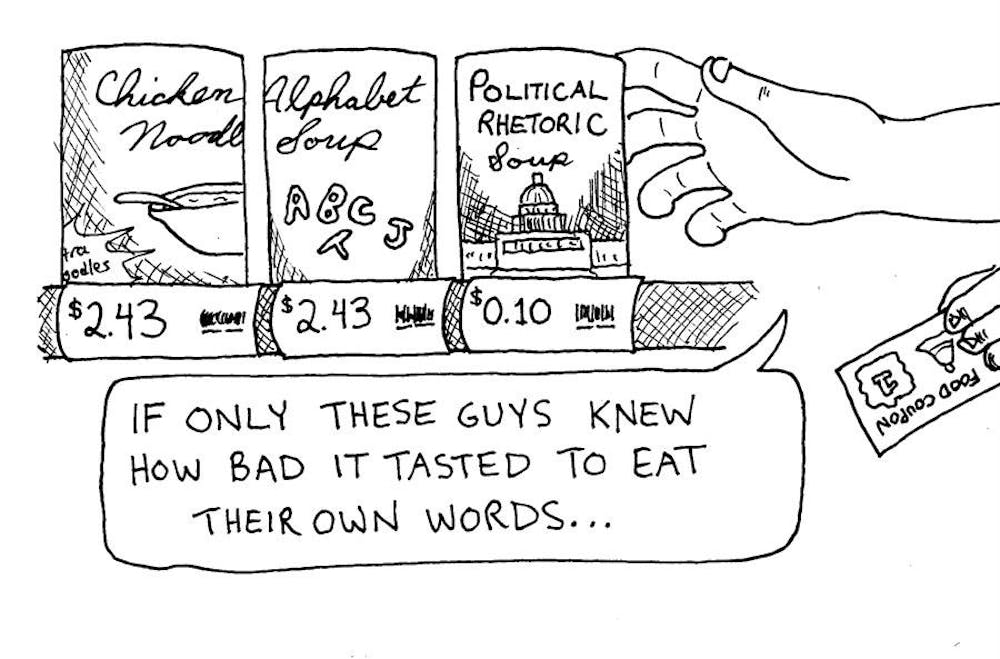
But cutting the food budgets of millions of Americans in an effort to push a political agenda or to make a point is wrong.
Political greed and indifference are starving Americans who need help, and it hurts us all in the process.
— opinion@idsnews.com
Follow the Opinion Desk on Twitter @ids_opinion.
Stamping out a political agenda
WE SAY: Everyone in America deserves a place at the table
Get stories like this in your inbox
Subscribe