
Welcome Week my freshman year was the first time I was called a “fag hag.”
Since then the slang has become familiar — fag hag, fruit fly, fairy princess. Basically, it means I have a lot of gay friends.
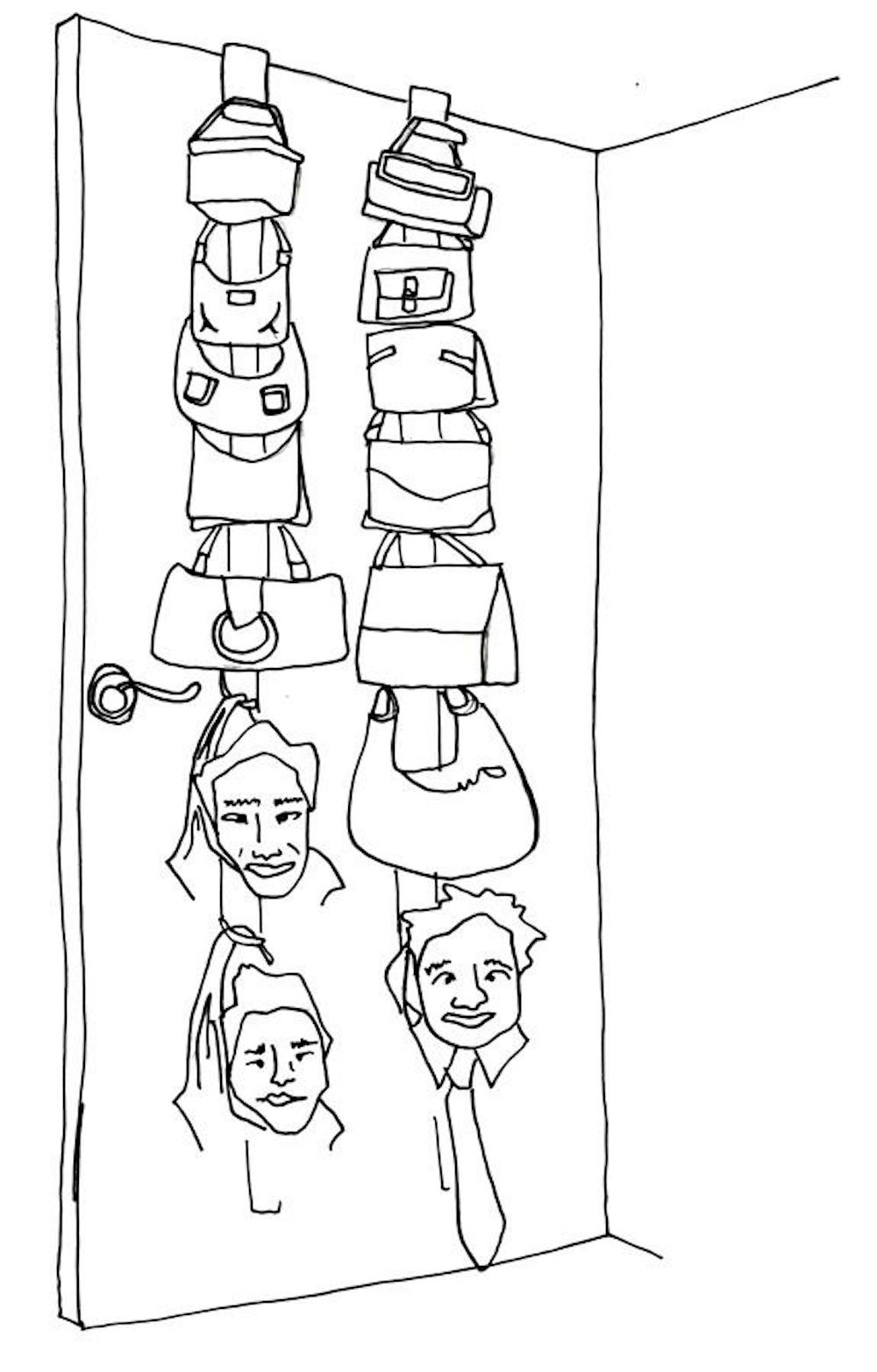
More than that, it implies I use them as accessories.
Last week my fellow columnist Emma Wenninger wrote about how straight women often fetishize gay men sexually.
Liking gay porn and finding gay actors attractive, she argued, is only superficial acceptance of gay men into our lives.
Women searching Craigslist for their new gay best friend similarly miss the point.
What these women really want is not a living, breathing human being, but a walking stereotype.
Someone to take them shopping. Someone to make catty remarks to about that dumb biddie in class. Someone to gossip with about boys.
Someone to interject, “What, what, what are you doing? You stupid bitch!”
To some women, gay men are like the newest designer handbag: he will totally complete her look.
Relying on stereotypes to understand a group is how we dehumanize people. That these stereotypes spark a desire for friendship rather than violence shows marginal societal improvement.
The script that these men are expected to follow is limiting and selfish.
He is imagined as a sidekick. He will help her with heartbreak. He will help her find boots on sale.
As soon as he threatens to step out of the stereotype to become a full-fledged person, she bails.
In her book “Bossypants,” Tina Fey describes her own misunderstanding of gay men when her teen self is faced with the unifying truth of gay men: they want to have sex with other men.
She enjoyed gay men in the abstract, as the stereotype, as the designer handbag, but when it came to supporting her friend in his pursuit of another man, she freaked.
To assume all women who have gay male friends are as shallow as Teen-a Fey is similarly misguided, though.
To call women “fag hags” can be insulting to very real friendships on both ends.
I don’t take kindly to being called one because it assumes the worst of me and my friends.
As a woman, it assumes I am shallow. That each gay friend I have is part of a collection.
For my gay male friends, it assumes they are willing to be collected. That they are willing to act as my accessories.
It implies that these friendships aren’t real and that there is something wrong with me or my friends for partaking in them.
Though many women should be wary of putting their gay friends in a box, questioning the value of a friendship solely because of the sexuality and gender of those involved is just as damaging.
My best gay friends aren’t my gay best friends. They are some of my best friends, period.
— casefarr@indiana.edu
Follow columnist Casey Farrington on Twitter @casefarr.
Gays and the gals who think they're the latest accessory
Get stories like this in your inbox
Subscribe



