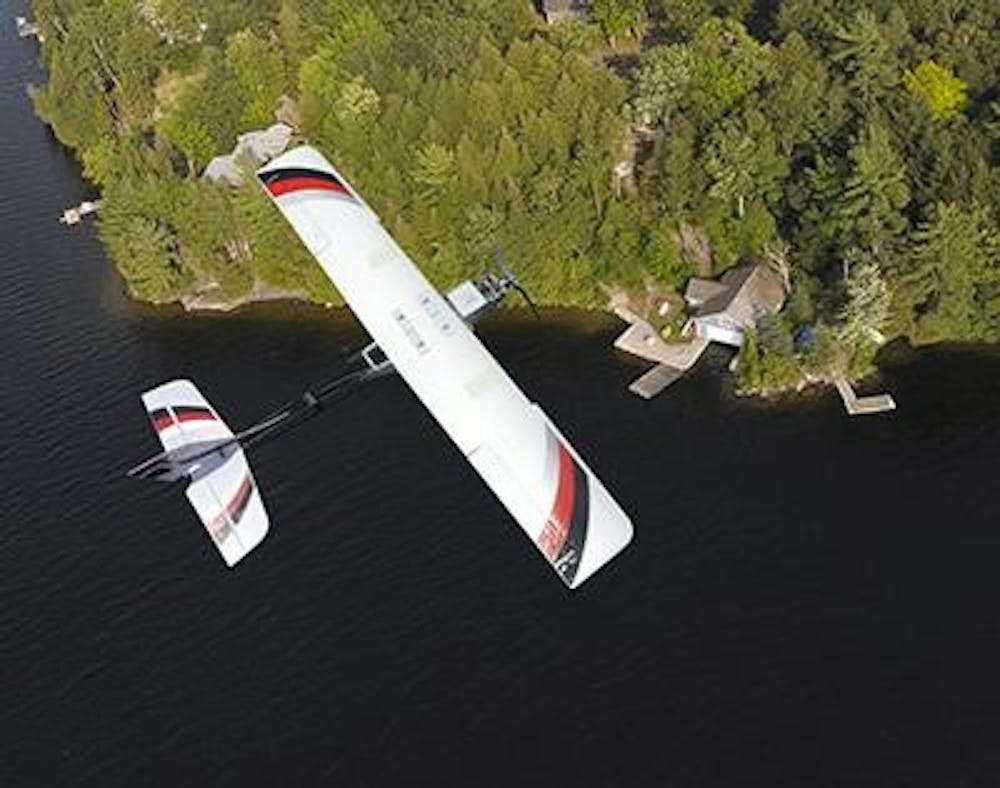
Some drones take pictures of war zones, but one Indiana company is building commercial drones to take pictures of cornfields.
IU’s Innovate Indiana Fund recently invested in PrecisionHawk, an unmanned aerial vehicle technology company with headquarters in Noblesville, Ind.
Innovate Indiana routinely invests in companies that originated at IU to help them achieve commercial success. The group invested in PrecisionHawk because of the growing commercial interest in the use of UAV technology.
“They have a leading technology addressing an unmet need,” Ken Greenfield, managing director of Innovate Indiana, said.
Drones are small, automated planes that have traditionally been used for surveillance in military warfare. However, PrecisionHawk produces and markets the technology mainly to agricultural businesses looking to collect visual data about their land.
Greenfield said he prefers using the acronym UAV for the product because it doesn’t carry the stigma that the word drone does.
“When you use the word drone, people instantly think of the military drones that are flying over Pakistan and shooting missiles at people,” Greenfield said.
PrecisionHawk UAVs provide airborne intelligence through high-resolution images that can aid in farming processes and plant research, among other things. PrecisionHawk also serves companies in areas such as livestock, infrastructure surveying and first response emergency management.
The use of drones and UAVs have been the source of national concerns over how private companies use data collected from individuals. But IU law professor David Fidler said PrecisionHawk’s UAVs are not being operated for law enforcement surveillance or personal data collection.
“The services PrecisionHawk sells do not, and probably will not, operate on the scale of the big information technology companies that are embroiled in privacy controversies about how they manage personal data on customers,” Fidler said.
Fidler said PrecisionHawk seeks to offer productive civilian uses for UAV technologies, which he views as a growing market.
The company aims to help farmers someday be able to toss the UAV into the air and see it return with information from their fields, Lia Reich, the company’s media representative, said in an email. Farmers use PrecisionHawk technology to survey their own land, not someone else’s.
“This information can be used to help them increase their crop yield, guide their combines more accurately, better predict seasonal outcomes, have the information to avoid drought, help the farm avoid diseases or pests — even identify farmable land of the future,” Reich said.
Greenfield said the technology could greatly benefit the agricultural industry because it would help large industrial farms treat specific areas differently, a strategy called precision agriculture. He said this prevents superfluous use of pesticides or fertilizers.
“The idea is to be more precise with the application of your expenses,”
Greenfield said.
The Federal Aviation Administration is currently reviewing its regulations regarding the commercial use of UAVs and plans to unveil a new set of rules this year. According to a press release, only certain government-approved organizations currently have permission to fly UAVs.
“It’s not that you can’t fly them, it’s just that it’s more restrictive,” Greenfield said.
IU is not the only university that has shown interest in UAV technology. In 2012 the FAA released a certificate of authorizations list that revealed which organizations had applied for the use of drone technology. One-third of the applicants were colleges and universities.
Greenfield said he hopes the regulations will be loosened for the benefit of multiple industries, not just agriculture.
“We think that a modification of the regulation is in everybody’s best interest,” Greenfield said.
Follow Sarah Zinn on Twitter @zinner12.
IU fund invests in commercial drones
Get stories like this in your inbox
Subscribe