The average student viewed last week’s strike as the product of a bunch of dirty hippies and lazy cheats looking to cut class.
We’re not denying the presence of those raffish Jason Bateman look-alikes or their need for a bath, but most had decent goals and were not only devoted to their cause, but justifiably so. They were informed. They understood a two-day strike wasn’t going to immediately upheave the educational system and that legislative action must take place at a state level.
But they also understood that standalone pickets and marches outside of the state house are constant and yield no results. Nonviolence is what we should be using, but it isn’t enough.
Nonviolence makes people nervous. It’s a tangential example that people are displeased and being progressive. It seems preemptive for larger action. People expect riots. But alone, nonviolent tactics aren’t seen as the methods of culture-changing individuals. They’re too commonplace and non-sensational in this society to accomplish anything substantial.
On the other hand, being destructive is counterproductive to a cause. For people who aren’t sadistic mass-murderers or Plankton of Bikini Bottom, it often takes away the inclination to contribute to a protest’s momentum and support.
Not many people want to be associated with violence, especially with today’s eternal life and dissemination of social media.
Authoritative figures aren’t naïve with respect to this fact. There is incentive to spice up a negotiable meeting with accounts of threats and physicality when it can manipulate the public’s perception.
It’s very easy to write off protestors as uninformed and opportunistic hooligans trying to topple cars and burn buildings.
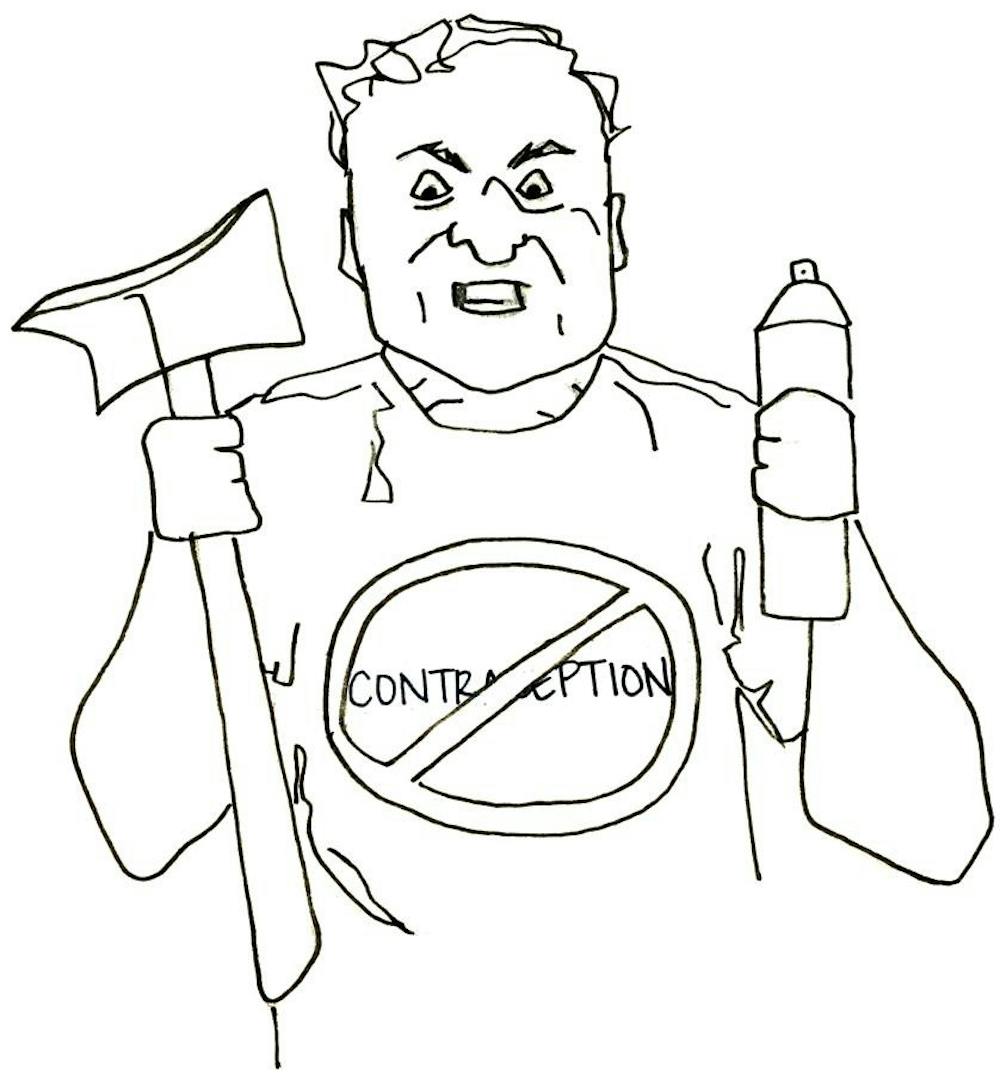
For instance, a drastically alternative form of protest was also performed Thursday wherein a man was apprehended on charges of battering the doors of Bloomington’s Planned Parenthood with an axe. He claimed to have done so on behalf of aborted fetuses, but whether or not his cause was valiant is overshadowed by the danger of his actions.
Nonviolence is therefore an important step in inciting passion, and it’s necessary that it’s not connoted as desperate or pathetic.
It’s an effort to pull the world in around the protestors rather than lash out at it.
It’s proof resistance to imposed limits can take on bodily emotions and sentiments without wielding a weapon.
Yes, boldness is valued for the sake of visibility.
But the influence of last week’s protest reached a small school in Turkey, where it garnered interest, and universities locally and regionally within the United States were prompted to consider what THEY could do to better there own plights.
The result? An opinion was made known and additionally that people were going to assert it.
But nonviolence is so societally denigrated and misunderstood that tiny acts can’t currently stand to actually affect legislative change. It is, however, motivational for wider discourse and collective action. It gets the public thinking change is possible, even if it’s not imminent.
If it’s going to have a stronger effect, it has to be respected. If it’s going to be intensely meaningful, it can’t be thought of as old-fashioned and impractical, or a label of people’s cleanliness.
Finding the line on civil disobedience
Get stories like this in your inbox
Subscribe