We need to talk about our depression.
And our anxiety, our bipolar disorder, our schizophrenia, our compulsions, our PTSD and all of the other spectrum mental illnesses we have.
I’ll start.
My name is Kelly Fritz, and I’m suffering from depression (although you wouldn’t know it from talking to me).
And yeah, it sucks.
On the bad days, it’s often difficult to leave my room, much less my house. I’ve always been motivated, active and involved, and suddenly that spark, which makes up so much of who I am, is gone.
On the bad days, I can feel its absence. There’s a hole inside of me, and I don’t really know why it’s there or how it got there or how to fill it back up again. And the accompanying sadness is like a cinder block chained to my ankles. I can sit down for a while and take the weight off, but I know that if I want to go anywhere, I’ll be dragging it behind me, heavy and conspicuous.
Before you ask or send me well-intentioned emails, yes, I’m treating it. And there are good days mixed in with the bad. But mental illness isn’t like strep throat. You can’t always cure it with a prescription and a nice person to talk to.
No one wants to admit to having any of these mental illnesses, even though we, as college students, have more of them than ever, and we, as a society, are much better at accepting them than we once were.
We preach in newspapers and on blogs about maintaining mental health, urging people to get the help they need. But the first step to getting any kind of help is admitting something is wrong.
It’s the scariest part, because as much as we like to talk in the abstract about mental health issues, we live in horror of them happening to us. No one speaks up, so we all think we’re the only ones suffering.
When we talk about mental illness, we hear people around us expressing a mix of concern, morbid fascination and unwitting smugness.
“Thank god I’m not affected,” our peers seem to be saying. “Sucks for you.”
Perhaps without even meaning to, they look at those with acknowledged mental illnesses as lesser. Suddenly, it seems mental illness has made its victims into lesser people than they once were.
If we’re struggling, we don’t want to tell people around us for fear of becoming victims of our own honesty. Ironically, this fear of telling people makes life worse for us. It’s a vicious cycle.
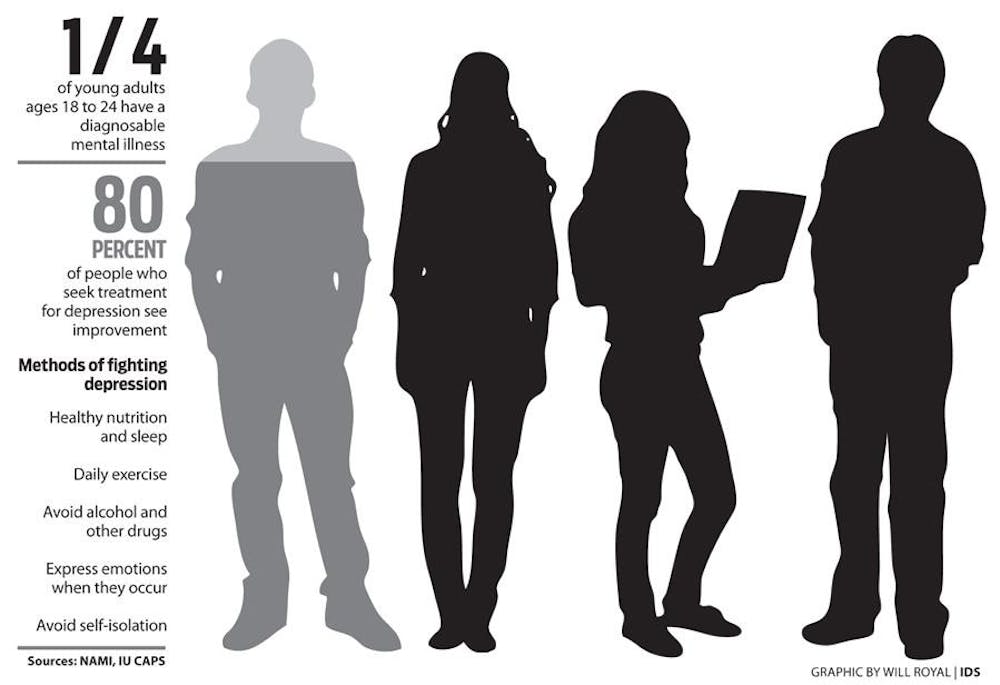
Statistically, more than 50 percent of all students have felt such overwhelming anxiety that it became difficult to function. One in four college students have some form of mental illness. Forty percent of students with mental health issues don’t seek help for them, and 57 percent of those suffering don’t seek help or accommodations from their schools.
The No. 1 reason students cite for not coming forward?
Concern of stigma.
Even though there are so many of us sharing the same problems, we’re afraid and embarrassed. We don’t want to tell professors we missed class because we were home, crippled with anxiety, physically unable to go. We don’t want to tell employers we had to skip a shift because we were having panic attacks. Sick days are fine, but if you tell someone you need a mental health day, they’ll probably laugh.
But mental health is no joke — it’s just as uncontrollable and unpredictable as physical illness. Those with mental health problems are not weak or lazy or crazy. They are suffering, just as those who have more obviously physical ailments are suffering, through no fault of their own.
And, when silenced or left untreated, mental illness can be just as deadly as physical illness. Suicide is the second leading cause of death on college campuses, outnumbered only by car accidents. Suicides are disproportionately high on college campuses when compared to the general population, and they aren’t declining. Moreover, many other causes of death and injury among college students can be directly traced back to unaddressed mental health issues.
If we want to help ourselves and our peers, it’s time for all of us to speak up.
Let’s talk about mental illness in more than just the abstract. Let’s examine IU’s policies for handling it in the academic sphere and let students know where to start when trying to address it. Let’s stop treating it like a dirty little secret.
Let’s examine how we treat our peers who are suffering from it. Let’s make an effort to stop defining people by their illnesses.
Let’s all challenge our ideas of how to deal with the growing problem of mental illness on our campus. Let’s create a true culture of care, where those who are suffering aren’t afraid to come forward with their problems, without fear of retribution, marginalization or judgment.
I’m sure I’ll be judged for writing this. People I know will see me and awkwardly smile, not knowing what to say. But if you see me, or anyone else you know who’s struggling, don’t pity or condescend.
Your support is appreciated, but the best way you can show it to us is not to treat us as lesser because of our illnesses. It’s a tricky balance to keep, but I have faith in all of you.
If you’re a friend, keep being a friend. If you’re a professor, be understanding when we try to address these difficult topics.
Whoever you are, if you can see us floundering, be kind and offer support. If we come to you, listen. You can’t solve our problems, but your nonjudgmental understanding can make them a little easier to cope with and can help us be more comfortable breaking the silence.
Change your attitudes to make our campus and our town a safe space.
If you’re fighting your own battles against mental illness, speak up. Join me, and don’t feel ashamed. It’s a little scary at first, but we’ll be fighting either way. I’m sick of hiding, and I bet you are too.
I have depression, but I’m not a broken person for it. I’m just sick. I’m trying to get better, but I can’t do it on my own.
Help me and all of the people on this campus who are silently suffering.
All you have to do is show a little care.
— kelfritz@indiana.edu
Creating a real culture of care
Get stories like this in your inbox
Subscribe