
South Bend is a not a site one is likely to think of going through a green revolution. Nevertheless, dozens of Unity Gardens have emerged in the community promising both sustainability and neighborhood revitalization.
These gardens are loosely connected through a non-profit organization, Unity Gardens, Inc., and now appear in the poorest and in the wealthiest areas of the city alike.
What makes this a particularly heartening example of sustainability is that the gardens serve human beings, not the other way around.
These green spaces are not examples of “going green” for the sake of “going green;” rather, they perform a specific and necessary function in a community trying to get back on its feet.
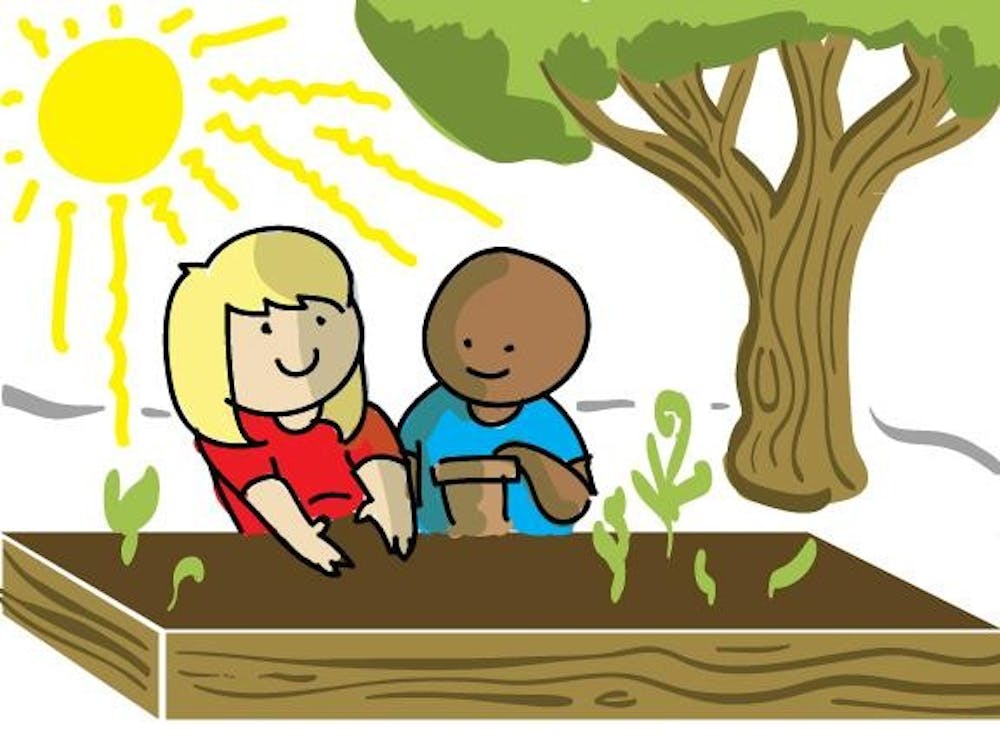
The gardens are gathering places for people who would otherwise never talk to one another.
The hope is that strengthened relationships with neighbors, solidarity between other neighborhoods participating in the Unity Gardens, access to free, healthy food, and training in skills such as planting, harvesting, canning and processing of vegetables will increase the quality of life for all involved.
The Methodists, Catholics, Jews and Presbyterians in town sponsor gardens, as do hosts of grade schools and even businesses and hospitals. Ordinary people are working together to fill once-empty lots with zucchinis to provide fresh foods in poor areas and to heal racial and social divisions.
Recycling, or even working in a Unity Garden, is a meaningless act without bearing in mind that it is a means to an end: human flourishing. It is not an end in itself. Outside this context, the green movement is incoherent at worst and silly at best.
Why maintain the earth for its own sake? Who cares? It should be for neighbors, for friends, for enemies, for our towns, for love of one another.
As humans are separated further from working the land, we lose the skills necessary to provide for ourselves and for our communities. We rely more and more on agro-business and commercialized produce than our own sweat.
This is unnatural. Humans thrive psychologically, socially and spiritually if they can work creatively for themselves and for others.
Without this appropriate ordering of goods, human persons live in servitude to the green movement rather than making it work for man.
South Bend found the correct arrangement, and it is flourishing. I have worked in these gardens myself and watched neighbors harvest together, weed together and
talk together.
Unity Gardens lives up to its name.
— Mthomas5@indiana.edu
South Bend: green and proud
Get stories like this in your inbox
Subscribe



