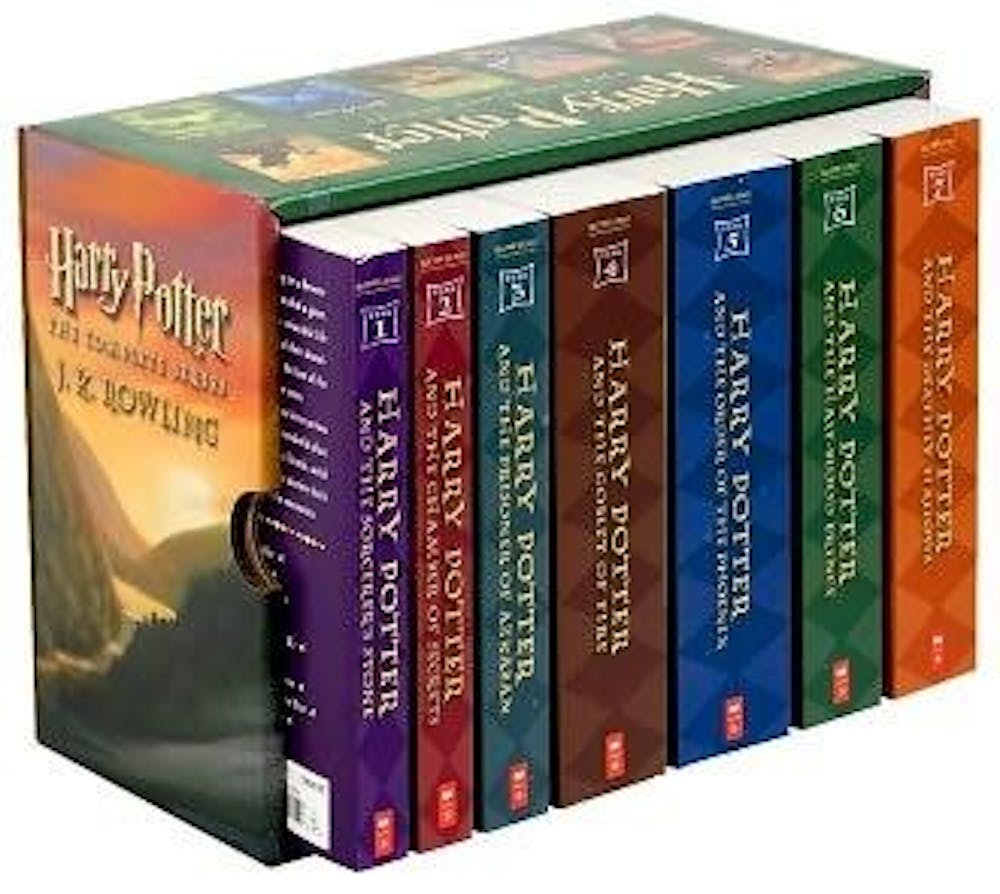
The novels were obviously the beginning of the Harry Potter phenomenon, but thanks to the simultaneous releases of the films, sometimes it’s easy for their textual partners to get lost in the shuffle. Here’s our best attempt to rank the novels. (Be easy.)
1. “Harry Potter and the Goblet of Fire”
Conceding that it’s nearly impossible to rank the books, “Goblet of Fire” has everything that would put a book at the top of said list: understated romance, high stakes and incredible action sequences.
Thanks to the Quidditch World Cup and Triwizard Tournament, we were able to peer even further into the wizarding world. Darker shifts in tone and themes made it a turning point in the series, from children’s entertainment to literary epic.
As people’s Death Eater pasts caught up to them, it was becoming increasingly difficult to tell who to trust. Oh yeah, and the Dark Lord returns; NO BIG DEAL.
2. “Harry Potter and the Deathly Hallows”
It’s not an enviable task, polishing off something as widely successful and beloved as the Harry Potter series. Fan-boy accommodations often clash with artistic vision and make for a difficult reconciliation, but “Deathly Hollows” triumphs in both realms.
J.K. Rowling takes risks and walks that fine line for the entire novel, complete with joyous highs (the Boy Who Lives!) and painful lows (Fred doesn’t), concluding the series in a way so utterly satisfying that it was hard to be mad it was over.
That is, until you read that awful epilogue — can you say “fan fiction”?
3. “Harry Potter and the Prisoner of Azkaban”
Normalcy is not a quality often associated with Harry Potter — let alone in a positive connotation. However, the chance for Harry to have some semblance of a life with his father’s long lost best friend Sirius Black propels the series to uncharted, hopeful sentimental territory. At least until Harry is forced to use time travel (thank you, Hermione, for being such a bookworm) to counter the betrayal of Peter Pettigrew and save Sirius’ life.
4. “Harry Potter and the Chamber of Secrets”
Time has served “Chamber of Secrets” awfully well — rereading it with the context of what a horcrux is, Ginny Weasley’s schoolgirl infatuation with Tom Riddle’s journal seems even more twisted.
Speaking of Riddle, this novel marked his debut to the series as Rowling began to construct Voldemort as much more than a character who couldn’t be named.
5. “Harry Potter and the Sorcerer’s Stone”
It’s difficult to have the book that started it all so far down on this list: It’s not a knock on its quality as much as recognition of all the introduction and character foundation Rowling had to establish in this debut.
But the luster of Rowling’s fantasy world was brand new, and it was brilliant, along with enough surprise and (literally) magic to make it stand up as so much more than a catalyst.
6. “Harry Potter and the Half-Blood Prince”
Cue the slow motion, the “Noooooooo” music and Dumbledore falling from the tower. If “Order of the Phoenix” didn’t finish the tonal shift that “Goblet of Fire” began, then “Half-Blood Prince” was an emphatic answer as to the direction of the series.
Aside from the poignance of Dumbledore’s death and the importance of Harry’s coming of age story, there wasn’t enough to make up for Ron and Hermione constantly bickering like a married couple and that stupid lucky potion device.
7. “Harry Potter and the Order of the Phoenix”
Not that implicit political commentary isn’t allowed, but the politicization of “Order of the Phoenix” took a little bit of the fun away, no?
The Aurors and the Ministry of Magic’s intervention at Hogwarts had people throwing around all kinds of theories, but the highlights were elsewhere.
Delores Umbridge was a phenomenal new villain who helped Harry start to rid himself of his teenage angst (not to mention another awesome battle sequence to end it — RIP Sirius Black).
Ranking the books from top to bottom
Get stories like this in your inbox
Subscribe