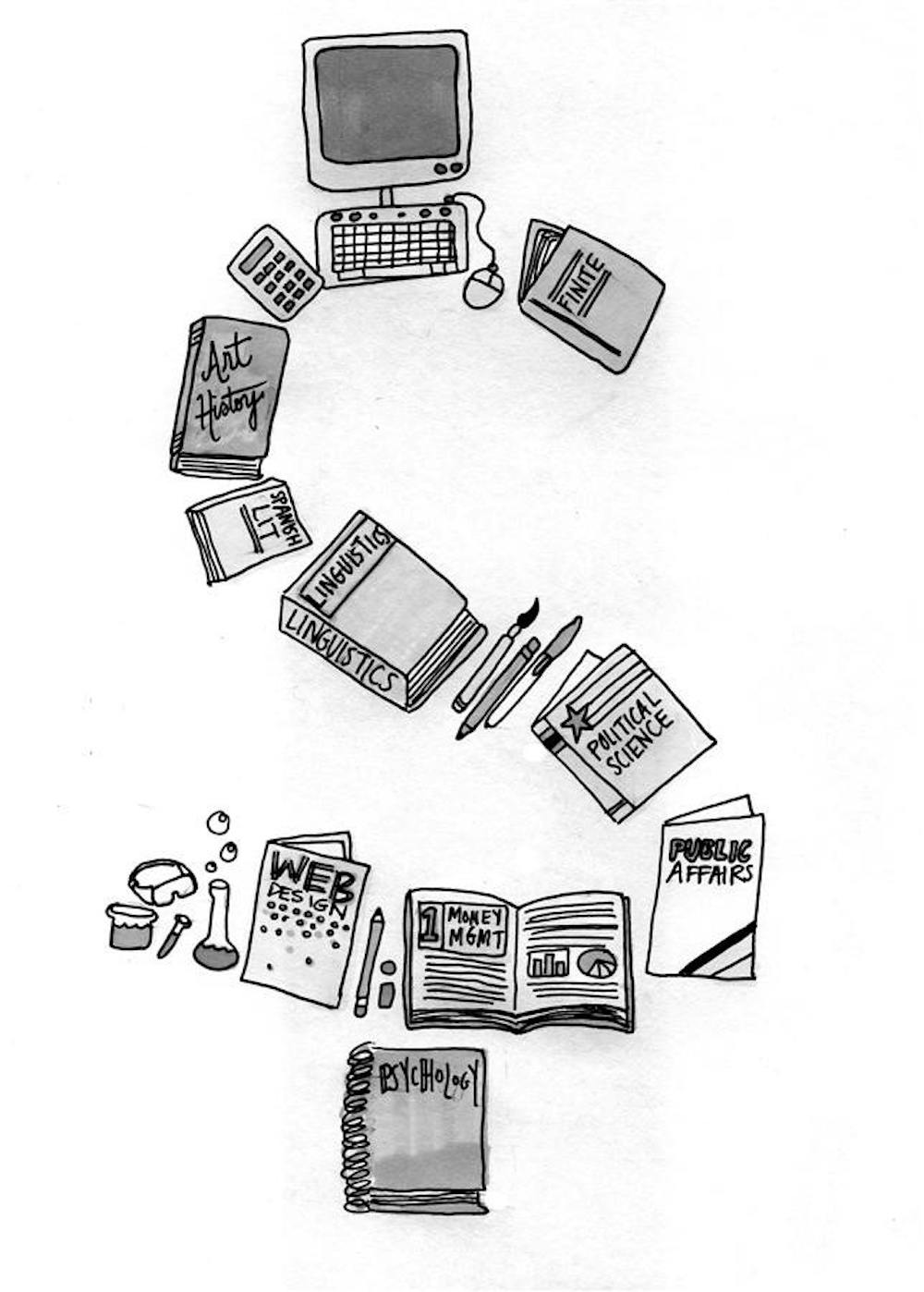
College textbooks are expensive.
University students are a captive market for textbooks. At a regular bookstore, if a book is too expensive, it likely won’t be bought. At a college bookstore, however, students are required by their professors to purchase books for their classes regardless of the exorbitant price tag that may be printed on the back of the book.
They either have to dig into their wallets and pay an inflated price for a book that isn’t worth half of what it costs or not buy the book and suffer educationally.
Students don’t have a choice but to be ripped off.
Students need protection from textbook companies taking advantage of them. Unnecessary textbook industry practices are designed precisely to make them pay more than they need to for books that they are required to purchase.
In short, we’re all being scammed.
On average, textbook companies come out with a new edition for every textbook they offer every three years.
Many of these revisions are entirely unnecessary, adding no new information to textbooks in fields like geography or mathematics that have had few or no developments since the last edition.
It is highly doubtful Antarctica has moved too much since the last edition of an atlas came out, and yet atlases are updated about once every three years along with other college educational materials.
With every new edition of a textbook, publishing companies increase the cost of the book by an average of 45 percent over the cost of the older version of the same textbook, even if no new information has been added.
If these revisions were actually adding information from new developments in the fields these textbooks address, these expensive revisions might at least have some benefit.
But more than 75 percent of university faculty surveyed nation-wide in 2004 indicated that they found these revisions unjustified and unnecessary at least half of the time.
Basically, we’re paying more for the same old information in the last book.
Another questionable tactic that publishing companies use to force college students to pay more for their required educational materials is the process of “bundling” expensive extras like DVDs and CDs with their textbooks. More than 50 percent of college textbooks in the United States are “bundled” in this manner.
This allows the publishers to justify charging even more outrageous prices for books simply because it comes with something extra. Something extra that 65 percent of American collegiate faculty members indicate they find “rarely or never” useful in aiding education in their classrooms, according to a 2004 survey.
Students, a market who are required to buy textbooks, need some sort of way to limit these unfair practices. Professors should not be forced by the publishing companies into requiring a new edition for their classes when the information presented in the older, less expensive version is equally applicable and educational.
And students should not be forced into paying more for a book because it has extra materials “bundled” with it that they never use.
There are multiple ways that universities, faculty, governments and individuals could avoid paying these inflated prices for their supplemental educational materials.
Universities and their faculty could be pioneers in the use of E-books, which are a fraction of the cost of traditional textbooks and often come with more interactive educational features that are actually useful at no extra cost.
E-reserves, a system that Indiana University already has in place, could be the perfect jumping board for a University-wide E-book program. IU could easily encourage its professors to use this program for sharing their chosen textbooks with their students and save individual students hundreds of dollars in the process.
Governments could stipulate that textbook prices may not be unnaturally inflated and could encourage the use of used and unbundled textbooks.
The governments in Canada and the United Kingdom have programs that limit the cost of college textbooks, and they’ve gotten significant results.
A textbook that costs $100 in the United States costs less than $55 in the UK and Canada, despite being exactly the same except that they spell words like color “colour.” Individuals can also beat the system by buying old editions of used textbooks online.
The vast majority of the time, old editions of textbooks have almost exactly the same information as the new editions except for perhaps a new preface or introduction and differing page numbers. Students, of course, should verify first that the old textbooks really do have the same information before purchasing old
editions.
But the inconveniences associated with older editions are minor compared to the potential benefits of saving literally hundreds of dollars per textbook. Old editions often cost less than $10, while the new editions can be more than $200.
The savings are definitely worth the small inconvenience of having to figure out the page numbers on the syllabus correspond to those in your older edition of the book.
A captive market should not be left exposed to the whims and fancies of a profit-seeking group. Publishing companies are understandably taking advantage of students — their goal is to make the maximum profit that the market will allow, and it makes sense for them to get us to pay hundreds of dollars for textbooks.
But when students — the consumers of publishing companies’ products — are effectively obligated to pay whatever the companies charge, the market is not free and is not fair.
E-mail: zammerma@indiana.edu
Textbooks: Held captive by publishers' prices
Get stories like this in your inbox
Subscribe