The FBI searched two Indiana University biology professors’ labs late last year, according to four people familiar with the situation. The reasons for the searches are unknown.
An FBI Indianapolis spokesperson said the agency doesn’t “comment on ongoing investigations.” IU also would not answer questions about the searches.
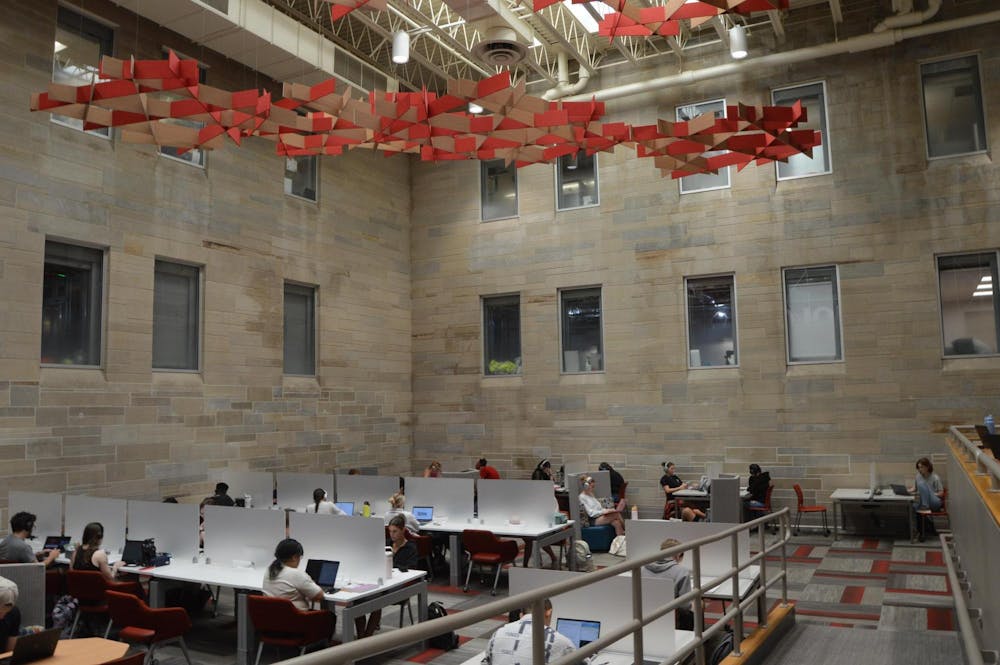
Rumors of the searches, which occurred in IU Bloomington’s Biology Building and Myers Hall, have spread widely among researchers and faculty. So has a chilling effect, especially as investigations of Chinese researchers in the United States have escalated under President Donald Trump’s administration.
“All the international students are now worried that they're going to be the next to be targeted or scrutinized or something,” IU biology professor emeritus Roger Hangarter said.
The FBI’s searches follow the November arrest of IU researcher Youhuang Xiang, who the U.S government accused of smuggling plasmid DNA of E. coli bacteria in clothing. He was charged with conspiracy to commit smuggling, smuggling and making false statements.
The bacterium E. coli is a common host for plasmid DNA, which is used to carry genes scientists are studying. Plasmid DNA, located outside of the bacterium’s chromosome, replicates independently of that chromosome. That’s useful for researchers, who can splice genes of interest into bacteria for replication. The strains of E. coli used for replication and splicing are almost always harmless.
Hangarter, who was the biology department’s director of graduate studies from 2007 to 2016, has interacted with hundreds of graduate students. He said sending plasmids is a common practice among researchers.
Xiang’s indictment says an individual in China hid the plasmid DNA in a package containing clothing and shipped it to Xiang in 2024. The value of the plasmid DNA was “at least twenty U.S. dollars,” the indictment says. Xiang told investigators that the plasmids were for use in his research — which, at the lab he worked at, focused on understanding how plants protect themselves against pathogens.
On Dec. 19, FBI Director Kash Patel wrote on X that Xiang was charged with smuggling E. coli into the United States, describing it as a "global threat to our economy and food supply." That framing is inaccurate — there’s a significant difference between E. coli and the plasmids it produces.
Hangarter said Patel’s post was “over the top for what happened.”
“To claim that this guy was, you know, doing some kind of treasonous act or whatever, it's just not the case,” he said. “I mean, he's a postdoc trying to do his science.”
Xiang’s lawyer declined to comment on his case, “given the ongoing judicial process.”
One of the searches targeted IU professor Roger Innes’ lab, where Xiang was a postdoctoral fellow. Innes declined to comment on the search.
Innes, according to court documents, had been appointed as a third-party custodian for Xiang. That meant he would have been legally responsible for supervising Xiang if he were released pre-trial — which he never was. The U.S. government objected to Innes serving in this role in a Dec. 8 memorandum.
Assistant U.S. Attorney Matthew Rinka alleged in the memorandum that Innes was a "material witness to the crimes the defendant is charged with and wholly unsuitable” to the appointment because of that connection.
Innes previously reviewed evidence in the case of University of Michigan researcher Yunqing Jian. Jian, with her boyfriend, was charged in June last year with smuggling small samples of toxic fungus for research. Innes wrote in a letter to the court that there was “no risk to U.S. farmers, or anyone else,” countering U.S. government assertions of “national security concerns.”
“Based on the evidence, there was no intent to generate a more virulent strain,” Innes' letter continued.
Jian was sentenced to the five months she had already served and allowed to return to China.
Court documents allege the Michigan investigation tipped off the Indianapolis FBI office on Nov. 19 about shipments from China to IU researchers. Six days later, Xiang was arrested. Hangarter said the timeline appears suspicious.
“The timeline does imply that there's possibly retribution here,” Hangarter said. “It's such a coincidence — you know, why they were ready to pick this kid up, why they would even have him on his radar.”
The reason the FBI searched the lab of the other biology professor— who appears unrelated to Xiang’s case — remains unclear. IU would not answer questions about the lab searches.
“To ensure the integrity of Indiana University’s research mission, we expect all faculty and staff to follow both IU policy and state and federal law,” IU spokesperson Mark Bode said in a statement. “We have no tolerance for conduct that violates IU policy or state and federal law and remain committed to cooperating with state and federal authorities.”
The two biology professors are the second and third faculty members known to face FBI searches in 2025. Last March, the FBI searched two homes of Xiaofeng Wang, a former Luddy School of Informatics, Computing and Engineering professor, and his wife, former IU Libraries analyst Nianli Ma.
Unsealed court documents detailed the FBI’s reasons for the search: accusations against Wang of theft or bribery concerning programs receiving federal funds, false statements and wire fraud. Still, not much else is known about the case. No federal charges have been filed against Wang.
Multiple faculty groups condemned Wang’s termination, which occurred the same day of the search, arguing the university didn’t follow due process. Ma was terminated four days earlier.
What’s resulted from the searches, and charges against Xiang, is an environment in the biology department much different from what Hangarter remembers. On Friday, he went to a seminar and walked around Myers Hall — where Innes’ lab is located — afterward.
“People used to congregate in the room where we eat lunch and chit chat about things,” he said, “and now, when you do see them in there, they're talking about this sort of thing, you know, ‘should I stay in school?’”
Have a tip? Contact Andrew Miller on Signal at andrewmiller.21.