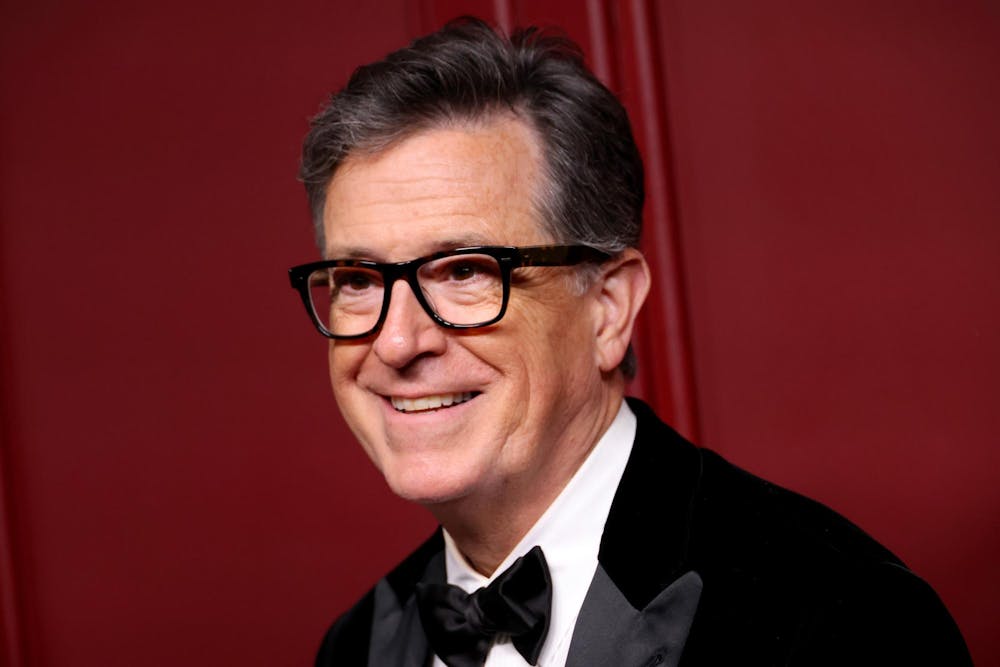
Late-night television began as a generous and strange experiment in American broadcasting: a gentle landing after the day’s hectic news and work where comedians, musicians and variety acts could be seen by millions in the same living room.
From Ed Sullivan’s wide tent of spectacle to Johnny Carson’s intimate, late-night salon, these programs were more than entertainment. They served as a cultural plumbing system that carried talent, taste and argument from niche scenes into the mainstream. Those early forms built a pipeline that connected artists and writers to audiences the way record stores and newspapers once did.
Over several decades, that pipeline has adapted.
"The Tonight Show" franchise and its peers became launchpads for singers whose sales jumped after a single performance, as well as for playwrights and sketch comedians who translated short TV moments into long careers. This covered cultural commentary that reached people who wouldn’t read political columns but would watch a television monologue. Research has shown measurable boosts to music sales and visibility following late-night performances — a practical, industry-level effect that has helped build an entire ecosystem of artists and production crews.
But the culture that sustained late night is once again shifting. The business model that made a nightly, hour-long broadcast profitable is slowly diminishing.
Ratings for late-night slots have been dropping for years, ad revenue has contracted and networks are rethinking whether expensive nightly productions make sense in an era where short clips and podcasts capture the attention of younger viewers. The economics of this question are simple: some flagship shows cost tens of millions a year to produce for smaller audiences than they did a decade ago.
At the same time, however, the art form is proving to be resilient, just not necessarily in the same way. Clips and monologues have become social-media commodities, accumulating billions of views and creating a different kind of reach that is immediate, shareable and often younger than the late-night TV audience. That’s promising for visibility, but it’s not the same as keeping the iconic writer’s room or a house band, or paying the same unions and crews whose livelihoods depended on nightly broadcasts.
Recently, high-profile moves have made the industry’s stakes more concrete.
Networks are canceling or restructuring respected franchises for financial reasons. CBS’ decision to end “The Late Show with Stephen Colbert” — a show that was a ratings leader in its category — illustrates the point. While many speculated the motives of CBS’ decision as being heavily influenced by political pressure stemming from its recent settlement with the Trump administration, the company framed the move as a financial necessity amid declining ad markets and rising costs.
For several years, especially since the start of the pandemic, I found late night monologues and interviews to be a rare provider of laughs, as well as serious conversations with important individuals. My enjoyment of the art form itself especially grew after watching “The Story of Late Night,” a CNN original documentary that traces the great hosts from Steve Allen in 1954 all the way to Trevor Noah. I began to view late-night television as a model for comedic entertainment around the world that is worth holding on to.
Like many following the sudden suspension of “Jimmy Kimmel Live” by ABC — also a move many suggest was explicitly based off political pressure — over some of Kimmel’s controversial political comments, I tuned in for his first show after returning to the airwaves. That evening, with all eyes on Kimmel, the show’s ratings spiked, with a whopping 6.2 million people tuning in. However, the sudden spike following consistently lower audiencesleft me with the question: Where is late night going?
I see several likely trajectories that will coexist uneasily.
Primarily, I see social-first, clip-driven extensions of legacy shows, with monologues or sketches as TikTok/YouTube products, taking priority. Ad sales will also shift to short-form metrics and sponsorships over commercials. If nightly broadcasts are uneconomic, networks can favor high-profile events — town halls, interviews, specials — that preserve cultural forms without nightly costs.
Creator-driven formats have become the new central forms of media/entertainment, and seemingly have begun to absorb some of the cultural functions once held by late-night TV. These formats rarely build the same cross-demographic, appointment-driven bridge that broadcast used to provide but creates a clear divide between different groups of culture and ages.
Each path carries tradeoffs. Regardless, this spirit of late night, of curiosity, satire and a mix of the trivial and the urgent is migrating into new forms. But if we value what late night uniquely offered the arts, we should think about what we lose as its popularity wanes: predictable entry points into mainstream culture, steady creative jobs and a common cultural time that let art travel beyond its bubbles.
Preserving those things will require new business models and an effort to strike a balance between accessibility, meaningful content and concise interviews. Without a plan, we risk losing a vital training ground for emerging artists and, more importantly, the voices and conversations that shape our nights.
Michael Sigal (he/him) is a sophomore studying music at the Jacobs School of Music.