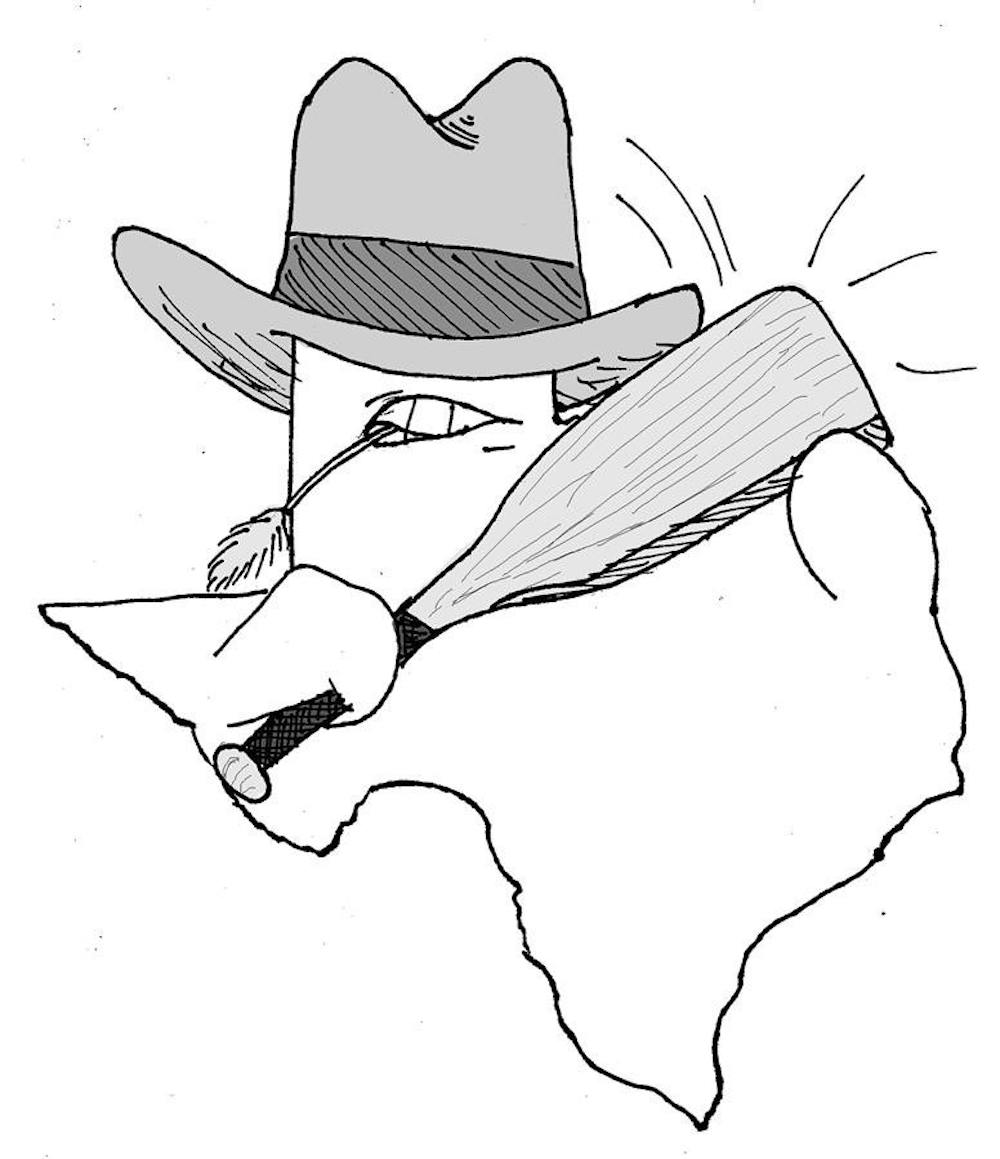
Much to the surprise of those of us who thought paddling had gone by the wayside along with sockhops and Bazooka Joe, the disciplinary practice seems to be swinging back into popularity. Thanks to the demand of parents, the small hamlet of Temple, Texas, has reintroduced corporal punishment into its 14 schools.
A large number of the town’s residents wanted to revive the antiquated practice to combat what they saw as a “rising disrespect among youth.” Furthermore, many parents who paddled their children at home wanted the same disciplinary measures taken in schools.
The technique of paddling, for those who are unaware, consists of an authority figure reprimanding a troublemaker by repeatedly striking his or her buttocks with a hard, wooden paddle. Although 20 states still legally allow corporal punishment in schools, Texas is certainly taking advantage of its legal status. In the 2006-07 school year, the Lone Star state hit 49,197 students.
There is much debate surrounding the issue of corporal punishment of children and adolescents, but, ultimately, the practice is no more effective in deterring bad behavior than other forms of discipline — and it can even mentally harm its victims over time, according to the American Academy of Pediatrics .
The Academy maintains that forms of physical punishment that are delivered with the intent to cause pain “such as striking a child with an object” might endanger the child’s health and well-being and should never be used.
Teachers who choose to physically punish offenders are demonstrating that aggressive behavior is an acceptable solution to conflict. A study conducted by researchers at Tulane University shows that children “who were spanked more frequently at age 3 were more likely to be aggressive by age 5.”
A different study found that the use of corporal punishment on children forecasted an increase in antisocial behavior later in life.
The Academy notes that effective disciplinary techniques “must occur in the context of a relationship in which children feel loved and secure.”
A relationship that includes physical violence can never demonstrate love, nor can it teach it. And the moment that paddle is raised, any hope of security has already disappeared.
Instead of paddling, alternative forms of punishments such as time-outs, the temporary removal of privileges and explanatory reprimands should be used. These will ultimately prove more effective than corporal punishment and won’t cultivate the negative behaviors associated with practices like paddling. Physical violence should never be the answer.
Step away from the paddle
Get stories like this in your inbox
Subscribe