
Whether it’s due to confusion, fear or simply a lack of caring, millions living in the United States leave their census forms blank when the nationwide survey comes around every 10 years.
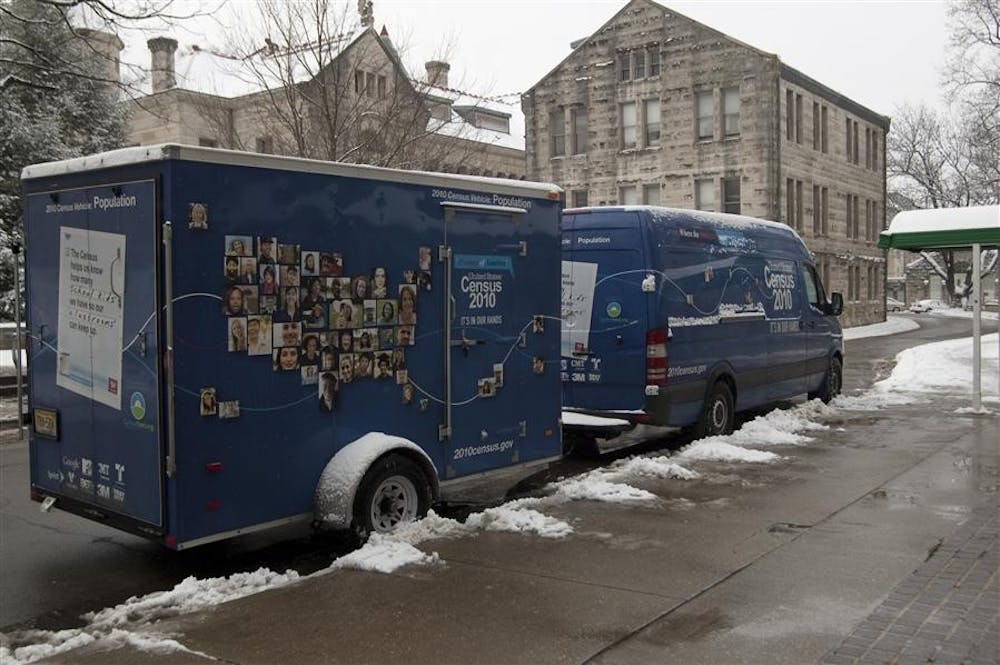
Traveling to the most unresponsive areas from the 2000 census, the 2010 Census “Portrait of America” Road Tour stopped by the Indiana Memorial Union on Tuesday to educate students about the upcoming population count.
But the census is as much about appropriating federal funds and redistricting for Congress as it is about counting the population.
“Universities are typically counted as group quarters, and it’s very important for universities to count,” said Keith Nunnally, 2010 Census Road Tour producer. “It has a lot to do with the funding that’s provided to the universities in those communities.”
It’s important for college students to be counted with their school address and not with their hometown addresses.
“We live here the majority of the year and this is where we’re supposed to be counted,” said IU sophomore Amy Bishop, communications director for Count Us IN, a campus organization that campaigns to increase census participation. “They need to make sure if they’re living with roommates, all of their roommates should be on one form.”
Students living off-campus will receive a form in March and will need to mail it back in a provided envelope. Students living on campus will receive a form in April to be returned to a designated spot on campus.
Economically depressed areas and areas with large populations of non-citizens also tend to be highly unresponsive.
At a recent stop in East St. Louis, Ill., a man told Nunnally that he wouldn’t fill out the census because he feared the government would have too much knowledge about his life.
Nunnally said a quick Google search and a satellite image of the man’s home showed him the census wouldn’t give away any information the government didn’t already know.
Because some in poorer areas are less likely to fill out census forms, they often are left short when it comes to receiving federal funding for their area, only making their economic conditions worse.
“If there was a community with 10,000 residents and we only get a count of 5,000 residents, that community is only going to get federal funding for 5,000 people for the next 10 years,” Nunnally said.
For undocumented or illegal aliens, fears of the government finding their residence are often enough to prevent them from participating, leaving their communities short on after-school and health care programs, among other things.
“These are just basic amenities that they need to get, and without them being counted, of course they’re going to short-change their community,” said Daniel Aguirre, co-producer for the 2010 Census Road Tour.
Even if residents decide not to fill out a form, a census worker will come by their house in later months to ensure they’re counted.
Bishop said campaigning and advertising prior to the census is a way to alleviate the fiscal burden of sending out workers after the polling ends.
“The census deals with addresses only. This is not about citizenship. We have to count everyone in America,” Nunnally said. “We can’t move forward unless you send it in, and that’s simply why we’re here.”
Census tour makes stop in Bloomington
13 buses travel throughout country, encourage university students to participate in 2010 census
Get stories like this in your inbox
Subscribe



