
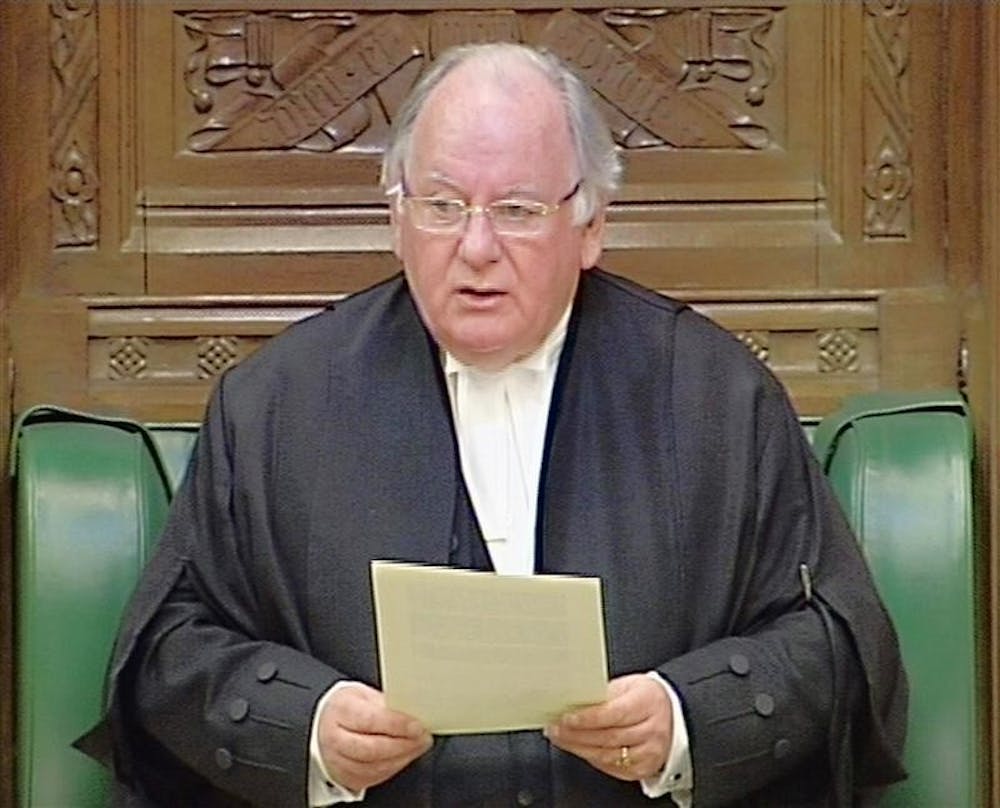
LONDON – Britain’s powerful Speaker of the House of Commons resigned Tuesday after a backlash over excessive expense claims by lawmakers, but some British residents aren’t sure if that will solve the problem.
Though Michael Martin wasn’t caught up in recent revelations about lawmakers’ expenses – reimbursement claims for chandeliers, moat cleaning and mortgage payments outraged taxpayers – he was blamed for creating a climate in which such excesses were allowed.
Martin said Tuesday he would resign June 21.
U.K. resident Luisa Borg-Myatt said she doesn’t think the resignation will solve the real problem.
“I’m indifferent to all of it,” Borg-Myatt said. “I’m more concerned about the MPs (Members of Parliament) and what they are doing with tax money.”
On Monday, 15 lawmakers made a rare step in tabling a motion calling on Martin to quit, a virtually unheard of step in Britain’s parliament, in which the Speaker of the House of Commons traditionally enjoys wide support and retires when he – rather than the House – chooses.
“Please allow me to say to the men and women of the U.K. that we have let you down very badly indeed,” Martin said in the Commons on Monday. “We must all accept the blame, and to the extent that I have contributed to the situation, I am profoundly sorry.”
Martin became the first Speaker forced out of office since John Trevor was
deposed in 1695 for accepting a bribe.
As Speaker, Martin keeps order during debates, decides which lawmakers are called on to speak and represents the chamber in discussions with Queen Elizabeth II and the House of Lords.
London resident Andrew Kettle said he is indifferent to Martin’s resignation because he doesn’t believe the Speaker was the source of the problem.
Instead, Kettle said he thinks the problem will be solved through a reform of the system, but he isn’t sure if that will happen.
London resident Simon Hayes agrees.
“I don’t think it has any big effect,” Hayes said. “We are left with wondering what is next.”
Britain’s main opposition leader, David Cameron, said he will ask citizens to sign a
petition urging Prime Minister Gordon Brown to call an election as soon as possible,
offering voters a chance to kick out lawmakers who have abused expenses.
The final decision on an election rests with Brown, who must call an election by mid-2010 and is expected to wait until the last possible moment, hoping for the economy to revive.
“I’m not sure it will change anything until the next general election,” he said.
– The Associated Press contributed to this story
Brits pessimistic as Speaker quits
Martin blamed for lawmakers’ shady expenses
Get stories like this in your inbox
Subscribe


