
The Bloomington City Council spent Wednesday’s deliberation session trying to narrow down the long list of tangible goals that will guide the city’s first full outcome-based budget in 2027 — but debate on whether the new system will work at all took up much of the meeting.
For fiscal year 2026, the city used a “priorities-based budget system.” This system listed thematic priorities for the city to take into consideration throughout the budgeting process: affordable housing and homelessness, public safety, transportation, economic development, community health and vitality and high-performing government.
The goal of Wednesday’s meeting was to determine what measurable outcomes should be established to evaluate if those original priorities are being met. However, after three hours of discussion, the council came away with no clear set outcomes, though it unanimously voted to add “environment” to the list of original thematic priorities.
“I hear from a lot of my younger residents and constituents that the environment is a very strong priority for them,” councilmember Sydney Zulich said.
Councilmember Matt Flaherty said the buckets are arbitrary and do not meaningfully clarify spending in the 2026 budget. Previous budgeting systems focused on department-level goals and dashboards. Flaherty said it was more useful to track the programs and actions that drive outcomes rather than grouping costs into broad categories.
“It felt like a pretty arbitrary exercise, and I actually felt like I had less transparency and visibility into the budget than ever before,” he said.
Councilmembers moved through the outcome categories one by one, beginning with affordable housing and homelessness, where they reaffirmed existing goals related to the comprehensive plan — the city’s masterplan for land use and development. These included expanding affordable housing types, locating homes near services and increasing neighborhood diversity.
Some councilmembers also suggested putting outcomes related to reducing homelessness in the homelessness bucket. Councilmember Piedmont-Smith said the council should have making homelessness “brief, rare and non-repeating" as an outcome in the homelessness bucket.
Other ideas related to building housing, including shortening permitting timelines and increasing predictability for developers, had a bit more debate. Some members said quicker permitting could support local housing production. Others warned it could weaken design standards or accelerate undesirable development.
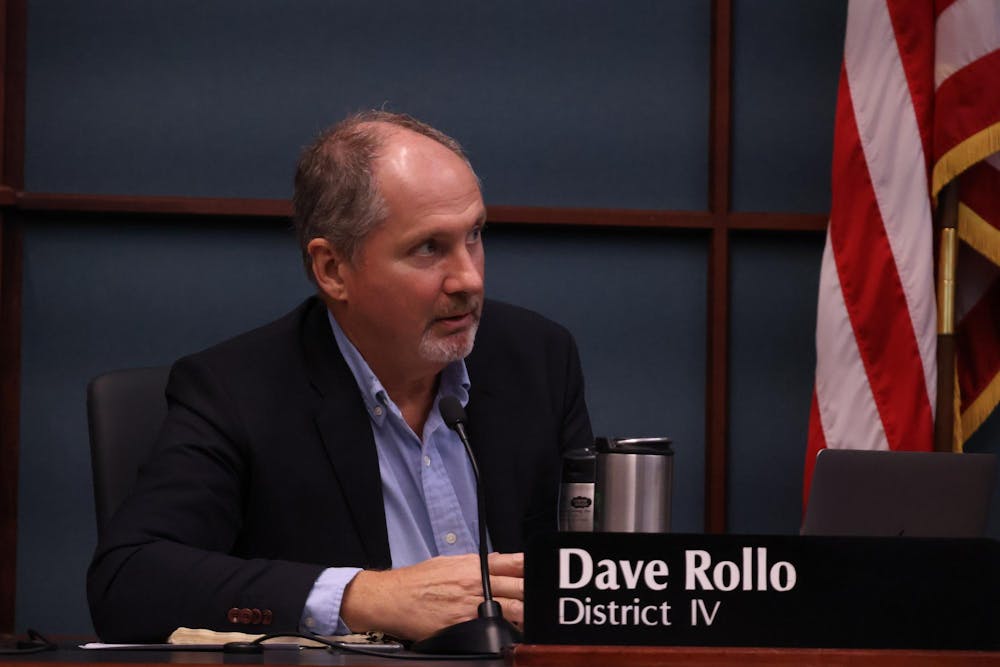
“I'm very weary of seeing buildings go up that are, frankly, unaesthetic and subtly designed, and I loathe the idea of reproducing that just under the banner of ‘This is going to yield housing for people, cheaper housing,’” councilmember Dave Rollo said.
Throughout the discussion, the council discussed the difference between long-term outcomes and short-term, measurable annual targets.
Some questioned whether the council should add new outcomes to the budget system at all until individual departments complete their own program inventories of goals. Others said the current outcomes don’t fully cover some city functions, such as policing, and will require future updates.
During public comment, local accountant Kevin Keough urged the council to establish clear metrics and understand fixed costs versus flexible spending.
“Unless we know the true cost structure of the city operation, we risk prioritizing outcomes that cannot be financially supported,” Keough said. “Prioritization becomes symbolic rather than strategic.”
The meeting ended without selecting priorities after several members expressed confusion over a planned ranking exercise using sticky notes. The council used sticky notes to easily demonstrate what each person’s top priorities were with the budget outcomes.
Council President Hopi Stosberg said the process will continue through next year.
The council will return to the topic in future budget discussions as it prepares to work with the mayor’s administration on the city’s 2027 budget.


