Men's soccer readies for No. 25 Michigan
The No. 18 IU men's soccer team is 4-0 against ranked opponents. The Hoosiers have a chance to extend the streak against No. 25 Michigan on Saturday.
IU graduate Jon Terzini designs humorous posters to promote football and men’s basketball home games.
The IU Student Alumni Association is adamant that bad weather will not keep this year’s parade from taking place, unlike 2008, when rainy conditions forced the parade to be cancelled.
Rather than being named Homecoming Queen, Valerie Jones became the first Ms. IU in 1978. From 1968 to 1977 there had not been any sort of Homecoming royalty because of the activist atmosphere of the time, but Jones helped change that. Jones told the IDS what it was like to be one of IU’s most controversial members of Homecoming royalty.
During Homecoming, the Hoosiers come out in full force. People wear cream and crimson body paint, sing IU chants and tailgate. But many of the IU traditions have a profound meaning.
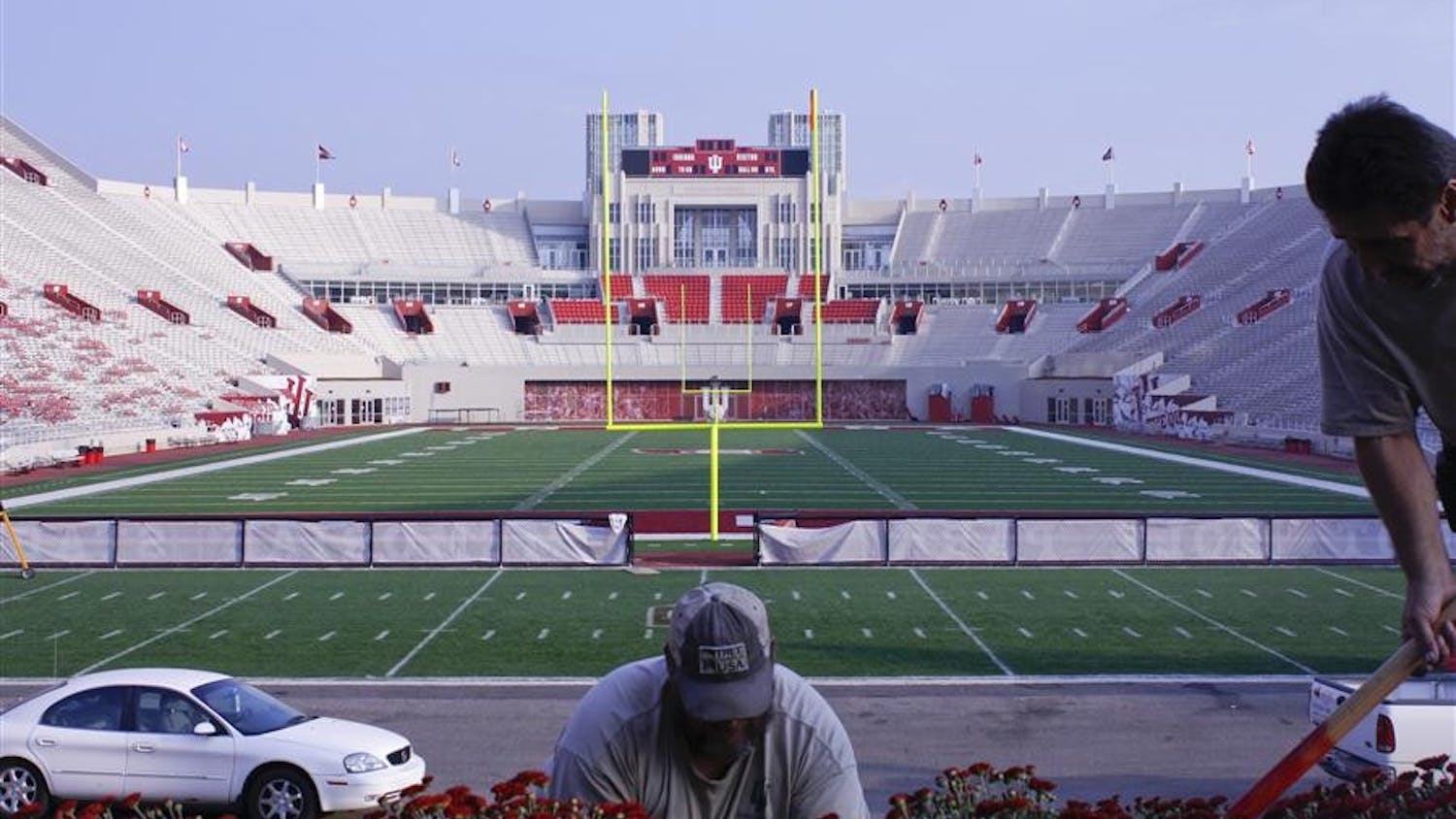
Beneath the looming Memorial Stadium scoreboard, the flower guys get to work. Bruce Cabanaw plunges his shovel into freshly tilled soil and the sparse remains of periwinkle vincas.
Episcopal Campus Ministry — a community that operates through the Canterbury Fellowship at IU — has opened a new house on Seventh Street.
Last October, the Student Athletic Board elected Heather Schaefer as 2009 Homecoming Queen. The IDS interviewed Schaefer and asked her about her involvement at IU, her experience being Homecoming Queen and what she is doing now. Homecoming Queen Heather Schaefer and King Cale O’Bryan celebrate at the 2009 Homecoming football game.
On Tuesday, IU Student Association Congress voted 17 to 16 to reject a bill appointing junior Hannah Kinkead as an associate justice.
At 95 years old, Harry Cherry is the oldest living IU football player. Cherry was the No. 11 halfback for the IU football team in 1934, ’35 and ’36. This Homecoming, Cherry is the grand marshal of the parade. Cherry shares his experience with the IDS about being a Homecoming veteran.
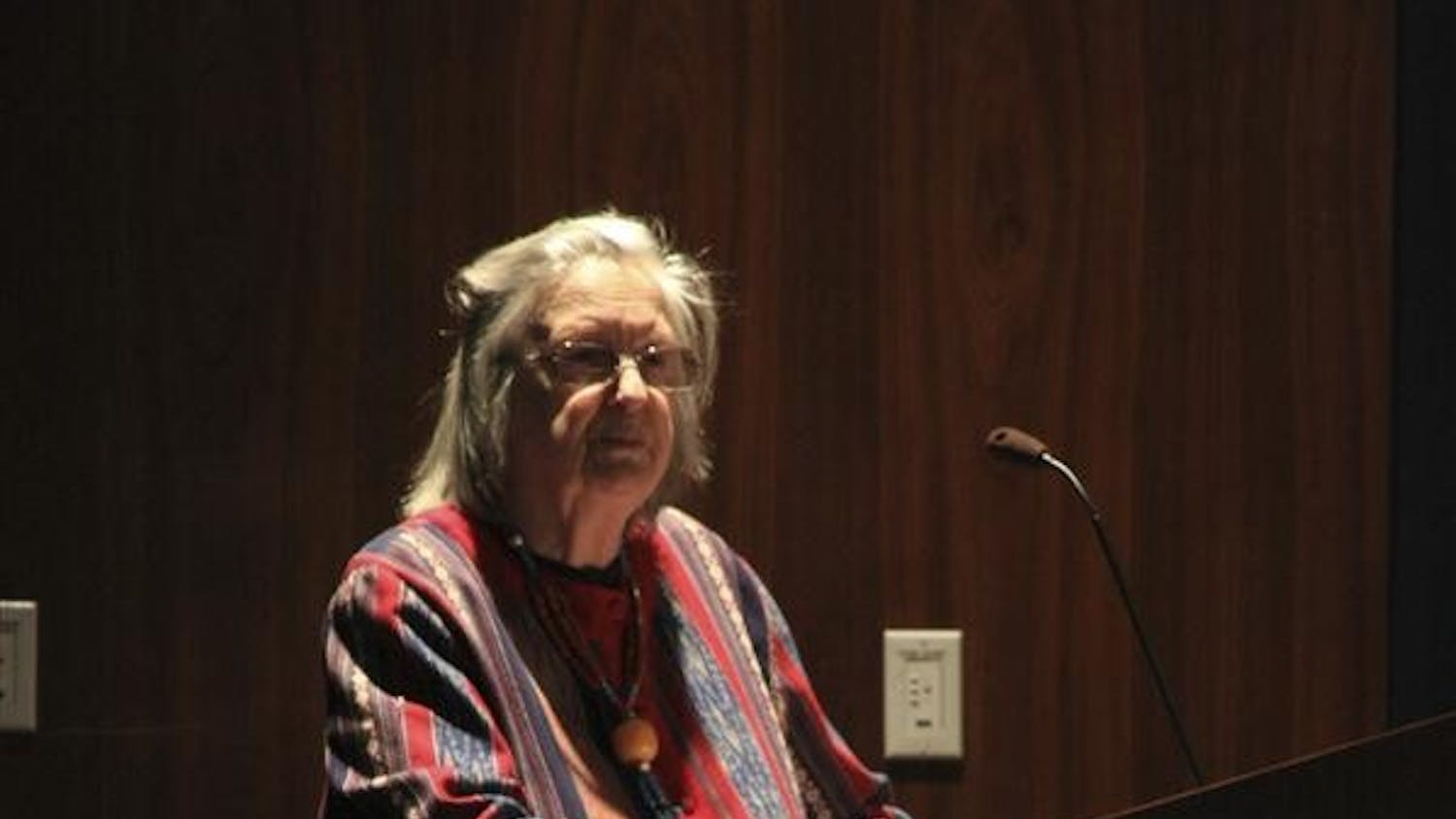
Elinor Ostrom does it again.
Alumni are essential to the greek system’s Homecoming celebrations.
Visit any Residential Persons and Services dining center on campus and there will be rows and rows of aluminum bottles on the shelves for sale. These bottles are part of the new refill program launched by RPS this semester.
In honor of the 30th anniversary of the forming of Solidarity — the trade union that brought Communism to an end in Poland — history professor Padraic Kenney is taking students back in time.
The spotlight was on George Taliaferro, now 83, during the 1945, ’47 and ’48 football games. He was a running back, quarterback, kicker and defensive back for the IU football team. He led IU to its first Big Ten championship in 1945 and earned All-American honors from 1945 to ’47. In 1948, Taliaferro became the first African-American chosen in the National Football League draft. Taliaferro explains what IU Homecoming was like in the ’40s.
Peanuts, popcorn and crackerjacks were staples at IU’s first Homecoming event. Since then, Homecoming has transformed from just a football game to an entire week of events.
It’s Homecoming, the weather is crisp, and it’s the perfect time for a football game. The game marks the finale of IU Homecoming events. After Big Man On Campus, the parade, the pep rally and Hoosier Hysteria, the football team takes the field.
Ever since restarting the tradition in 1978, the Student Athletic Board at IU has elected a Homecoming Court of five students, including a king and queen who best exemplify the qualities of an IU Hoosier. The IDS spoke with this year's Homecoming Court members.
Cale O’Bryan was crowned Homecoming King in 2009. O’Bryan talked to the IDS about his experiences as IU royalty for a week.
Angelo Pizzo, a 1971 graduate, is best known for writing and producing “Hoosiers” and “Rudy.” After living in Los Angeles for 30 years, he returned to Bloomington to raise his two sons. Pizzo tells the IDS why Bloomington — and IU — will always be his home.