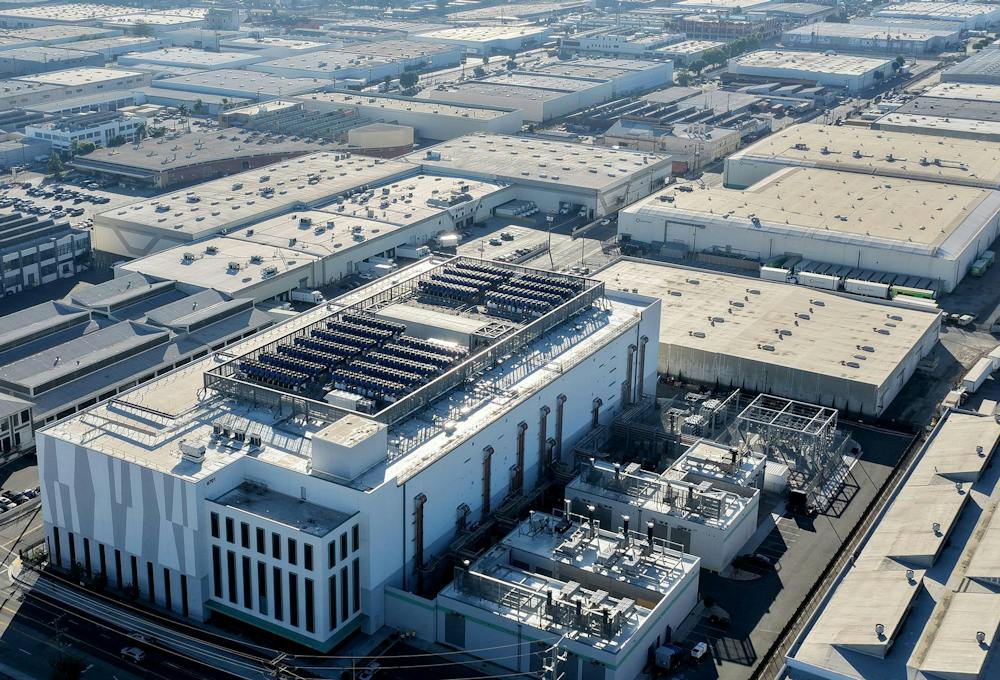
A data center is a large physical area, such as a room or building, that houses information technology infrastructure for building and running applications.
Data centers aren’t new, having been around since the 1950s. Still, their construction has surged throughout this decade due to the rise of generative artificial intelligence, expanding cloud services, 5G networks, and more. More centers are being built across the country — especially in the Midwest.
Data centers are increasingly being built predominantly close to residential areas, especially those that are lower-income, leading to immense backlash and resistance from residents due to how these centers impact them.
While most existing centers are currently in cities, according to Pew Research, the bulk of planned and new data centers are being built in rural areas, especially in the Midwest and the South, due to easier access to land and tax breaks. But rural areas that deal with problems like poor air quality or bad water are having their problems exacerbated, with a data center corroding the quality even more. Putting a data center in an area that already has economic and environmental issues hurts the community, as they must shoulder the costs created by the center, causing an increase in water and energy usage and making citizens’ bills increase.
Data centers take more than they give. According to Indiana University’s Environmental Resilience Institute, the energy usage of data centers in Indiana in one year is projected to rise from 1 terawatt-hour to over 6.5 TWh by 2030. For context, 1 terawatt could power around 1 billion average homes for one year, while 1 TWh could power 90,000 average homes.
Data centers could also require more electricity than 6.8 million Hoosier households today. Power is the rate at which energy is used, while energy is the total amount used over time. This would cause these centers to rely more heavily on fossil fuels instead of renewable energy to meet demand.
A recently passed state law, Indiana House Bill 1007, requires data centers to cover a portion of the costs they generate. However, the legislation doesn’t protect civilians from the cost of providing electricity to the data centers, making them vulnerable to increased bills and costs.
The data centers also pollute the air, water, and noise quality. Data centers used 17.4 billion gallons of water in 2023, a number projected to double by 2028. Data centers also use diesel generators to generate emergency power in case of generator failure, causing increased carbon monoxide emissions.
Another major complaint about data centers is that the servers and cooling equipment generate tons of noise, up to 85 decibels consistently, the same volume as a food blender. A 1,500-acre Meta data center is being built in Lebanon, Indiana. Residents have stated that the constant lights and sound have impacted their sleep and day-to-day living.
While data centers would generate jobs for upkeep and maintenance, the number of jobs isn’t enough to justify putting these centers in rural areas, even if they have the land and the infrastructure to support them. It’s estimated that the average data center will need roughly 1 worker per 5,000 square feet, beyond requiring contract construction workers to build the property itself. However, local communities still don’t see much to any rewards from a data center being built in their area, even with employment opportunities.
Data centers being built in local areas are a process that is decided without the locals’ consent. For example, a town hall in Munster, Indiana, drew a local protest shortly before a vote that would decide whether a data center would be built outside the town. The areas are picked due to open land, easy access to electric grids, fewer zoning laws, and the areas get tax breaks, making it an attractive development to the leaders of the town. The communities that are chosen don't hold it to a community vote or listen to the populace; they move forward without making sure that the people will benefit from the construction.
Data centers are being built in rural areas, affecting farmland, water and energy, without community consent and with little protection for civilians who must shoulder the cost increases created. While they generate income for the company and the people who sign off on their construction, they negatively impact those who will have to deal with them.
Jacob Fry (he/him) is a senior studying political science.