
Editor’s note: This story includes mention of potentially triggering situations, including the exploitation of minors. Resources are available here. All opinions, columns and letters reflect the views of the individual writer and not necessarily those of the IDS or its staffers.
Nowadays, it seems there is no shortage of commentary on the existential implications of evolving technology. The greatest thinkers of this era frequently ask “what if” questions about artificial intelligence, conjuring up images reminiscent of a science fiction film. Valid questions, surely, but what about the here and now?
In the quest for big picture answers about the future, we’ve forgotten about how these advancements impact us at present. Particularly the most vulnerable of us: children.
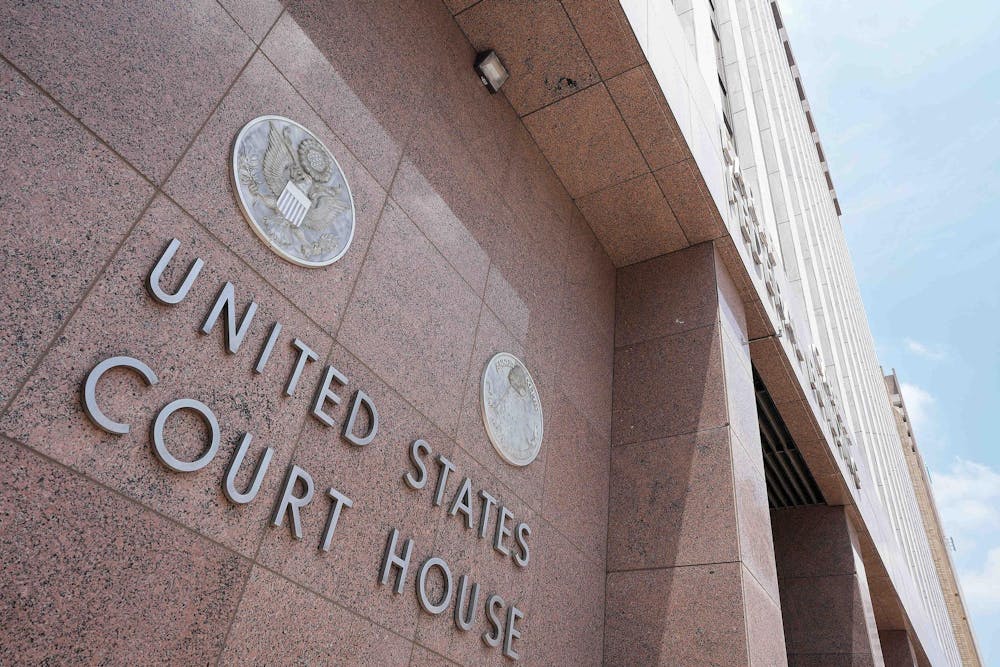
The U.S. Court of Appeals for the 7th Circuit ruled on Aug. 25, 2026, that generating and possessing AI child sexual abuse material within the home is protected under the First Amendment.
In 2024, the Department of Justice charged Wisconsin man Steven Anderegg of violating federal obscenity laws by using generative AI software to produce, possess and distribute explicit images of children. Federal prosecutors appealed after a Wisconsin judge agreed to drop Anderegg’s possession charge last year. With the latest ruling, charges against Anderegg of both production and possession were dismissed on account of free speech.
The problem is that this ruling was predetermined by the Supreme Court over 20 years ago.
Upholding the lower Wisconsin court’s decision, 7th Circuit Federal Court of Appeals Judge John Lee cited a Supreme Court ruling from 2002, Ashcroft v. Free Speech Coalition. The ruling deemed the prohibition of “virtual” child sexual abuse imagery unconstitutional, under the idea that “fictional, computerized” images would divert abusers away from real children. However, this decision is too old to account for the current and evolving functions of generative AI.
While it would seem that these materials are fictionalized, no AI image is truly fake. This is evident through even the name of the software Anderegg used Stable Diffusion, which refers to the process in which generative AI models create new images from existing ones. In diffusion, systems develop random noise into detailed images, much like a television screen using pixels to display a moving image. The important distinction here is that diffusion models are trained on immense datasets of real images.
A 2025 Yeshiva University study found these diffusion models mostly rearrange, rather than invent, the pictures they generate.
“If I generate 10,000 images,” doctoral student and researcher Lakshmikar Polamreddy said, “maybe only 10 of them contain truly new features not seen in the training data.”
LAION-5B is a large dataset used to train many generative AI programs and was created by collecting materials across the internet. According to a senior researcher for Human Rights Watch, Hye Jung Han, it contains personal photos of children that were originally posted to social media with their names and other identifiable information within the image URLs.
Han’s research revealed that 41 of 600 randomly selected images her team viewed from the dataset were of children’s personal social media photos. That is, only 600 of about 5.85 billion images total within the LAION-5B system.
Those images can then be taken to generate a virtually identical reproduction of a child. In fact, it only takes a few photos, or even just one.
Current views on AI often lean toward that of a mysterious technical force, devoid of humanity. In reality, AI is more of a mosaic built on fragments of human triumph and tragedy. Every database AI is trained from contains the good, the bad and the ugly within society. This includes even the gravest violations of human dignity. Knowing how these images are generated tells us that no explicit AI image of a child could exist without real children being abused first.
With this knowledge already available to us, no court can reasonably say AI child sexual abuse material is entirely fictional, or does not violate obscenity laws in place to protect American children. However, when the highest court in the land last drew the line in 2002, no lower court can properly assess new matters of technology with the proper context.
To Lee’s credit, he acknowledged this limitation.
“Given the relentless advancement in artificial intelligence models, we have some concerns about the lines these cases draw,” he wrote, “but we are not free to redraw them ourselves.”
AI is no longer a beast of the future as it becomes a current force in our lives. This is not to say that AI and other emerging technology is inherently harmful or should be banned. Under the right circumstances, innovation can be incredible. Still, those tasked with upholding the law continue to dance around it, under the claim that AI is a “Wild West” that we are not yet equipped to handle. All the while, children’s safety is being jeopardized.
While, of course, these technologies are still developing, we can no longer say we don’t have enough information to make some decisions regarding their legality. It didn’t take much digging to find out how generative software works. When we continue to evaluate cases like this one as if we’re still unaware of certain AI functions, more people will be put in harm’s way.
The appeals court may not have the power to safeguard children from AI exploitation. But the Supreme Court could, if given the opportunity. Given the nature of this case alone, the rapid development of AI poses an ongoing threat to the most susceptible of citizens and simply cannot be evaluated on sentiment that predates it.
Emma Howard (she/her) is a junior studying journalism.



