Editor's note: All opinions, columns and letters reflect the views of the individual writer and not necessarily those of the IDS or its staffers.
About six in 10 Americans support a social media ban for children under 16, according to the Pew Research Center.
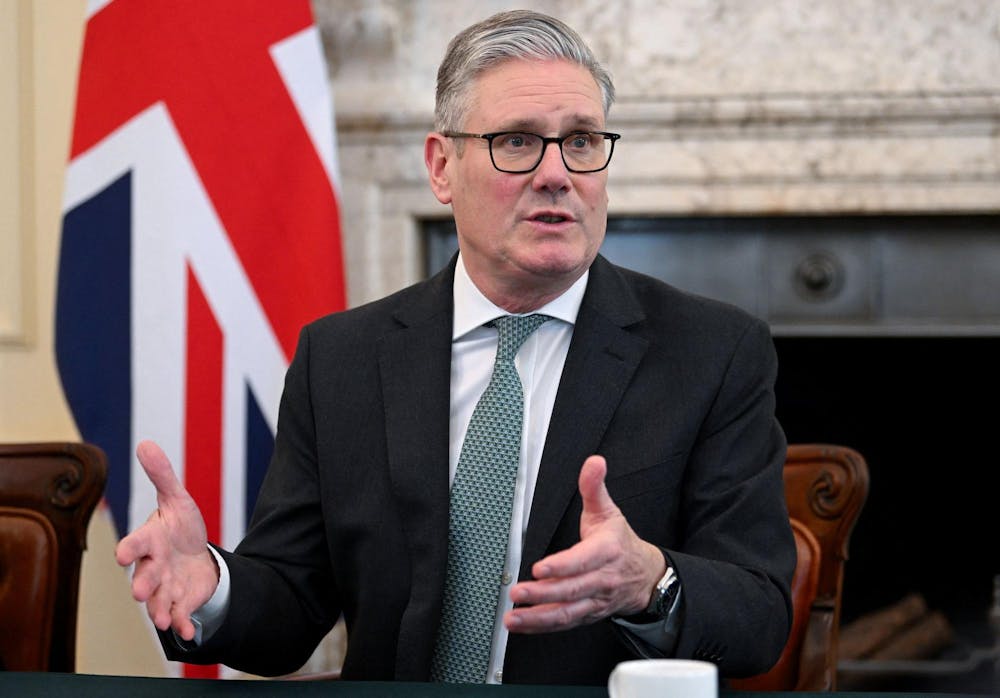
Around the globe, more and more governments are eyeing similar plans to prevent children and adolescents from using major platforms. Just days before his resignation on June 22, former U.K. Prime Minister Keir Starmer announced a ban that would restrict children under 16 from using social media. And just over a week ago, France became the first country in the EU to ban social media for those under 15.
At the time Starmer’s bill was announced, I was enrolled in the Media School’s Summer in London program. Under the scorching English sun, I found myself living amid the discourse. Some Londoners sang its praises, lamenting their own struggles with social media as teens. Others were less satisfied. Many wished such a safety net had been procured sooner. And some experts warned that an outright ban is unenforceable.
And while unenforceability is certainly a strong argument against the bans, it mostly renders them ineffective rather than harmful. Successful or not, social media bans are a direct alternative to regulating social media companies – in a way that could be beneficial for all users.
Turkish-British journalist and online safety activist Adele Zeynep Walton has been advocating for stronger digital regulations since 2022, after her sister tragically took her own life at the age of 21. She had been consuming content on an online forum that encourages self-harm and suicide, even freely advertising poisonous substances that can be purchased on Amazon.
In her book, “Logging Off: The Human Cost of the Digital World,” Walton argues that because online safety is a human rights issue, social media regulation is necessary.
“Adopting a human rights lens to social media and digital technologies would empower us to strike the essential balance that is required for us to protect free speech while ensuring safety for all,” Walton wrote. “Online safety is not a choice, it is a fundamental right we all deserve.”
Viewing social media from a human rights perspective, we can prioritize putting content regulations in place to protect children and adults alike. Rather than placing the burden of self-regulation on users, like current social media bans do, Big Tech could be held accountable. However, like Walton said, the complexity of the right to free speech has been a major roadblock.
But to understand why our current laws around the internet are so lenient, we have to go back nearly 60 years before the internet went public.
The Communications Act of 1934 was enacted to expand federal authority over all forms of telecommunications, which at the time would have included the telephone, telegraph and radio. Based on the idea of broadcasting technologies as public resources, this act prohibited censorship and supported the distribution of varying viewpoints in media.
In 1996, Congress attempted to amend the Communications Act with the Communications Decency Act, which sought to restrict the distribution of graphic materials over the internet. The following year, in Reno v. ACLU, the Supreme Court ruled that its broad restrictions based on content violated the First Amendment and overturned it. Only Section 230 of the overturned legislation was allowed to remain in the original Communications Act.
This section of the Communications Act legally protects social media companies from liability over content. Under U.S. law, individual users are responsible for the distribution of harmful, violent or graphic content, rather than the platforms these posts are found on. Considered by many media scholars as the most important law shaping our online world, it provides Big Tech with the immunity it needs to keep making money off vulnerable users.
Ironically, this statute was drafted before mainstream social media platforms even existed. Yet 30 years later, it still rules our internet experience.
While Mark Zuckerberg himself might not be pressing “post” on dangerous content, the cash made from algorithmically pushing it onto users’ feeds still lines his pockets. Ultimately, social media platforms are publishers of media, as any other outlet would be. They might not be directly creating clips and posts, but they certainly profit from recommending them to viewers.
In fact, in a digital world where attention is the breadwinner for major platforms, algorithms recommending negative content are huge moneymakers.
Users are roughly 1.91 times more likely to share negative news articles than positive ones, according to research by Cambridge Judge Business School. This is due to a psychological phenomenon called negativity bias, in which we are hardwired to react to and remember negative events more distinctly.
While algorithms bring in the bacon, they create echo chambers of harm in the process. According to internal reports from Meta shared by whistleblowers this March, algorithms will purposely recommend content to users that elicit strong emotions.
“Instead of passively scrolling, they are gripped… especially when the content outrages them,” the reports read. “Given the disproportionate engagement, our algorithms presume users like that content and want more of it.”
Of course, being aware of one’s habits as a user is important, too. I’ve previously written on this topic, stressing the necessity of digital literacy and hands-on parenting. However, expecting users to always efficiently combat a strategically addictive system is unreasonable — and also exactly what Big Tech wants.
If social media is dangerous enough to be banned in the first place, we need to figure out what platforms could improve, rather than what users need to be barred from. We need accountability. No other product is released to the public without vetting. From the shirt on your back to the bag of chips you had with lunch today, everything you consume goes through some regulatory process to end up in your hands. The internet shouldn’t be any different.
Even if bans were to deter adolescents from using social media, young adults would inevitably plunge into the vast waters of an unregulated internet. If harmful content is still constantly in circulation, the internet is a danger for everyone, not just kids and teens. But by banning its usage for a select group of people, we fail to tackle the root of the problem: the companies themselves.
Emma Howard (she/her) is a junior studying journalism.