Editor’s Note: This story includes mention of sexual assault. Resources are available here.
As a fan of true crime and horror, my interest piqued when I found out Ryan Murphy, creator of the show “American Horror Story,” would be directing a series focused on the horrendous serial killer Jeffrey Dahmer back in 2022. But this first season showed that Murphy focuses on dramatization rather than facts. With many casual viewers not doing their own research into these cases, it’s easy to manipulate the truth of real events time after time.
The addition of “Monsters: The Lizzie Borden Story,” released Sept. 17 on Netflix, continues to throw misinformation at its viewers. Before you watch this next season, here is a list of the most outrageous lies told throughout the previous three seasons:
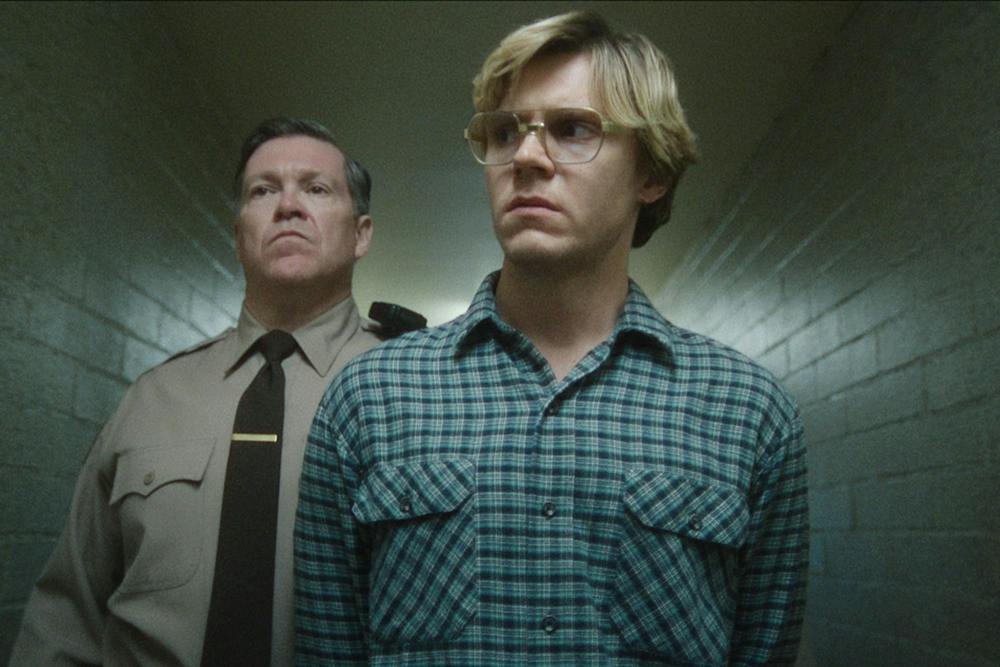
“Monster: The Jeffrey Dahmer Story”
Season 1 is often regarded as the most accurate and best executed season, and I agree. The first season focuses on the infamous serial killer Jeffrey Dahmer, who killed 17 men and boys from 1978 to 1991, mostly in Milwaukee, Wisconsin.
While the historical events presented on screen this season are mostly accurate, it does take some unneeded creative liberty.
The show depicts Jeffrey Dahmer’s apartment complex neighbors as overly suspicious of him. But his neighbors didn’t suspect anything malicious, believing his room simply smelled unhygienic, they say in the 2012 documentary, “The Jeffrey Dahmer Files.” One neighbor the serial killer interacted with, Pamela Bass, even said she saw him as “kind of friendly but kind of introverted.”
Since the Dahmer case was so gruesome and involved so many crimes on men of color, I think making a series based on these events should be approached with utmost carefulness. Giving the right justice to these victims is a hard task to do, and I felt the series just brought back unwanted memories for those impacted by Dahmer’s crimes that Murphy chose to rehash.
“Monsters: The Lyle and Erik Menendez Story”
Season 2 focuses on Lyle and Erik Menendez, brothers convicted of murdering their parents in 1989 at the family’s Beverly Hills mansion.
The show falsely implied that the two brothers had an incestuous relationship with each other, with them even sharing a kiss in Episode 2, “Spree.” This addition to the plot felt random and exploitative of the story as the brothers have never claimed they had this type of relationship.
Murphy faced criticism for this portrayal of the brothers, especially because the brothers’ motivation for murder was heavily impacted by Jose sexually abusing them throughout their childhood. And many thought the depictions of sexual abuse victims within this season were completely inaccurate.
Having queer relationships in the broader media is often seen as taboo, making it rather special when a series focuses on these love stories. But for “Monsters,” it just felt like a gross, inaccurate portrayal of two victims of abuse.
Season 3 stands out for its abundance in factual inaccuracies, facing horrible reception both critically and publicly. In this third installment, audiences watch the story of Ed Gein, who was convicted of murder and multiple grave robbings in Plainfield, Wisconsin.
Early in the season, we see Ed Gein strike his brother Henry over the head, resulting in his death. However, in the true story, Ed Gein was never convicted for his brother’s murder and Henry Gein’s cause of death is a mystery.
This season showcases another completely fictitious murder: the disappearance of 15-year-old babysitter Evelyn Hartley. She is hospitalized due to polio and is replaced as a babysitter by Ed Gein. He soon gets fired as a sitter for his disturbing behavior, and stalks Hartley where it’s implied he murdered her in his basement.
The real Hartley case is still unsolved, and Ed Gein has been proven not at fault with no evidence that he even knew Hartley, so why would Murphy add these inaccuracies? The answer is entertainment value.
This season stood out to me as my least favorite, agreeing much with the public criticism it has received. Not to mention, narratively speaking, the series gets more into the territory of the later, all-over-the-place seasons of “American Horror Story.”
This series raises an ethical concern of showcasing these stories with such falsities. Yet, many, like me, still tune into things like true crime podcasts to either use as background noise or to watch in depth. Therefore, there is clearly a market for these types of crime projects, so I think the point at which this line of morality is drawn is subjective to each individual viewer.