Editor's note: All opinions, columns and letters reflect the views of the individual writer and not necessarily those of the IDS or its staffers.
You crack your knuckles and reach for your phone. Your nerves are shot. It’s finally time: you are going to post your summer vacation on Instagram. Are twenty photos too many? Ten too few? You have an awful lot of scenic views. Make sure to post a picture of yourself here and there, so people don’t think you have self-esteem issues. And of course, there’s the ordeal of choosing a song. Don’t even get me started.
If this situation sounds familiar, firstly, join the club, and secondly, that’s the unfortunate reality of what Instagram has become: curated.
This May, Instagram sought to change that reputation with the launch of its new photo sharing feature, Instants.
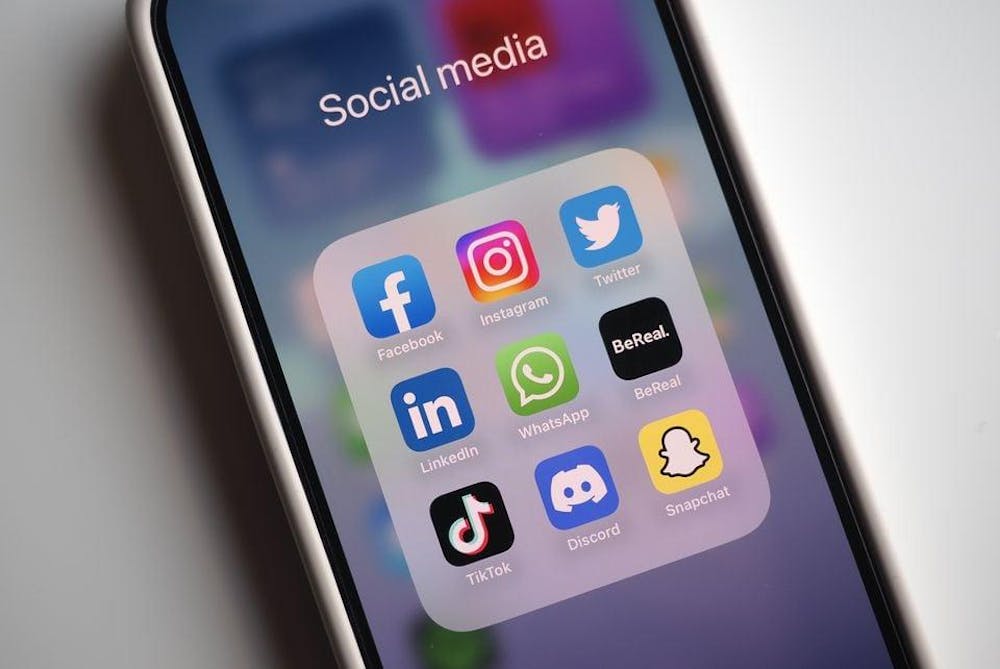
The little plus sign located on the lower right side of the “direct messages” tab allows users to snap a quick candid pic to share with their followers. Upon its arrival a little over a month ago, it garnered a less than warm reception among users. Drawing comparisons to other photo sharing apps like BeReal and Snapchat, Instants was instantly deemed redundant.
I too found it a bit irksome. No, I wasn’t interested in seeing a carton of Meijer blueberries posted by a former classmate.
But blueberries aside, what if I told you Instants are what Instagram is all about?
In July 2010, two friends, Mike Krieger and Kevin Systrom, uploaded the first ever post to their new app, Instagram. Heavily saturated and filtered, the photo resembled that of a Polaroid instant camera, which gave the app its name and logo. In fact, the raw spontaneity of an instant camera was what drove Instagram’s early success. Living in the unpolished moment was encouraged, and taking a picture and posting it at a later time wasn’t the norm it is now. In fact, doing so required the rather self-aware hashtag, #latergram.
After Facebook’s acquisition of the company in 2012, the app began to evolve into what it is today. Dr. Kaitlyn Regehr, one of the UK’s leading experts on the cultural impacts of social media, has noted that Instagram has become the direct opposite of what its founders had intended.
“In fact, you could say that Instagram in its current form is the opposite of ‘instant,’” Regehr said in her 2025 book, “Smartphone Nation.” “Now a staple of Instagram is that posts are often polished.”
About a year after Regehr’s comment, we have Instants. Instagram is attempting to revive their original ideals.
While Gen Z continues to lament the death of casual social media, now would seem the perfect time to act. Just last week, the app was promoting sharing videos using the feature. But after a rocky release in which thousands of Instagram users accidentally shared embarrassing pictures, most users just aren’t biting. Why?
We might just be too far gone down the self-marketing rabbit hole.
As Instagram grew, its signature features took on new forms. In the app’s infancy, the iPhone 4 was the latest, greatest model, so phone cameras weren’t exactly professional grade. Fun filters, from “Willow” to “Inkwell,” made art of pixelated pictures. But as phones evolved and camera quality increased, those filters were less needed. That is, to fix camera quality. It was then discovered that filters could fix something else: ourselves.
The evolution of filters brought with it major changes to how we present ourselves online.
They became more than just cool colors. They transformed into tools to alter one’s entire physical appearance. When an influencer, for example, carefully curates their image without disclosing the process, we hastily jump to the conclusion that we, without those same attractive features, aren’t good enough. According to the Ballard Brief, around 40% of teens reported that social media led to insecurities around body image.
What drives this isn’t pure malice. Instagram has become something of a Milburn Pennybags via our insecurities. When we use social media, we are really the product rather than the content we consume. By giving our attention to various types of content, social media companies collect our personal data to sell directly to advertisers.
Media scholars have dubbed this the “attention economy.” Do your eyes tend to linger on a lot of gym-fluencer content? Lululemon loves that juicy, juicy data.
This money-making scheme is, of course, thriving through an extremely potent psychological phenomenon. We feed the attention economy cycle when we post, too. By choosing to highlight our best photos, cleverest captions and most niche parts of our tastes, we market ourselves the way we want to be perceived by others. We quite literally filter out the messier bits for social validation. Media psychologists call this the selective self-presentation theory. This form of self-marketing can range from personal branding on LinkedIn to the woes of creating a Hinge profile.
That potency is what has made Instants unsuccessful. In fact, many have said a major drawback of the feature has been that it “blasts” photos immediately, with no time to check whether or not they may be unflattering. Even BeReal, specifically crafted for, well, being real, has declined in downloads. Some users have admitted to breaking the app’s rules of reality for a more interesting scrolling experience.
But new ways to share have only been a temporary solution to the larger issue of our inauthenticity online.
Simply marketing the idea of a more authentic Instagram to Gen Z might not be enough if we’ve already been conditioned to a plastic one. If Instagram really wants to bring back casual social media, the secret might be to stop selling users’ data. But I doubt that’s a sacrifice they’re willing to make.
Emma Howard (she/her) is a sophomore studying journalism.