
SPOILERS: This column contains potential spoilers for “Leviticus.”
I had been anticipating the release of Adrian Chiarella’s “Leviticus” which premiered June 19, ever since I saw the trailers. A gay horror film sounded iconic. The result, however, felt like watching a 90-minute hate crime where all the innocent queer people get punished. While this does indeed feel like horror, it left a bitter taste in my mouth.
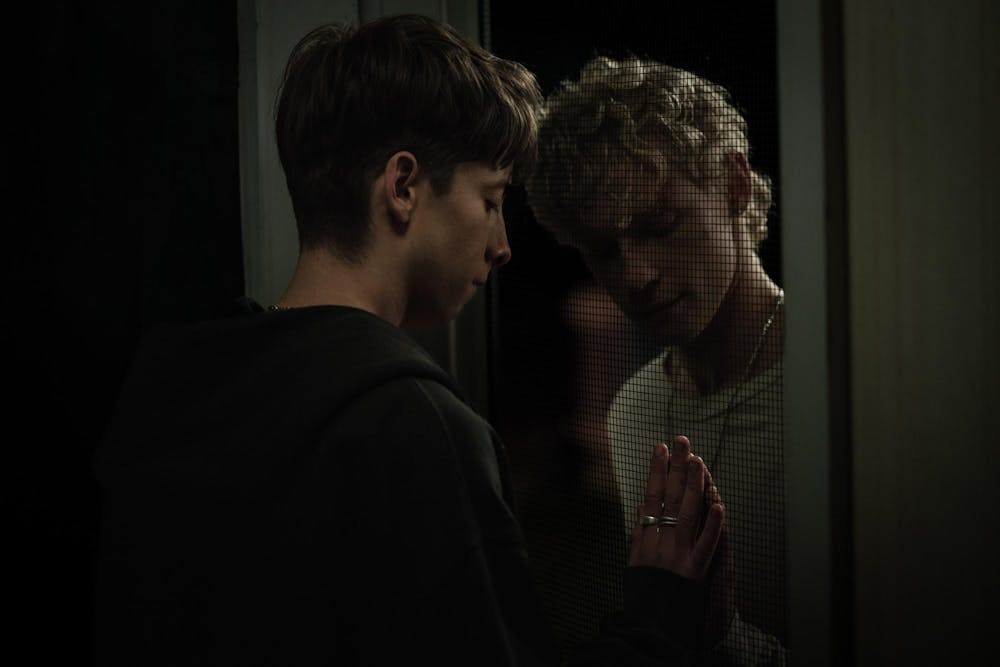
In the film, two teenage boys, Naim (Joe Bird) and Ryan (Stacy Clausen), live in an overtly religious small town in Victoria, Australia. After the local church community finds out that the two of them are gay and have feelings for each other, a deliverance preacher (Nicholas Hope) curses them in a spiritual ritual at the behest of the boys’ parents. Each boy is then stalked by a deadly entity that takes the form of the person they desire the most, each other.
Admittedly, this is a great concept. The idea of making two lovers scared of each other was interesting. Not being able to tell if Naim was interacting with Ryan or the entity made me pay a lot more attention. However, in the end I think this film suffers from too many narrative issues for me to truly love it.
Starting off, the homophobic Christian group in this film goes entirely unpunished, leading to, in my opinion, a disappointing end. Basically, the homophobes win; even during Pride Month. Furthermore, the boys are left stuck with their curse forever. Honestly, that’s even scarier than the jump scares.
I also don’t really understand the deliverance preacher's goals in the film. If the idea is to convert them straight, why make their safe spaces each other? Since the entity only appears when each person is alone, Naim and Ryan simply end up together at the end, presumably never to be separated.
And then there is the fact that Naim is an incredibly unintelligent main character. In the film, Ryan tells Naim to stay away from anything that looks like him because when Naim is alone, anything that appears as Ryan could be a threat. And what does Naim do? He finds himself alone with “Ryan” several times throughout the film and is constantly surprised when he’s attacked. Like, seriously, either stop talking to Ryan or only interact with him when he is surrounded by other people.
It’s a cliche that horror movie characters always make the dumbest and most unrealistic decisions that get themselves in a life-threatening scenario, and I would have loved to see this film make its characters a little less naive.
I also felt like this film seemed to be allergic to the words “gay” or “homosexual,” which was annoying as it’s clearly set in the modern day where those words are prevalent throughout society.
When the two boys describe their feelings, they talk about themselves as outcasts, but never explicitly gay. And when the church talks about their behavior, they describe it using terms of lust and desire rather than homosexuality. As someone who grew up attending a homophobic church as a gay kid, it felt unrealistic considering the film’s conservative Christian setting.
However, as a love story, I think the film worked pretty well. Naim and Ryan have great chemistry, and you could feel how much they wanted to be together. The two actors did a great job creating the on-screen romance, and I hope to see them in more projects in the future. I thought the curse was sort of a silver lining for the boys. The church's homophobic and religious agenda ended up bringing them closer together.
I also think the story’s open-ended conclusion makes for a compelling finish. After a whole night of experiencing the entity’s horrors, Naim finds the real Ryan and they run away together. While they seem happy, the viewer can see the entity in the form of Ryan still lurking outside the train car window. My interpretation of this was to show that the couple can have a future together, but their religious trauma would always make them paranoid. I’m just glad the film wasn’t a doomed or problematic gay romance as so many often are like “The Song of Achilles” or “Call Me By Your Name.”
Overall, I think “Leviticus” is a welcome addition to this year’s growing list of good horror movies. Even with its many issues, I thought it was at the very least original and artistic. It kept a serious tone throughout the whole film, never breaking for a cheesy moment; which I always appreciate in horror films. It’s also a great step toward more queer representation in media that isn’t sensationalized.


