Editor's note: All opinions, columns and letters reflect the views of the individual writer and not necessarily those of the IDS or its staffers.
According to The New York Times, Amazon MGM spent roughly $35 million promoting "Melania." The Washington Post cut over 300 journalists. How are these incidents connected? Both Amazon MGM and the Washington Post are owned by long-time Trump puppet Jeff Bezos. With billionaires pulling the strings of our entertainment and news, propaganda is inevitable.
Looking at the commercials I’ve seen over the past year, I’ve noticed three outstanding tactics to draw in audiences. First, propaganda ads are commonly aired on live broadcasts or platforms where ads are unskippable to gain viewership. Second, some use absurdity to gain publicity and push messages further. And finally, certain advertisers will act as a voice of reason or feign political neutrality to gain audience trust.
In 2022, Disney+ launched its ads for users paying for the “basic” plan. Since then, already-paying users are forced to endure whatever commercials come their way when streaming content. Among those commercials, Kristi Noem’s deplorable advertisement for the CBP Home app calls on immigrants to essentially self-deport with a mobile application. This and other government-funded ads have primarily appeared as unskippable on streaming platforms or aired during live broadcasts.
But if you want that wonderful traction of short-form content, you’ll have to find another way to attract eyes in a world where viewers can simply scroll away.
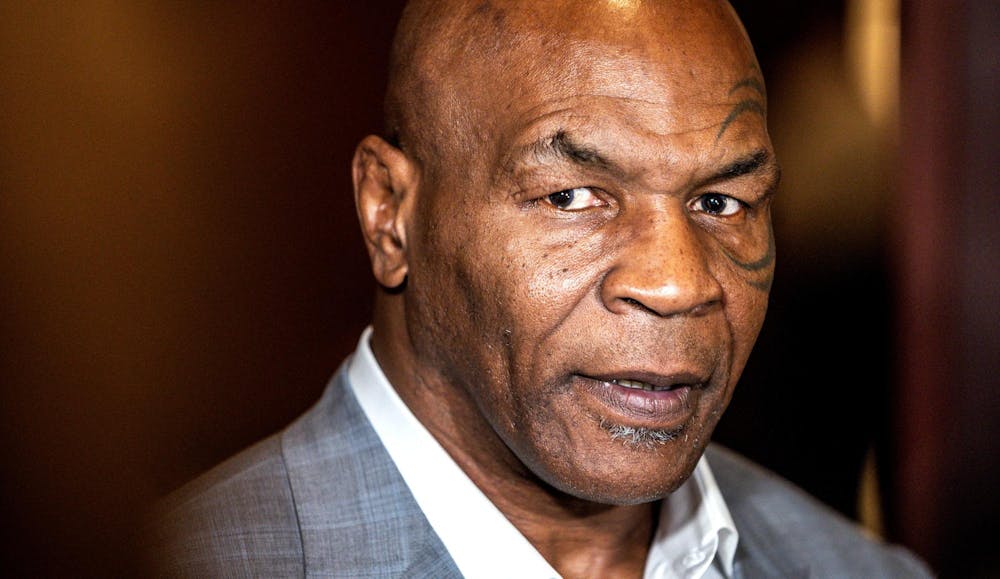
On a doomscrolling endeavor this week, I noticed multiple content creators parodying a recent ad aired on Super Bowl Sunday. When I went to YouTube to see for myself, I was met with Mike Tyson referring to Americans as “the most obese, fudgy people,” in between takes of loudly chomping on produce. The ad was sponsored by the MAHA Center Inc., which is a non-profit modeled after the “Make America Healthy Again” movement and Robert F. Kennedy Jr.’s medical policies. Instead of simply warning of the dangers of obesity, the ad’s wording bluntly aligns with social stigmas about body image and physical attractiveness. So blunt in fact, it’s hilarious.
And that’s the point. Let’s be honest for a moment, no one would — or should — book Mike Tyson of all people to narrate a serious PSA. The sheer absurdity of the ad is what spreads its message further. There is no reality in which MAHA could have thought Tyson’s testimonial was going to pull audiences’ heartstrings. But it sure is funny, and that’s what gets people talking about, sharing and parodying it.
Some commercials take a more indirect approach to their right-wing messaging, posing as a sane middle ground in a heated debate. Cosplaying neutrality, they can reach general viewers more easily.
For example, in a PSA I saw on Instagram titled “The Girl in the Middle,” a young woman facing an unplanned pregnancy is torn between two angry mobs of anti-abortion and abortion-rights protesters. In an attempt to veil its conservatism, the ad offers adoption as a third choice beyond the two extremes. But a quick Google search will tell you that the ad’s sponsor, Adoption is an Option, was founded by registered Republican John Knox Jr., whose lengthy donation list includes names like Greg Abbott, Sarah Huckabee Sanders and Marco Rubio.
Even your typical product-oriented commercials are silently promoting right-wing policies through their use and encouragement of AI. The New York Times reports about quarter of ads aired in this year’s Super Bowl featured it in some way, ranging from its use in vodka ads to commercials for companies like OpenAI. And given the White House’s frequent use of AI as its personal propaganda generator, Trump’s stance on the matter is clear.
This January, the administration released a report arguing AI will lead to economic boosts comparable to the Industrial Revolution. Unsurprisingly, Trump’s largest donors have been AI and tech CEOs, with OpenAI’s Greg Brockman donating $12.5 million this past September. Support for the advancement of AI is support for Trump and his fascist policies.
But most viewers will glaze over these details. When we’re given so much information at once, we can’t do in-depth research on every commercial we see. And that’s the goal. Major broadcasts and platforms like Instagram and TikTok are a perfect storm for propaganda, with so many consumers having to multitask with so much content at once. This makes commercials like “The Girl in the Middle” particularly dangerous because their underlying messages can slip under the radar of those not versed in media literacy.
Of course, we aren’t going to do a deep dive into the financial endeavors of every CEO whose advertisements grace our screens. And when viewers can’t skip some of these ads or even escape their influence through the traction they gain on social media, it becomes increasingly difficult to think critically about the plethora of government brain rot we’re being fed on a daily basis.
Emma Howard (she/her) is a sophomore studying cinematic arts.