Editor's note: All opinions, columns and letters reflect the views of the individual writer and not necessarily those of the IDS or its staffers.
Every day, a data center can guzzle nearly 5 million gallons of water. That’s roughly equivalent to the water used by a town of 50,000 people, according to the Environmental and Energy Study Institute. Meanwhile, a phenomenon called “AI hallucinations” can fabricate outputs of historical information due to how Large Language Models predict the next word in every sentence it generates, spreading misinformation as historical fact. In art, the market for AI generated works is estimated to grow by 42% by 2029, although generative systems continue training on copyrighted materials.
In short, we have opened Pandora’s box.
Generative AI has encroached on all areas of our lives in an unprecedented way, and the environmental costs alone outweigh the benefits of allowing the general public free reign over its use. But at the intersection of ripping off artists, fabricating history and wasting oceans of water, there is Darren Aronofsky’s new AI-generated series, “On This Day…1776.”
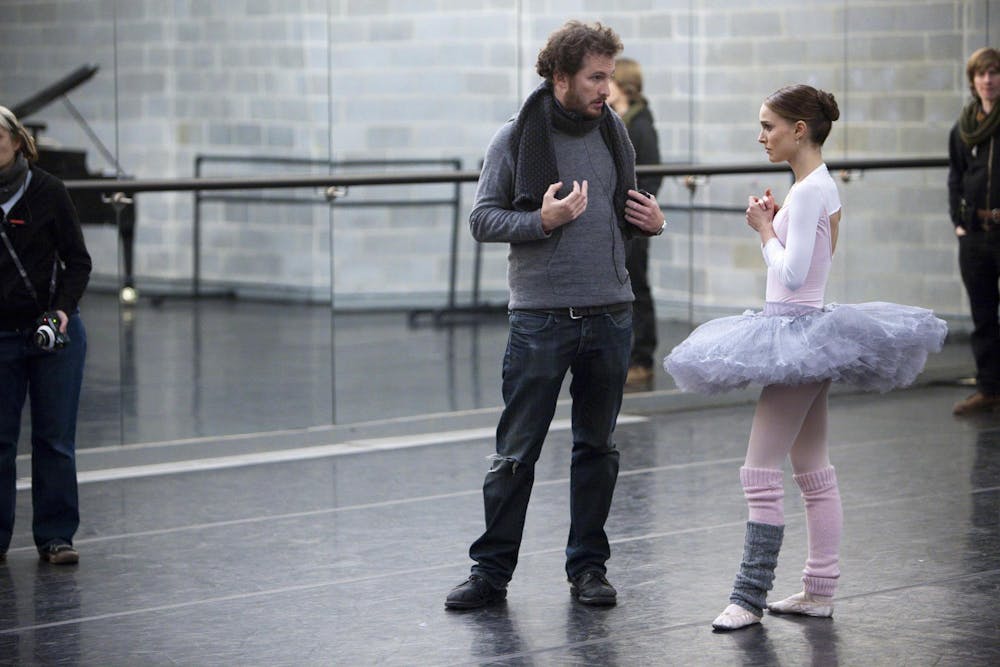
The once-respected director of hits like “Requiem for a Dream,” “Black Swan” and “The Whale,” Aronofsky has traded his artistry for something cheaper: AI slop. According to the Hollywood Reporter, the former filmmaker is now producing his new series by his own AI studio, Primordial Soup, to be released on Time’s Youtube Channel throughout the year. The first episode was uploaded on January 29.
The show will follow a key event of the American Revolutionary War in each episode to mark 250 years of American independence. Partnering with technologies from Google DeepMind, Primordial Soup has used AI to generate everything seen on screen, only using human creatives for voice acting and editing.
From the water it wastes to the real artists it refuses to employ, this project is nothing more than a cash grab masquerading as patriotism and technical innovation. From a legal perspective, this show runs the risk of lawsuit from just how eerily similar the AI renderings mirror real actors. For example, Stuart Heritage of The Guardian noted the show’s depiction of Thomas Paine appears primarily modeled after English actor Ralph Fiennes.
Setting aside ethics, though, “On This Day…1776” is just blatantly poor quality. Viewers have been able to notice and screenshot very clear errors, such as the misspelling of “America.” This production has about as much artistry as a sweater from Shein, made quickly and cheaply to maximize profits.
But there’s a silver lining: Everybody hates it. From Reddit threads to tech articles on CNET, audiences and critics alike are grilling Aronofsky, including longtime fans of his previous work. Just a typical doomscroll can tell you just how intense the backlash is.
One X user wrote, “A director should completely lose their career for this. His Wikipedia should say ‘former filmmaker’ from now on, no matter what else he does.”
And if audiences aren’t buying it, studios won’t, either.
This past December, McDonald’s Netherlands pulled its uncanny AI-generated holiday ad from air following immediate online backlash. Viewers not only disliked the commercial’s negative outlook on the holiday season–as it jokingly encouraged audiences to escape their families at McDonald’s–but also noted its generally cold and creepy visuals. In the gaming world, consumers have pushed developers to cancel certain titles and pull back on the use of AI technologies. Even major shows like Netflix’s “Stranger Things” have faced controversy over the possible use of generative AI, as audiences noticed a decline in the latest season’s writing quality. Although the Duffer Brothers haven’t confirmed this, the theory alone proves audiences don’t believe AI can replace real writers.
I might worry when I see someone open ChatGPT in front of me in a lecture hall and ask it what to eat for lunch. And of course, stop doing that! But I’m also learning that plenty of people still desire humanity in the media they consume.
Soulless content devoid of the human touch is not worth the price of fresh drinking water and independent thought. While there still is a long way to go to convince major companies to drop this cheap new method of production, audience pushback to generative AI gives me hope that human creativity is still valued.
Emma Howard (she/her) is a sophomore studying cinematic arts.