
Editor's note: All opinions, columns and letters reflect the views of the individual writer and not necessarily those of the IDS or its staffers.
First came the 2024 University of California, Berkeley study that found toxic metals in big-brand tampons and pads. This research opened our eyes to the invisible dangers and lack of consumer protection, especially for women, in America. Sadly, it’s not just period products that are allowed to poison us.
It's time to talk about the hormone-disrupting chemicals commonplace in many products targeted to women.
Fear-mongering headlines, Gwenyth Paltrow and your Facebook-fooled aunt throw around the term “chemical” like it’s a diseased hot potato. But chemicals aren’t inherently safe or dangerous. Lots of substances are chemicals, like the water we drink, the oxygen we breathe in and the carbon dioxide we breathe out.
The important distinction for whether to worry is dose dependence. The toxicity — a substance’s potential for causing harmful health effects — depends on how much exposure is required to cause those negative effects. A chemical is considered non-toxic if only an unreasonably substantial amount of exposure causes harm (technically, water can kill you by drowning). Substances’ toxicity also depends on factors like how readily human bodies absorb, detoxify and eliminate them.
It’s safe to say that limiting your exposure to toxic chemicals is a good way to look after your health. However, only 1% of the nearly 85,000 man-made chemicals worldwide have been evaluated for safety. We’re exposed to these daily, from food to beauty products, fragrances, packaging and more. To add insult to injury, we know over 1,000 of these chemicals might fall into the group of chemicals called endocrine disruptors.
What are endocrine-disrupting chemicals? Well, an EDC is any chemical that mimics or interferes with the natural functions of your body’s endocrine system, which releases over 50 hormones into your blood and regulates the levels of each. Hormones are the chemical Hermes, messengers formed and secreted by glands, traversing rivers of blood and stopping over in organs and tissues to hand out messages to your body to change biological functions.”
Once absorbed by the body, EDCs — doppelganger hormones — have free rein to decrease or increase normal hormone levels, or alter natural hormone production. Thus, EDCs thrift Hermes’ messenger bag and dump its contents into your body, creating their own small changes in our finely tuned biological systems.
This process has significant health ramifications. Even at low doses, EDCs are highly toxic. Disrupting the endocrine system means disrupting the wide breadth of biological processes our glands regulate: mood, metabolism, homeostasis — internal balance of water, electrolytes, body temperature and blood pressure and sugar — growth and development, sexual function, reproduction and circadian rhythm. As a result, EDC exposure in humans and wildlife can harmfully disrupt the functions of development, reproduction and immune and nervous systems, leading to increased risk of malformations, infertility and cancer.
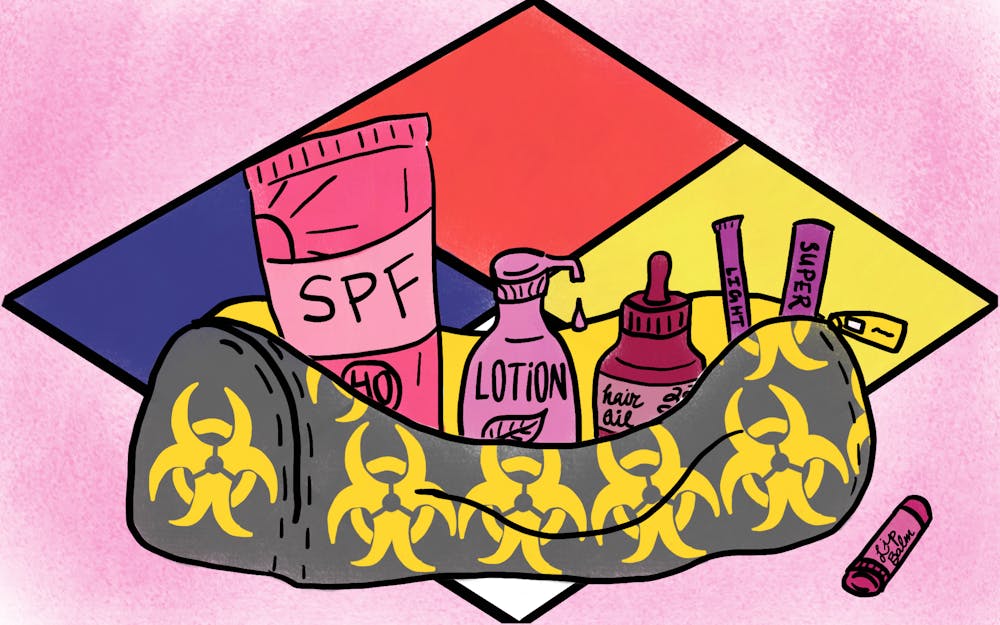
Despite these risks, EDCs are so pervasive that we encounter them through air, diet, skin and water. American manufacturers don’t seem to care a whit, considering we and find EDCs in everyday consumer products like food and beverage packaging, toys, carpet, pesticides and some flame-retardant chemicals. And these manufacturers may care the least about women’s health, as EDCs are rife in feminine products like tampons and pads and an overwhelming amount of cosmetic goods marketed specifically to women: anti-aging, skincare (and skin lighteners), dental, fragrance, hair, makeup and nail products.
The most common and toxic EDCs to be aware of are brominated flame retardants and polychlorinated biphenyls used in clothing, furniture and electronics; phthalates and bisphenol A (BPA) in plastics and fragrances; heavy metals like lead and cadmium; pesticides and herbicides; and non-degradable PFAS substances in cookware, carpets and textiles. Note that EDCs like parabens, phthalates and heavy metals are common in cosmetics as well. Even sunscreen contains compounds like PABA, octinoxate and homosalate. Considering this plethora of sources, it’s not all too shocking that over 97% of Americans carry at least one EDC in their bodies at a time, but it is maddening.
It’s hypocritical for the American government to recommend wearing sunscreen for your health — which you should definitely do — and then turn around and allow manufacturers to use EDCs in that exact product. Furthermore, it’s disheartening in the first place that our society teaches girls and women that beauty is currency. What’s darkly ironic is that we’re also told that currency can be increased by using some particular product that will likely silently increase reproductive risks and damage crucial bodily processes. It’s a vicious cycle, or, more aptly, a trap. Given the normalization of heroin chic's resurgence, the trending dead eyes pose and the misuse of Ozempic, maybe this irony is unsurprising. But things don’t have to be this way.
While it can be hard to avoid some sources of EDCs in the air and water, this group of chemicals’ prevalence in our lives should elicit more than an “oh well.” Complacency is as much a choice as consumerism, so make your choices count. By buying and slathering on that Sun Bum sunscreen every summer, you communicate your acceptance of the literally poisonous status quo to negligent companies.
Instead, be a conscious consumer. You can use apps like Yuka to scan beauty aisle barcodes to identify harmful ingredients in their products, or screen ingredient lists against the biggest and baddest EDCs listed above. Alternatively, buying and using fewer plastics and cosmetics — essentially, most “new” products — is a radical decision that will benefit your health by reducing exposure to EDCs, global waste and carbon emissions that contribute to climate change.
Sure, government agencies should shoulder the responsibility for regulating commonplace exposure to toxic chemicals, but they don’t. Shoulda, woulda, coulda! We will never live in a perfect world. By now, it’s no secret to us that our government cares more about the bottom line than what you put on your face, so you have to stand up for yourself and your own health.
Odessa Lyon (she/her) is a senior studying biology and English, pursuing a minor in European studies.



