Editor's note: All opinions, columns and letters reflect the views of the individual writer and not necessarily those of the IDS or its staffers.
In one scenario for education’s future, we’ll soon see classes without reading. This is already becoming the case with the infamous textbook, which, once upon a time, was required for any college course.
Today, fewer than 10% of courses use exclusively physical textbooks, though 41% of faculty in institutions of higher learning across the country believe students would benefit more from them than their digital counterparts.
But this trend away from printed text will also turn the last page on the book.
The contributing factors are numerous. We could lay blame on former President George W. Bush and the late Democratic Sen. Ted Kennedy of Massachusetts. Since 2002, their bipartisan product, the No Child Left Behind Act, has prioritized instructing students with short informational texts, resembling those they will encounter on standardized tests, over whole, canonical books.
Or we could point to technology like Google Search and now ChatGPT. Both have further clipped the texts we read into bite-sized informationals. Why parse through the “unwashed phenomenon” of a book yourself when artificial intelligence can provide you with its cleanest, most predictable meaning in a message no longer than a text?
Also consider cultural politics’ role in reading’s ongoing demise. More state legislatures and university boards are placing restrictions on syllabi and, in effect, on the texts courses can cover. The excerpts of books that survived in the classroom until now are vanishing because of book bans aimed at expelling “wokeness” — or otherwise, the uncomfortable, like racial themes in “The Adventures of Huckleberry Finn.”
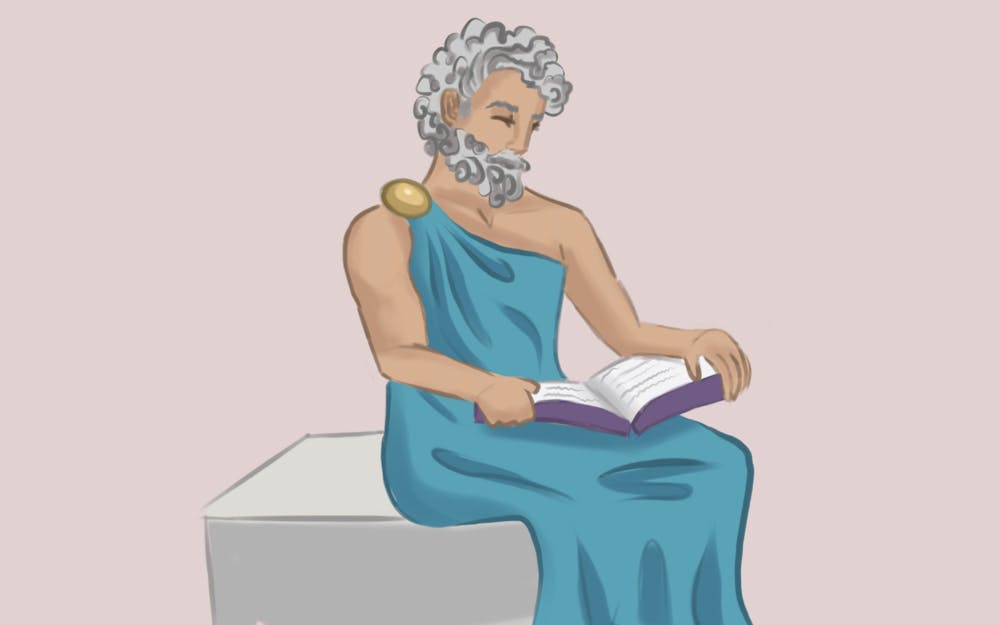
At Texas A&M University, such restrictions suppressed Plato’s “Symposium.” In this work, the titan of philosophy pores over sex and love. It was Plato who founded academia when he penned Socrates’ dialogues, initiating more than two millennia of education based on reading. Now it is Plato who stands trial during what is widely considered the most troubling time for academia in United States history. Coincidentally, this time also marks a relative low in the public’s reading capabilities.
The nature of reading, epitomized by the enduring encounter with the unpartitioned book, stands antithetical to these trends. No matter which you pin most of the fault on, all three represent the sanitization of the learning experience. After all, most of our classrooms are a far cry from the spontaneous call of the street-born Socrates. More saliently, they resemble less than ever classrooms from the recent past, where students faced the full surprise of canonical texts.
In turn, learning outcomes have floundered. Students not only do not read. They cannot, under present circumstances, which no longer expect them to.
In 1941, W. H. Auden, an American poet and professor of literature at the University of Michigan, included 6,000 pages of reading in an undergraduate course. Auden clearly harbored great expectations for his students. Too great for today? Nothing suggests this. When University of Oklahoma history professor Wilfred McClay copied this design in a 2018 class, it became one of the school’s most popular.
Allow me to compare, returning to politics for a moment, the kind of politicians our era has spawned — Kamala Harris, Gavin Newsom, Donald Trump — with the statesmen reared in Auden’s — Martin Luther King Jr., Robert F. Kennedy and their ilk.
Kennedy cited Aeschylus, a Greek poet featured in Auden’s course just a few years before the former's university years, during contemporaneous speeches. No less, King contributed to the oeuvre of American literature with more speeches than just “I Have a Dream.” I don’t possess such great expectations for Harris, Newsom or Trump.
Finding such comparatively desirable chickens, if we wish to recover them, we must begin by rebuilding the coop in which their eggs were laid.
Instead of pushing generic catechetics of artificial intelligence on Canvas — for students to complete alone, faces glued to their screens — Indiana University’s administration should encourage departments across disciplines to take up this older model. Perhaps AI’s advance cannot be halted, but in career fields that will soon be overstreamed by regurgitative patterns, practice in critical interpretation will carry economic weight.
No need to bear all of society’s problems, though. Simply pick up a classic book for yourself. Thumb through Plato’s “Symposium,” just in time for Valentine’s Day. The classics are a sure method of finding your meaning in our shared humanity.
Eric Cannon (he/him) is a sophomore studying philosophy and political science and currently serves as a member of IU Student Government.