
Editor's note: All opinions, columns and letters reflect the views of the individual writer and not necessarily those of the IDS or its staffers.
In the 19th century, barbed wire, railroads and federal land policy closed the once expansive American West. With it gone, the last cowboy died.
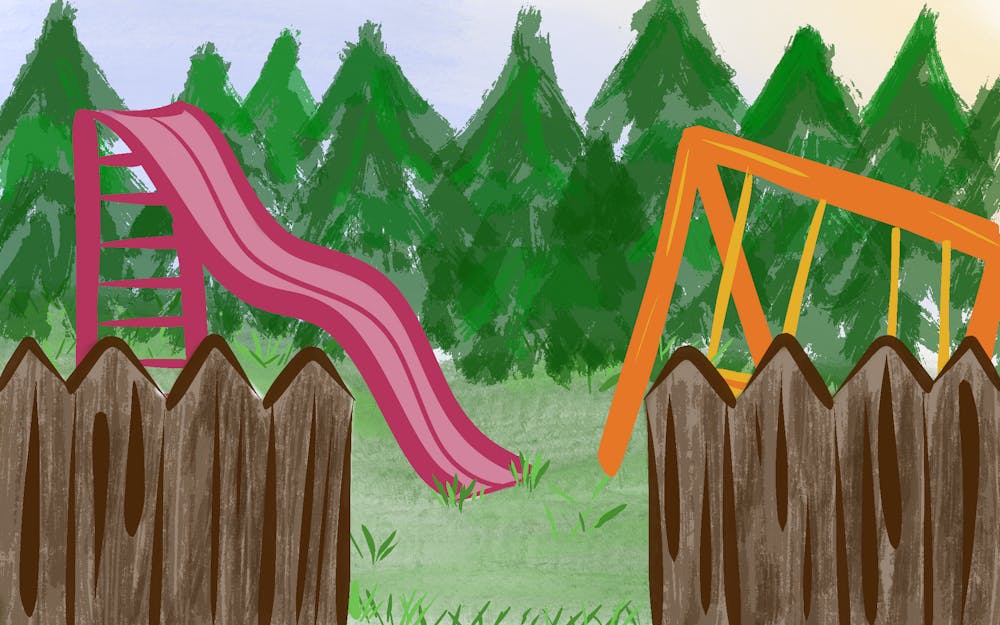
Something similar has happened to the free-range child.
Missing children panic from the Reagan era, when the phrase “stranger danger” entered common parlance, and, beginning in the mid-2000s, addictive technology that alienates us — our smartphones — closed the American neighborhood.
With nowhere left for them to go, two ways of life that both embodied honest, hard-nosed pioneering and adventure — cowboying on the frontier and kidding around in streets and parks until dinnertime — were buried in the places they once flourished.
While the cowboy, a casualty of the frozen boxcar, is condemned to remain among the dead — driving cattle to the slaughter over unpaved plains on horseback was long ago rendered uneconomic — the independent child could be resurrected.
If we wished to recover that way of life — or at any rate, incorporate its wisdom into a new kind of modern life — we would need to be guided by our heritage artists Mark Twain and Norman Rockwell or follow the true myth of the American Hercules, President Theodore Roosevelt.
At 16, Roosevelt hunted and watched birds in New York’s Adirondack Mountains. Rockwell, as a child, escaped to the Long Island shore to kick stones before he returned home at dusk, an experience he later captured in his painting, The Runaway. Twain wrote tales of youthful adventure scholars describe as “quintessentially American.”
But if we sought to live with their freedom, we would face one problem: It would be illegal.
In Indiana, the Department of Child Services can investigate parents who allow their children to engage in age-old independent activity: walking to stores, playing outside or staying at home alone, not to mention hunting, beachbound adventures and stone-kicking.
So, goodbye, Tom Sawyer. You were a good read, but not another American child — certainly not two, Huck Finn — will dare go beyond their living room. Their guardians’ watchful eyes must always surveil them. Father State will ensure it — as it must also ensure the children study the degrees it chooses. Stay entertained with your iPad instead, Tom and Huck, and become lifelong products of Big Tech’s algorithms.
More than “can,” the DCS actually does invade the family home when parents grant their children the same freedom every child had a generation ago, which they enjoyed while managing to avoid national calamity.
Hannah Tarr, a mother of six from Columbus, Indiana, has faced two DCS assessments in the past six months “based solely on allegations that she and her husband allow their children appropriate independence,” according to the Indiana Capital Chronicle.
Tarr told the Chronicle she and her husband let some of their children — ages 11, 10, 8 and 7 — bike to school. For short periods, they also let the elder siblings care for the younger ones while she and her husband were away.
Both investigations found the Tarr children were not endangered in any way, but they show how the state can lay siege on the family without legitimate reason. In turn, this rules out the free-range child's return because it's the family that is supposed to form the child for the range.
Not only is the family society’s smallest unit, but it’s also the place we first learn to live as humans. If the state is supposed to empower us to live the best lives we can, it’s tyrannical for it to overpower the family’s privileged role in forming our lives.
However, the good news is that in December, State Rep. Jake Teshka (R-North Liberty) authored a bill, House Bill 1035, that clarifies DCS cannot deem parents “neglectful” merely because they allow their children to engage in independent activity. HB 1035 would also bar the state from designating children “in need of services” on this basis alone.
Rep. Victoria Garcia Wilburn (D-Fishers) joined Teshka as a co-author. In a glimpse of bipartisanship, the bill passed the Indiana House of Representatives unanimously Jan. 20 and was transferred to the state Senate, where its fate remains to be determined.
I urge our senators to vote favorably on this bill and, if they do and it reaches his desk, Gov. Mike Braun to sign it into law. HB 1035 represents real “opportunity” for families to give children a share in the American tradition of freedom as it existed on the once great frontier and in the neighborhood.
Families should seize this opportunity. Kids today feel unprepared for their futures. And no wonder. Life is not a cage, but the screens omnipresent in houses and schools can easily trap us in one without bars. Far and away from this, it was their open adventure of nature and culture as children that prepared Roosevelt, Rockwell and Twain for the paths they later forged.
Eric Cannon (he/him) is a sophomore studying philosophy and political science and currently serves as a member of IU Student Government.



