
As COP30 came to an end in Belém, Brazil, several contradictions were exposed—especially when we focus not on what was included in the final document, but on what was left out.
While all the buzz surrounded the absence of a fossil fuel phase-out plan, nothing about critical minerals—an issue of huge importance—made it into the summit’s closing document. This is particularly relevant considering that without a serious debate about these minerals, there is no stable foundation for a just transition, being they are a key component of it and central to discussions about social and environmental impacts.
However, this omission does not appear to be casual or random. It seems to be a political choice in avoiding confronting sensitive issues that conflict on the surface—such as the cost implications and responsibilities several parties must take on if the energy transition is to go in the desired direction.
If political leaders won't establish the necessary frameworks, a requirement emerges to count on practical tools to fill the gap in order to manage these inevitable conflicts. In this regard, social impact and ESG services in Latin America play a pivotal role in educating the public, as well as decision-makers, to ensure the ethical and sustainable extraction of these minerals aligns with broader environmental and social goals.
The Centrality of Critical Minerals in the Global Energy Transition: Why Do Critical Minerals Matter?
One of the key elements of decarbonization lies in replacing fossil fuel-based energy with renewable power. To do this, however, foundational infrastructure is needed, and this is where the relevant materials do justice to the word “critical”.
Electric vehicles, for example, rely on several critical minerals, such as lithium, cobalt, nickel and graphite for several of their components with other clean energies following the same pattern. Solar panels require silver, and other rare elements such as neodymium are essential to the magnets that make wind turbines work, and not to mention copper, which is used to produce electrical wiring, a vital resource in energy transmission. We can therefore assume, if we want to decarbonize, these minerals are the backbone of achieving it.
Nevertheless, with the imminent transition, the interest in these minerals is expected to skyrocket. Lithium demand, for example, is expected to increase eightfold by 2040 when compared to 2023. All other minerals listed above will likely follow this trend as well—such as nickel and cobalt, which are expected to double in demand over this same period.
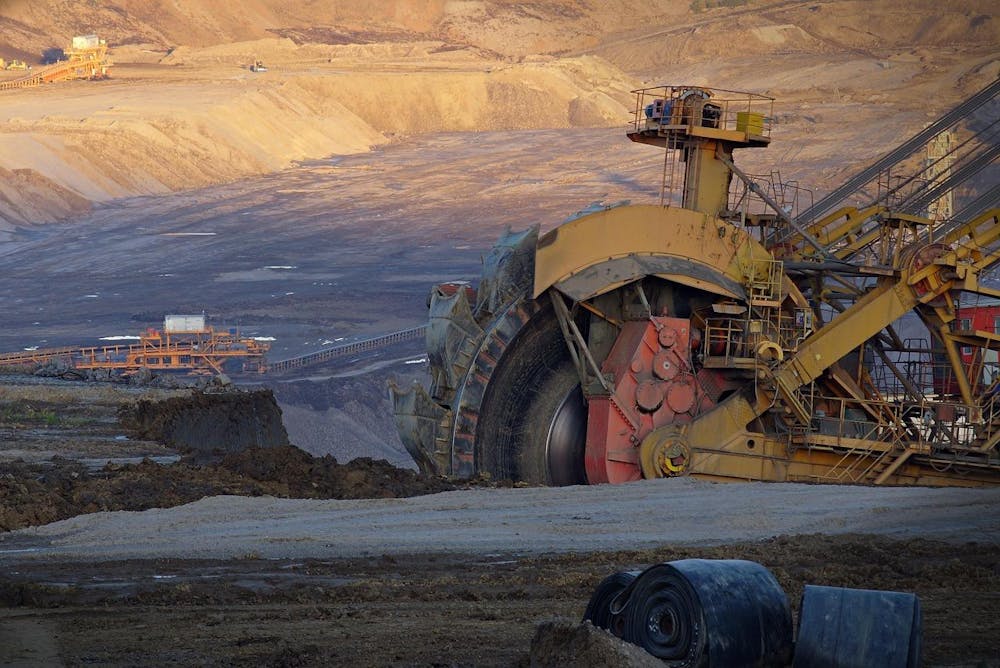
Here, we face two problems: first, critical minerals are not infinite; second, extraction often causes serious local and regional damage, as mining is an aggressive process and surges debates about environmental justice. This presents a contradiction and an uncomfortable reality: we are not moving from an extractive economy to a digital one, but from one form of extraction to another, and it also creates geopolitical friction—echoing the tensions already seen in global gas and oil markets.
Critical Minerals at COP30 Belém Summit: Expectation Vs. Reality
COP30’s Blue Zone hosted debates featuring the Brazilian Energy Ministry, the World Bank, the Global Clean Power Alliance, as well as other global institutions. The expectation was to paint a picture of the role of critical minerals in the energy transition and the issues expected to arise as a consequence of this increase in demand.
Some of the points discussed include the need to increase global supply with transparency and sustainability, while ensuring socio-economic benefits for local communities; building resilient, diversified low-carbon supply chains; and the need for investment, innovation and circular economy strategies.
These are all valid and important aspects that need to be considered. The problem, however, was that these discussions were brushed aside during COP30 and didn’t make it into the final agreement.
Critical minerals being treated as a parallel conversation and not a core pillar of the negotiation exposes a glaring contradiction, one that was a deliberate political choice rather than a technical oversight: not to step on the toes of industry giants.
What Hindered Progress? The Political and Structural Blockers
A conflict of interests led to the exclusion of critical minerals from COP30’s final document. One of the major obstacles is the longstanding clash between producer and consumer nations—a pattern that has repeated historically, previously seen with other resources in the past. This dispute centers mainly on controlling the supply chain, hence dominating the power dynamic.
Producer nations demand sovereignty over the territories where these resources are located, along with local processing to maximize economic value. Community impact is also a critical topic these nations pointed out, considering the fact mining significantly affects the lives of those living near extraction sites.
Consumer nations, on the other hand, want to secure affordable supplies and a stable influx of minerals. They often resist multilateral governance, preferring to retain full control to ensure more favorable outcomes. There is also concern that producer-led regulations could slow the energy transition as envisioned by consuming countries.
This conflict—directly connected to the omission of critical minerals from the summit’s closing document—exposes a flagrant contradiction. While there is much talk about the energy transition, diplomacy tends to avoid the subject when disputes become touchy, and ultimately failing to deal with the issue properly.
The Implications: A Multidimensional Matrix of Risk, Inequality, and Desequilibrium
The removal of critical minerals from the agenda triggers three interlocking crises: social injustice, environmental damage, and geopolitical instability. Together, these threaten to undermine a fair and sustainable transition.
A truly just energy transition must account for the conditions in which minerals are extracted. This includes addressing social conflicts such as land grabs, mitigating impacts on local and Indigenous communities, and ending labor abuse. Currently, a persistent inequity exists; this encompasses that producer nations are often left with the social burdens of extraction, while consumer nations reap the economic rewards.
Environmentally speaking, a sustainable future cannot be built upon a foundation of ecological degradation—a frequent consequence of mining. Unregulated expansion can lead to severe water contamination and loss of biodiversity, ironically harming the very ecosystems that serve as crucial natural carbon sinks and, thereby, increasing the overall carbon footprint of mineral production.
Finally, this omission heightens geopolitical friction. As previously noted, disputes over power and supply chains hinder cooperative responses, intensify global competition, and risk causing, or exacerbating, diplomatic and economic crises.
Managing Critical Mineral Demand: The Role of Circular Economy Strategies
To mitigate the challenges and risks outlined above, applying circular economy principles to critical minerals emerges as an innovative and essential solution. This approach addresses price volatility and extraction impacts while building more resilient supply chains.
The key strategy adapts the established “inner-loop” concept: reusing, repairing, and repurposing—this time specifically to minerals. This can be achieved by recovering materials from retired technology products rich in critical minerals, which can be recycled, giving new life to new generations of electrical components.
Progress is already underway with advancing research, technology, and business engagement aimed at building a functioning circular supply chain for critical minerals. This model could also mitigate geopolitical tensions by enabling consumer nations to source a significant portion of minerals within their own borders.
Despite its obvious potential, the plan lacks the formal governance framework and international cooperation required for global viability. This shortcoming was clearly demonstrated by the outcome of COP30.
Contradiction Exposed.... Now, What’s Next?
COP30’s rhetoric collapsed in the face of an urgent situation that parties chose to ignore out of political interest. By excluding critical minerals from the final document, we risk undermining the energy transition and the possibility of building a truly sustainable and responsible alternative. Additionally, this omission damages COP’s credibility, revealing a reluctance to confront the core challenges and inequities of the process.
In response, a coalition of countries led by Colombia and the Netherlands, dissatisfied with the summit’s approach to a just transition, has organized a parallel conference. This meeting, scheduled for April 2026 in Santa Marta, Colombia, represents a crucial next chapter. It will test whether this conflict of interests can be addressed with seriousness and finally place critical minerals discussions where they belong: in the spotlight.
By Henrique Castro Barbosa.


