Most of your studying fails for boring reasons. You start too late, you work in the wrong place, or your phone takes the first ten minutes and the next ten follow it. You can fix a lot of that with rules that run automatically and short study blocks you repeat across the week. When the routine holds, your workload feels less like a crisis and more like admin.
Researchers keep finding that simple learning moves beat all night bursts. Practice tests and spaced sessions help across ages and subjects because they force retrieval, and retrieval is what sticks. Dunlosky and colleagues rated practice testing and distributed practice as high utility techniques, meaning they tend to work broadly without fancy gear.
Start by capping the scroll
A site blocker helps because it turns your plan into an automatic rule. Services such as BlockSite run as a browser extension and mobile app, and you pick targets, schedules, and focus windows so distracting sites fail to load during the hours you set. You stop bargaining with yourself at 11:17 p.m., and your attention stays inside the room where your work sits.
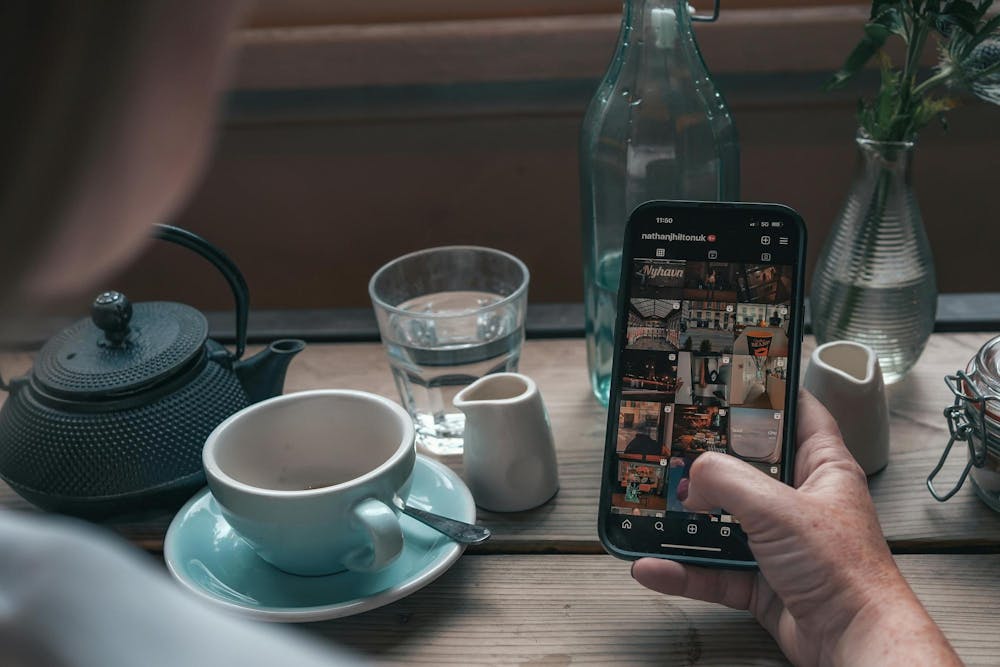
Your brain already runs a reward economy, and the phone plays it like a sort of social slot machine. A Gallup report in 2023 put teens at an average of 4.8 hours per day on social media, and that number explains why “I’ll study after one more check” keeps turning into midnight. Indiana students face the same gravity as everyone else, so the fix starts with friction, like putting the cookie jar on a high shelf.
Build study sessions around retrieval
Practice testing works because it forces recall, and recall builds durability. Roediger and Karpicke showed that taking memory tests improved long-term retention, even when students felt like extra studying would help more. You can use this without a test booklet. You close notes, write what you remember, then open notes and patch gaps in a different colour.
Spacing beats cramming because your brain has to rebuild the memory each time. Cepeda and colleagues reviewed hundreds of experiments and found a robust distributed practice effect across verbal recall tasks, which maps neatly onto classes that demand definitions, steps, and explanations. You study biology on Monday, then you pull the same material on Wednesday, then you do a short recall pass on Saturday, and the content starts to stick like a chorus you keep hearing in the car.
The stats that show you how to shape a realistic plan
- Teens reported an average of 4.8 hours per day on social media in a 2023 Gallup report. You don't need to stop altogether, but there's probably room for improvement.
- The American Academy of Sleep Medicine recommends 8 to 10 hours per 24 hours for ages 13 to 18.
- Roediger and Karpicke found practice testing improves later retention, a core “testing effect” result.
- Cepeda and colleagues reported 839 assessments of distributed practice across 317 experiments in their quantitative synthesis.
Run your week like a small production schedule
You pick two anchor blocks, one early and one later, and you treat them as fixed appointments. A Monday block handles reading and outlining. A Thursday block handles retrieval and practice problems. This avoids the trap where every subject fights for the same evening, then nobody gets enough depth to matter. If you like a pop culture reference point, and feel particularly motivated by the facial features of wild animals, think of Rocky’s training montage, except the win comes from repetition and clean form.
You also link study to your financial goals in a practical way. A steady grade path keeps scholarship options alive, and it keeps internships within reach, which makes your future budget easier to breathe in. That link feels obvious when rent, books, and food prices show up on the same screen as your grades.
Sleep and setup, since your brain runs on biology
Sleep keeps attention steady and helps memory consolidation, and the recommended range for teens sits at 8 to 10 hours per 24 hours. You can treat sleep as a study tool rather than a reward. If you set a shut-down routine, your morning recall improves, and your afternoon patience improves, and both matter when you face long readings or math sets.
Your environment matters more than motivation. You set one study spot that stays boring and consistent, then you keep it stocked with the tools you actually use, like charger, water, and a single notebook for recall dumps. You also keep your phone outside the chair radius during focus blocks, because reach equals temptation, and temptation costs time.
Use tech like a tool
Digital platforms seem like they're only getting worse, but there is a way to use it productively. It can help when you choose them for one job. You watch one targeted lecture clip, then you stop and write a short summary from memory, then you check it against the video, and you move on. That pattern keeps the internet in a servant role, and it prevents the autoplay spiral that turns “study support” into an evening sinkhole.
A study plan also supports financial goals in a quieter way. Better time control reduces last minute stress spending, like delivery meals and emergency supplies, and it frees hours for paid work that fits your schedule rather than crushing it. You build stability, and stability tends to pay you back.