
Not so long ago, if fans wanted to hear from their favorite athletes, they had to wait for open locker room access or the postgame press conference. Reporters asked the questions, and editors decided what made the story. There was separation between the person playing the game and the person reporting it.
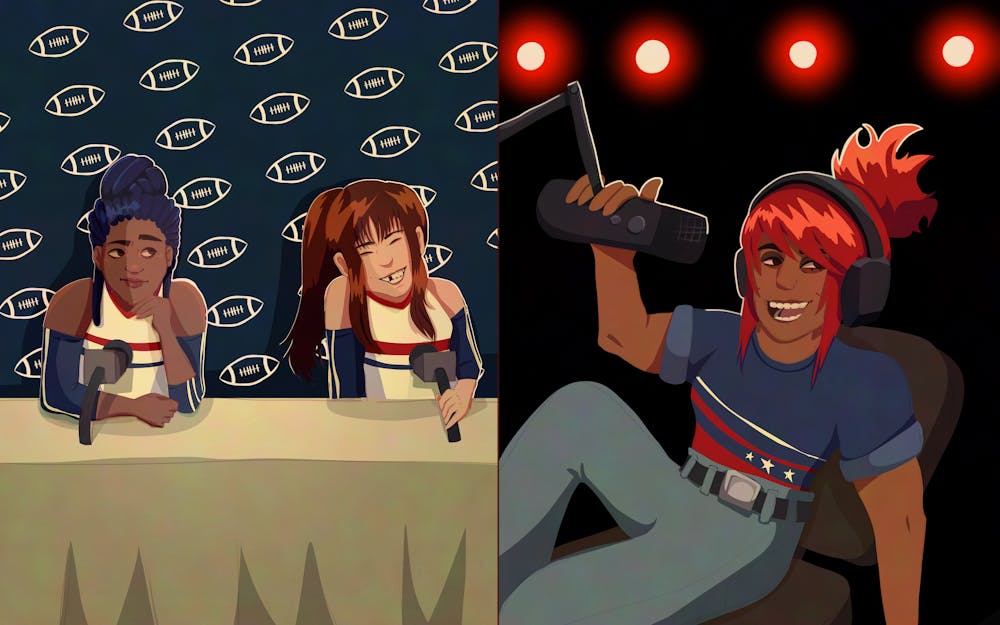
Now athletes can grab a microphone, launch a podcast and tell their own story, which blurs the lines of journalism. What feels like direct access and unfiltered honesty is often part analysis, part entertainment and part something else entirely, and it is worth asking who benefits from that shift.
A study from the USC Annenberg Norman Lear Center shows just how big athlete-owned media has become. Their researchers identified 33 athlete-owned production companies creating more than 370 media projects, including podcasts, TV shows and digital series. It has grown into a multi-billion-dollar industry.
For example, LeBron James's company, The SpringHill Company, is valued at about $725 million, while Peyton Manning's Omaha Productions is worth around $400 million. Athlete-hosted podcasts have racked up more than 7 billion views on YouTube, 725 million likes on TikTok and 37 million Instagram followers, the study found. These numbers aren't just trends; they represent a major shift in how sports media operates.
This is a win for athletes. They get to tell their side of the story. If there's a controversy, they can explain it in their own words instead of through a clipped quote. Long-form podcasts provide nuances that 30-second locker-room interviews rarely capture.
Younger sports podcast listeners are also some of the most engaged and loyal consumers in media. In 2023, 42% of Gen Z sports fans said they "frequently" or "occasionally" listened to a sports podcast. They’re spending more on sports merchandise each year, and about 67% say they trust the products and services used by the athletes they like. That trust gives athletes influence as brand ambassadors.
That is where it starts to get complicated. Athletes who host their own shows are not just talking about the game or hot topics in sports. They are protecting their reputation and brand while highlighting other companies' brands. Endorsement deals, sponsorships and future opportunities are all tied to how they are perceived. That doesn't mean they are being disingenuous, but it does mean the story is being told with personal stakes attached.
This brings us to an even bigger question: who is really in control — the athlete, or the brand?
Look at Pat McAfee, for example. The former Colts punter built The Pat McAfee Show into one of the world's biggest sports talk platforms, mixing football breakdowns, locker room stories, opinions and sponsor reads all in the same breath. One moment he’s reacting to a scandal, the next he’s promoting a betting app.
McAfee has long navigated this balance between personal commentary and sponsorship, showing how athlete-run media merges content and branding. Even though he doesn’t pretend to be a traditional beat reporter, millions treat his commentary as sports news gospel, giving his platform influence far beyond entertainment.
When promotion is embedded into the conversation rather than separated from it, it becomes part of the experience of consuming sports. The athlete decides what deserves attention and what does not. The platform grows through engagement, and engagement attracts partnerships. Over time, strong takes and marketable moments become more than just opinions. They become assets.
And that dynamic creates real issues for the traditional models of sports journalism.
Reporters are trained to ask uncomfortable questions. They are supposed to challenge coaches, press players on inconsistencies and investigate issues that teams and athletes might avoid. The primary job of a sports reporter is to inform the public. When audiences shift toward athlete-run platforms, that accountability can weaken.
Athletes are rarely going to scrutinize their own contracts, locker room conflicts or organizational failures with the same rigor a journalist might. The incentive structures are completely different.
Athletes have more freedom than ever to shape how they are seen. But when storytelling, sponsorship and self-promotion are one and the same, independence is not as simple as it sounds. If sports journalism’s role is to hold power accountable, it becomes harder to do that when power owns the microphone.
Jack Davis (he/him) is a junior majoring in media with a sports concentration and pursuing a minor in folklore and ethnomusicology and a certificate in journalism.



