
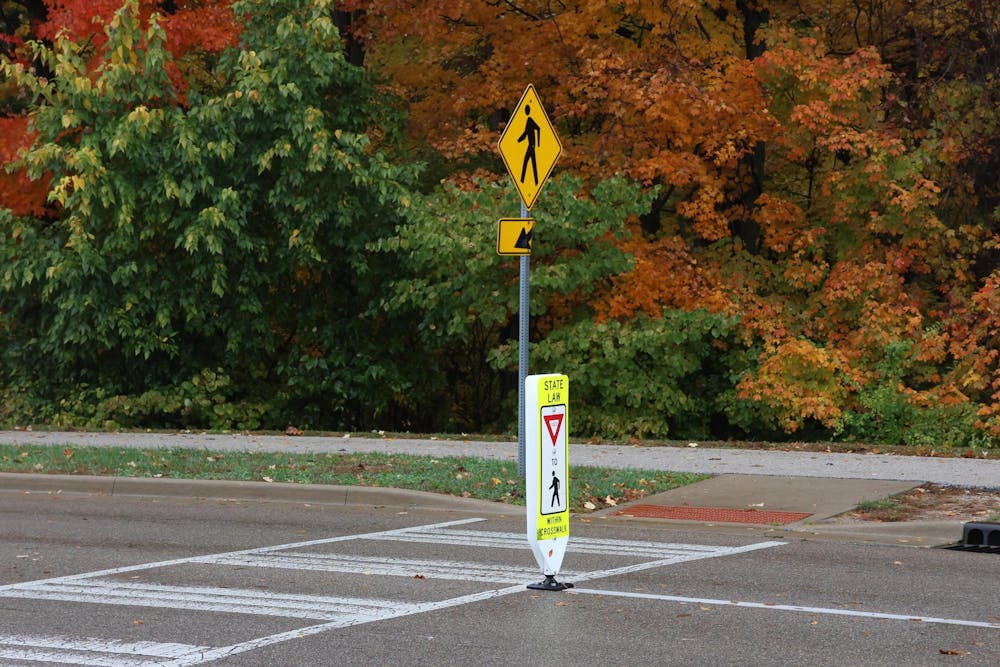
The Foundation of Monroe County Community Schools, a fundraising organization for the Monroe County Community School Corporation, received a $18,698 grant to improve the safety of students walking to school, foundation Executive Director Cyrilla Helm said.
The grant was awarded by the Indianapolis-based organization Health by Design as part of its Safe Routes to School initiative, or SRTS, which aims to increase infrastructure for walking and biking to school.
SRTS was inspired by an increase in obesity levels for children and in traffic around schools, according to Health by Design’s Indiana SRTS Guidebook. SRTS aims to fund infrastructure like bike-and-pedestrian-accessible streets and crosswalks.
“Every student, every person, deserves the ability to get around their community in the way that they want,” Ashlyn Devine, Health by Design director of advocacy and grants, said. “It is a freedom of choice aspect. It's also a sense of empowerment. If we can get students feeling safe, having safe roads and safe access to their schools, they're able to independently navigate to get to their daily.”
This fall, Health by Design granted over $250,000 to schools, trail and biking organizations and the Wabash County Health Department. These awards focus on improving routes to school through “The E’s of Safe Routes to School:” education, encouragement, engineering, enforcement, evaluation, equity and enjoyment.
The funding for this grant comes from Federal American Rescue Plan Act as part of the COVID-19 federal stimulus package. It’s administered through the Indiana State Health Department and distributed through organizations like Health by Design.
“We do really look for organizations and school communities that are going to be doing a more holistic approach to safe routes,” Devine said. “So, looking at not only how can we educate and promote students and their families about walking, biking and using active transportation, but also making that a plausible reality, right?”
Helm said MCCSC plans to use the grant for a pedestrian gate at Binford Elementary School and eight bike racks for schools that need them. It will also fund bike safety education from Lisa Greathouse, manager of Coordinated School Health at IU Health Bloomington Hospital. This is the first grant the foundation has received for health and wellness.
“Ensuring the safety of our students is a top priority, and that includes providing secure and accessible transportation options for all,” Helm said. “Many of our students live within walking or biking distance to school, and we are committed to supporting those who choose to walk, bike, or roll by enhancing safe and equitable routes.”
According to the Indiana SRTS Guidebook, 85% of children in the U.S. go to school by car or bus, with 13% walking. In Bloomington 13% of commuters bike to work and another 5% walk. Devine sees walking as a way to encourage healthy habits for school children.
In 2025 there’s been a reported 219 bike crashes and 329 pedestrian crashes according to the crash data for Bloomington.
“We also know that getting more kids walking, biking, and using active transportation at a young age will instill those practices for use later in life,” Devine said. “So, then we're getting kids who are going to be active into adulthood, which obviously has those physical activity and health benefits.”
Beyond MCCSC, Bloomington is recognized by Walking Friendly as a bronze-level community for its B-Line walking trail and nearly 50 miles total of trails.
The city also has an alternative transportation education group called Go Bloomington, which organizes carpools and aims to reduce the use of single-occupancy vehicles.
“Any mode that reduces single occupant vehicles is a win for the community sustainability in our environment,” Jeffrey Jackson, City of Bloomington Transportation Demand manager, said. “We decrease CO2 emissions, we increase parking availability, and we reduce traffic congestion.”
Devine said the end goal of SRTS funding is to increase the safety of school children.
“When you're outside, walking or biking, you're really a part of the community,” Devine said. “You see your neighbors, you see what's going on. You're not just passing through, you're actively participating.”
CORRECTION: This story has been updated to correct the spelling of Ashlyn Devine's name.


