Editor's note: All opinions, columns and letters reflect the views of the individual writer and not necessarily those of the IDS or its staffers.
I attended a career discussion Nov. 7 on trend-based media with digital vice president at ID Relations Adryan Dillon and E! News reporter Catt Sadler, both IU alumni. During the Q&A section, I asked about balancing originality with engagement in trend-driven media sources, or media based on popular topics and current behaviors.
As an aspiring music or film journalist, I asked this question anticipating what I’d do in my own line of work; both areas are heavily influenced by trends.
Sadler and Dillon told me to pay attention to trends but remain authentic and put yourself out there. I think they gave me this advice because personal experience and vulnerability resist algorithms and fuel genuine, original content that feels curated instead of generated.
In giving too much priority to attention or engagement, one risks dampening their voice. However, algorithms are powerful tools for reaching audiences, and engagement results in profit. This results in an ethical dilemma for content creators.
My media ethics class had introduced me to the “ethics of care,” a moral theory that emphasizes interpersonal relationships, posing that our moral obligations are shaped by connections to others, rather than abstract principles. It suggests the correct solution to a dilemma is context-dependent, given the unique needs of different people, and rooted in empathy as a foundation for trust, which helps us build connections and understand the needs of others.
In contrast, the theory of utilitarianism implies a simpler, more universal solution. To solve a dilemma, a utilitarian would mainly focus on the outcome, ensuring the greatest happiness for the greatest amount of people.
A clear tension exists between these two frameworks: Should we value relationships or outcomes? Should we prioritize the individual or the majority?
This tension is explored in Vince Gilligan’s new Apple TV show “Pluribus.” In this world, a viral hive mind erases individuality and conflict, leading to worldwide peace and happiness — but costing many lives.
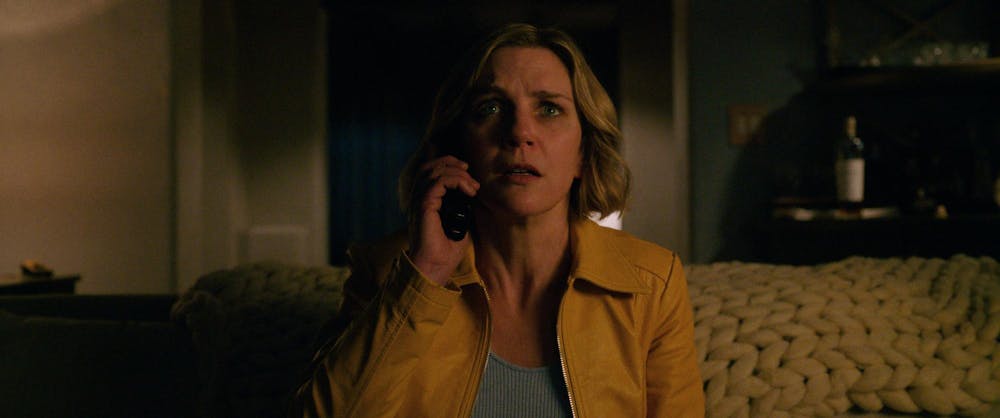
Carol Sturka (Rhea Seehorn), the show’s protagonist, is one of few rare individuals immune to the virus, and, so far, she seems to be the only one determined to restore humanity to its previous state.
With its hive mind that promises bliss for all, “Pluribus” poses questions about whether moral good lies in maximizing happiness or in preserving our capacity for individual connection.
The answer depends on your framework. Ethics of care would frame the show’s “joining” the hive mind as a complete moral loss because it erases humans’ individuality and therefore discourages solutions tailored to specific needs. Meanwhile, utilitarianism would ignore unintended consequences, such as the millions of deaths caused by the virus’s spread, and focus instead on maximizing happiness by bringing survivors into the collective consciousness and enforcing consensus.
Although the hive mind and its representatives try to connect with Carol, their interactions with her come off as artificial and transactional; they focus on keeping her happy and maximizing efficiency to assimilate more people. In real life, we see algorithms operating in a similar way.
I believe an important part of Carol’s character is that she is an author, and therefore an artist. Artists are significantly hindered by algorithms because they favor trends and influencers, discouraging artists from creating and sharing original work. Instead, content creators merely work in pursuit of engagement.
On the level of consumers, algorithms control exposure to content, usually prioritizing whatever is most popular or gets the most clicks, while giving the illusion of choice when browsing social media.
This echoes the irony of the hive mind’s maxim in “Pluribus”: They reassure Carol that her life is her own, but really they want her to surrender and become another worker bee.
Ultimately, the show exaggerates this dilemma in trend-based media for dramatic effect and introduces a situation where much more, including the future of humanity, is at stake. To clarify, I believe technology such as algorithms and artificial intelligence are definitely shaping our future, but not in as drastic a way as the show’s hive mind.
Competing ethical frameworks help illustrate the tension between the utilitarian logic of algorithms and the individualism we value in art, a concept that aligns with the ethics of care and their focus on human community and relationships.
Returning to the advice I received at the trend-based media discussion, the challenge lies in working within the system of technology and algorithms without letting it get in the way of authentic self-expression. Dillon and Sadler reminded me it’s possible to amplify your voice in the face of forces that seem to hinder creativity by leaning into your unique strengths and creating things that reflect them.
Joaquin Baerga (he/him) is a junior studying journalism.