Editor's note: All opinions, columns and letters reflect the views of the individual writer and not necessarily those of the IDS or its staffers.
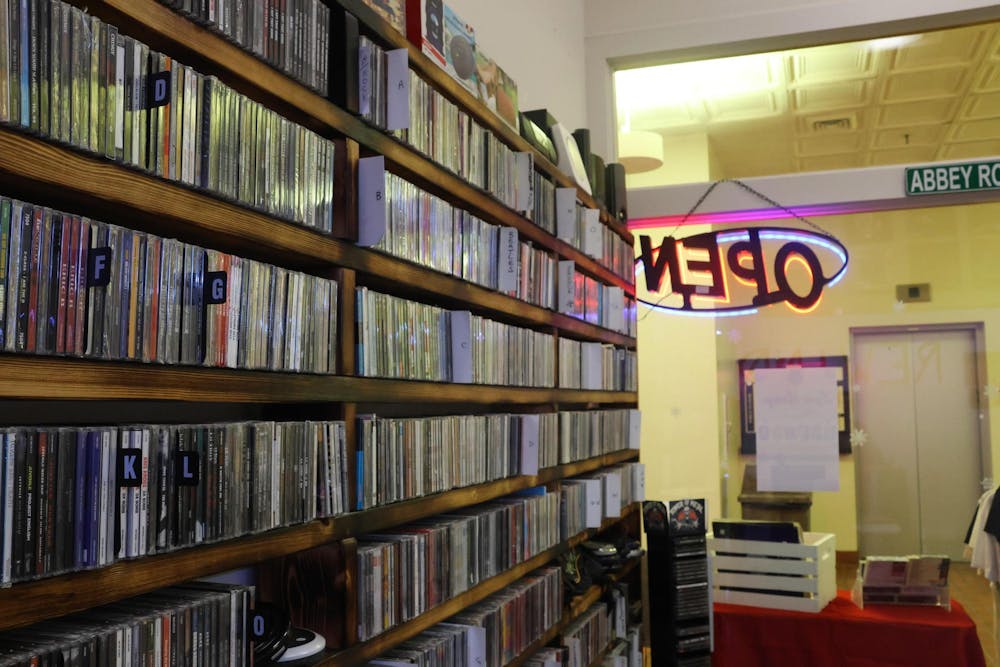
I moved into a new home in 2016. When it was under construction, my father wanted to build a “music room” meant to house his CD collection, his sound system, and my drum set. The collection is sorted alphabetically and by genre. It covers the entire back wall and both sides of the entrance.
I know he still grieves the loss of Spec’s, his usual record store that closed in 2013. He takes pride in his collection, logging every CD on Discogs and celebrating his rare box sets that can’t be found for sale anymore.
My father swears off music streaming platforms. He manually downloads his CDs into his iTunes library while my brother and I share a Spotify subscription.
Every time I ask him why he hates Spotify and prefers his CDs, he gives the same answer: The CDs belong to him, and they can’t be taken away at a whim, unless we get robbed, God forbid.
Digital media and streaming platforms have their appeal; you can generally access them anytime, anywhere, and users can receive and share new content immediately.
They also make sense for modern lifestyles, matching the pace and connectivity of everyday life. People are always on the move, and it makes sense to have access to on-demand entertainment and information.
However, Spotify can choose to remove your favorite artist from its platform, your internet connection can go out, and your laptop or phone can run out of battery.
These weaknesses aren’t just hypothetical. Just last week, an Amazon Web Services outage disrupted streaming on Netflix, Hulu and Disney+. Even services like Fortnite and the PlayStation network were affected.
On the other hand, a physical copy of “To Kill a Mockingbird” or a “Jaws” DVD won’t vanish due to a policy change or a network problem; you can access them whenever, and they’re yours to keep.
In a world increasingly dominated by the intangible, it’s normal for people to find comfort or value in physical media. To clarify, I’m not suggesting we must turn to it entirely. Instead, I believe it offers a different kind of satisfaction that we should also value.
Physical media carry a sense of ownership and permanence. I know one of my father’s favorite hobbies is simply browsing his collection and throwing on whatever album he feels like listening to.
They also have a sensory appeal. Some people revel in the smell of a freshly-opened CD or the feeling of flipping through the pages of a book.
Recently, I noticed the charm of grabbing print copies of the Indiana Daily Student when I walked into the newsroom. Now that the Media School cut print, I’ll have to rely on the online newspaper. This has all the same information, but I can’t hold it in my hands or keep it on my desk, and there’s no guarantee I can come back to it.
Picking up print copies felt deliberate. I felt more engaged with stories, since the paper supports a more tactile experience uninterrupted by ads, pop-ups, or bad internet. I also celebrated more when I saw my own stories. Now that connection is gone.
Unlike the CDs in my dad’s collection, that digital paper depends on servers and software that could go out unexpectedly anytime. It feels less real.
I know I contradict myself. I only truly valued the IDS print version once it was gone, and I continue to scroll on the digital version between classes. I recognize the value of physical media but still opt for digital textbooks; I usually stream every movie and download every game digitally.
Even then, I understand my father’s attachment to what’s truly his. His CD shelves might seem excessive or outdated, but they’re solid, unlike my Spotify playlists.
Still, I stream music every day and download it to listen offline, hoping I can cling to it somehow. I’ve already created and grown attached to my playlists, and it would be hard to recreate them physically.
Maybe that’s the root of our generation’s cognitive dissonance. We crave permanence but still model our lives around things that can disappear in an instant.
We’ve grown up relying on availability rather than taking ownership. Maybe that’s why tangible media still carry weight, reminding us that things can last beyond a click.
Not everything worth keeping fits on a screen. We don’t have to give up streaming, but we should recall the worth of what we can keep instead of calling it obsolete.
Joaquin Baerga (he/him) is a junior studying journalism.