
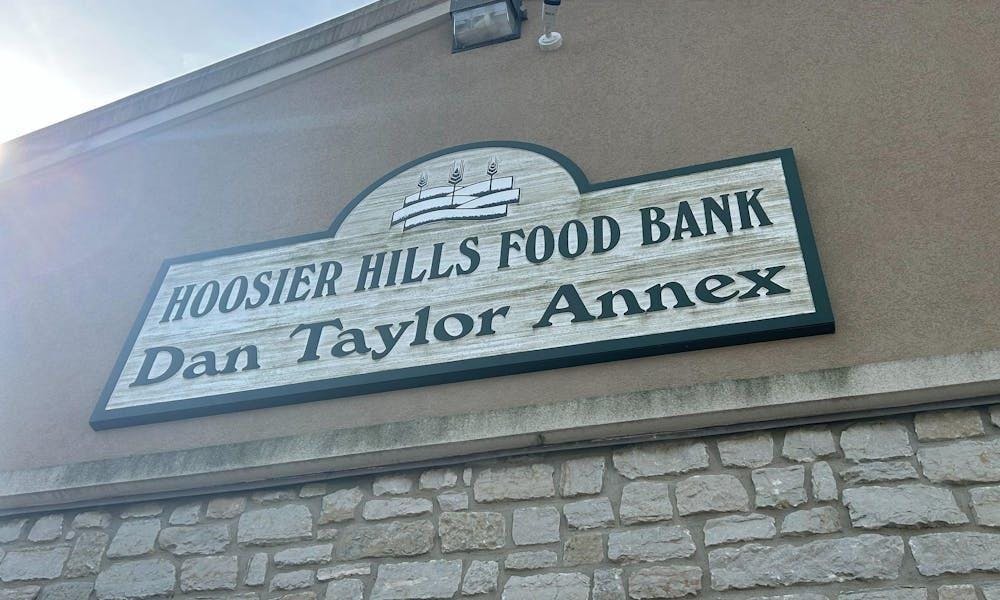
The City of Bloomington donated $46,000 to Hoosier Hills Food Bank to supplement its mobile pantries and those of 84 partner agencies as some Bloomington residents have lost SNAP benefits amid the government shutdown.
The money will provide 330,000 pounds of food, equivalent to 275,000 meals.
“Food access is essential for community health and stability,” Community and Family Resources Department Director Shatoyia Moss said in a press release Monday. “Our city is acting quickly to help ensure that families, seniors, and individuals continue to have what they need during this period of uncertainty.”
The city’s funding will add to HHFB’s November emergency response plan, which will purchase ten semi-truck loads of staple foods like peanut butter, fresh produce, frozen turkeys and non-perishable food.
“No one should go hungry because of gridlock in Washington,” Bloomington Mayor Kerry Thomson said in the release. “When national systems are disrupted, local governments and our community partners hold the line. Bloomington will always step forward to respond, take action, and care for our neighbors and the communities we serve.”
The aid comes after SNAP benefits were delayed for over 16,000 individuals in the six counties HHFB provides food for, including Monroe County. In an Oct. 28 release, HHFB director Julio Alonso laid out a plan to provide more food to organizations across the country, predicting that the loss of benefits would cause greater strain on food banks.
The release said the total cost of the food project in November is estimated to be $249,782. It listed the Community Foundation of Bloomington and Monroe County as providing $100,000, as well as $146,000 in funding from other programs and grants.
“With the support of the Community Foundation of Bloomington and Monroe County and other donors, we’ve put a plan together to help get through November,” Alonso said in the Oct. 28 release. “We are a strong and resilient network of agencies supported by caring and generous communities. We will rise to this occasion together.”
A federal judge in Rhode Island ruled that United States Agricultural Department must use the agency’s contingency fund to pay out benefits for November. In a separate case, a judge in Massachusetts ordered USDA to either start providing full November benefits to recipients or partial benefits by Monday.
USDA filed a statement Monday, promising to use the contingency fund to pay out benefits amounting to 50% of eligible households’ current allotments, although the change in payment amounts could take up to months for states to re-establish and distribute.
The filing stated that the fund would use around $4.65 billion dollars of the contingency fund, which would only cover half of the $8 billion November benefits.


